

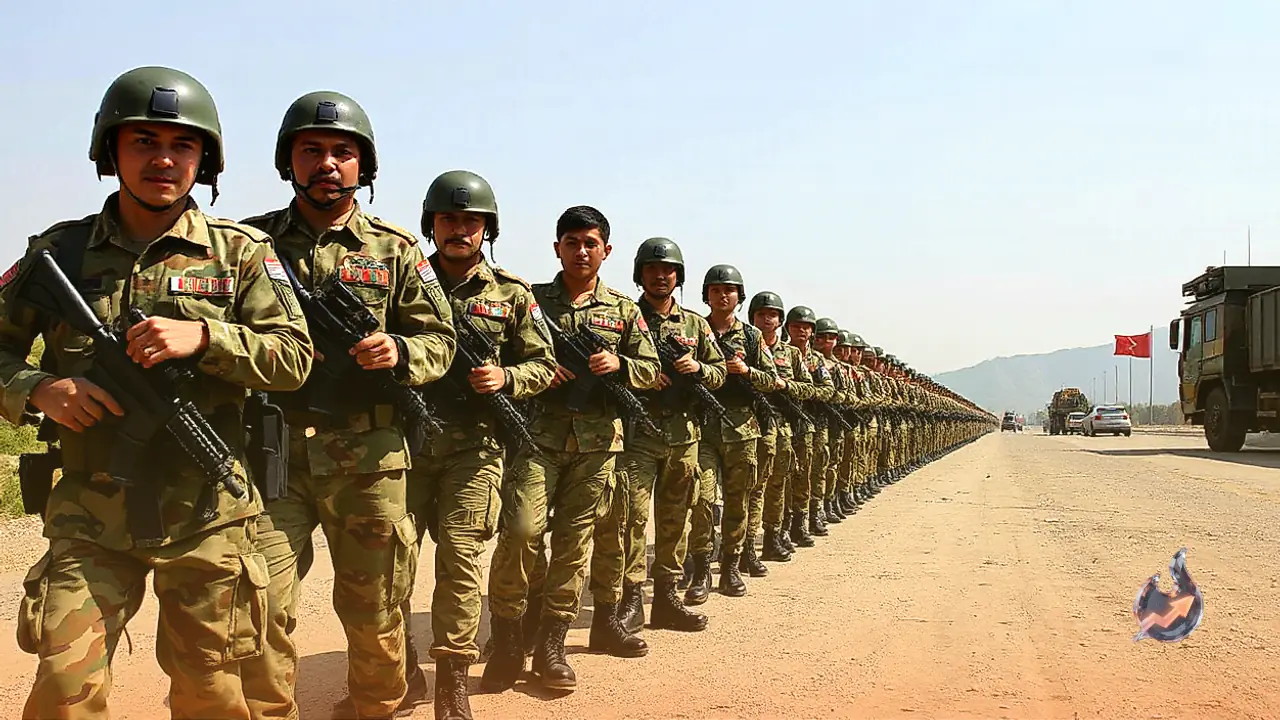














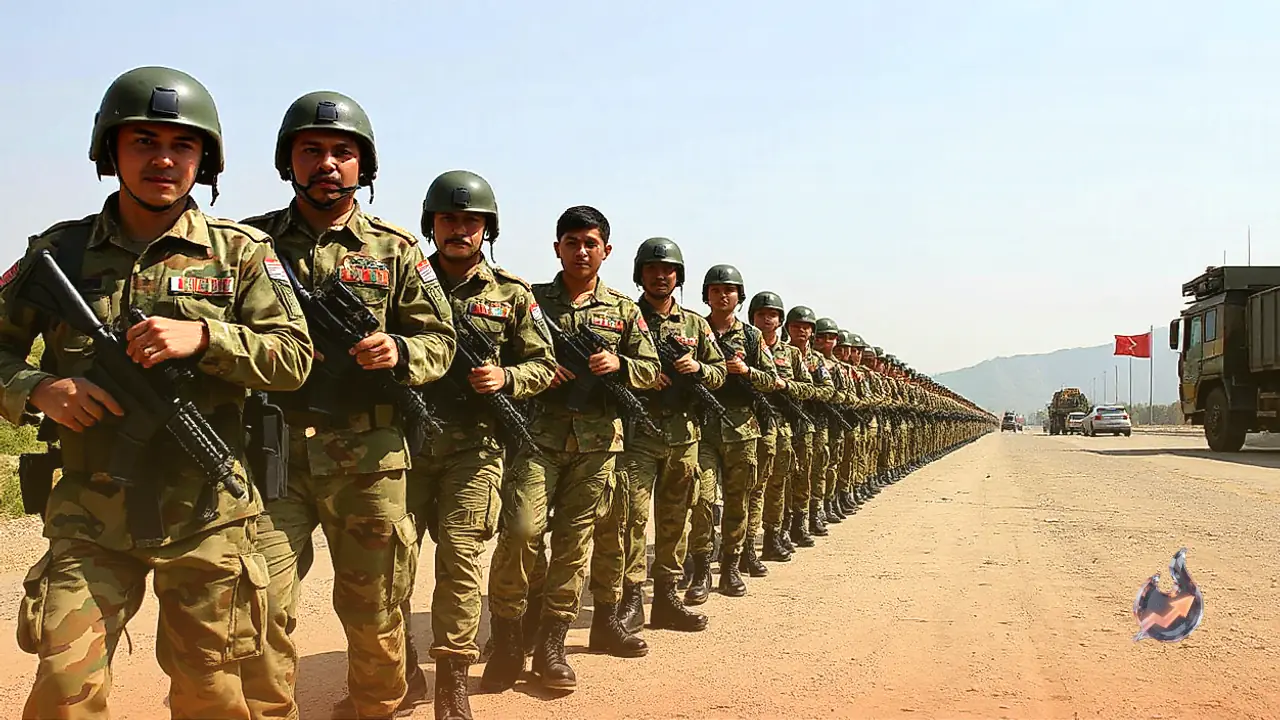

The shifting dynamics along the frontier with China require a continuous and substantially larger deployment of Indian military personnel. External Affairs Minister S. Jaishankar made these remarks on Saturday, emphasizing that India has significantly strengthened its military capabilities along the Line of Actual Control since the violent clashes in the Galwan Valley of eastern Ladakh in 2020.
These observations came during the HT Leadership Summit at a time when both nations are actively attempting to normalize diplomatic and bilateral relations. Ties between New Delhi and Beijing had remained severely strained for over four years due to a prolonged border standoff in eastern Ladakh. Jaishankar pointed out the visible acceleration in infrastructure development near the frontier, noting that reports of newly constructed tunnels, bridges, and operational airports have become far more frequent.
Enhanced Military Presence on the Frontier
Elaborating on the ground situation, Jaishankar stated that activities along the Chinese border have intensified, which naturally demands a permanent and heavy presence of troops. He explained that foundational work completed in earlier years has made it feasible to maintain such large troop concentrations in those challenging terrains, and ongoing efforts will ensure this deployment remains sustainable.
Following the resolution of the eastern Ladakh military standoff, diplomatic engagement resumed at the highest levels. In October 2024, Prime Minister Narendra Modi and Chinese President Xi Jinping met in the Russian city of Kazan, marking a significant turning point in breaking the ice and initiating a thaw in bilateral relations.
High-Level Talks and Bilateral Concerns
Discussions between Prime Minister Modi and Xi Jinping covered a wide range of critical issues, including reducing trade deficits, combating terrorism, and ensuring fair trading practices across multilateral platforms. Addressing past neglect, Jaishankar remarked that until about a decade ago, border infrastructure was genuinely overlooked, despite various plans having been formulated on paper.
He emphasized that a ground-level assessment of annual road construction lengths, tunnel excavations, and deployment patterns reveals the true picture to anyone familiar with the region, particularly members of the armed forces. The minister credited the past decade for providing the dedicated focus, policy backing, and financial resources needed to drastically improve India's capability to position troops effectively along that frontier.
Economic Trajectories and Missed Opportunities
Addressing a question regarding the economic divergence between the two Asian giants, Jaishankar recalled that during the 1960s, 1970s, and 1980s, when global industrialization was accelerating, India and the economies of China were comparable in size. He noted that when Rajiv Gandhi visited China in 1988, both nations shared similar economic dimensions.
However, China aggressively pursued industrialization and modernization, particularly throughout the 1980s. Expressing regret, Jaishankar noted that India failed to capitalize on that crucial historical window. Although economic reforms were initiated in the 1990s, the country was unable to implement them comprehensively across all sectors or sustain their momentum consistently.
Emerging Multipolar Global Order
Highlighting the manufacturing and industrial initiatives undertaken by the current administration, the minister urged that these efforts should not be viewed through a political lens. He noted that decades of lost momentum must now be overcome through bold leaps rather than incremental steps, requiring India to lean heavily into its core national strengths to address existing disparities.
Amid ongoing conflicts in West Asia and Ukraine, a new multipolar world order is taking shape, characterized by intense competition, a growing number of independent decision-making power centers, and a transactional global approach. Jaishankar warned that the emerging global environment will be more complex and volatile as the number of self-interested actors increases.