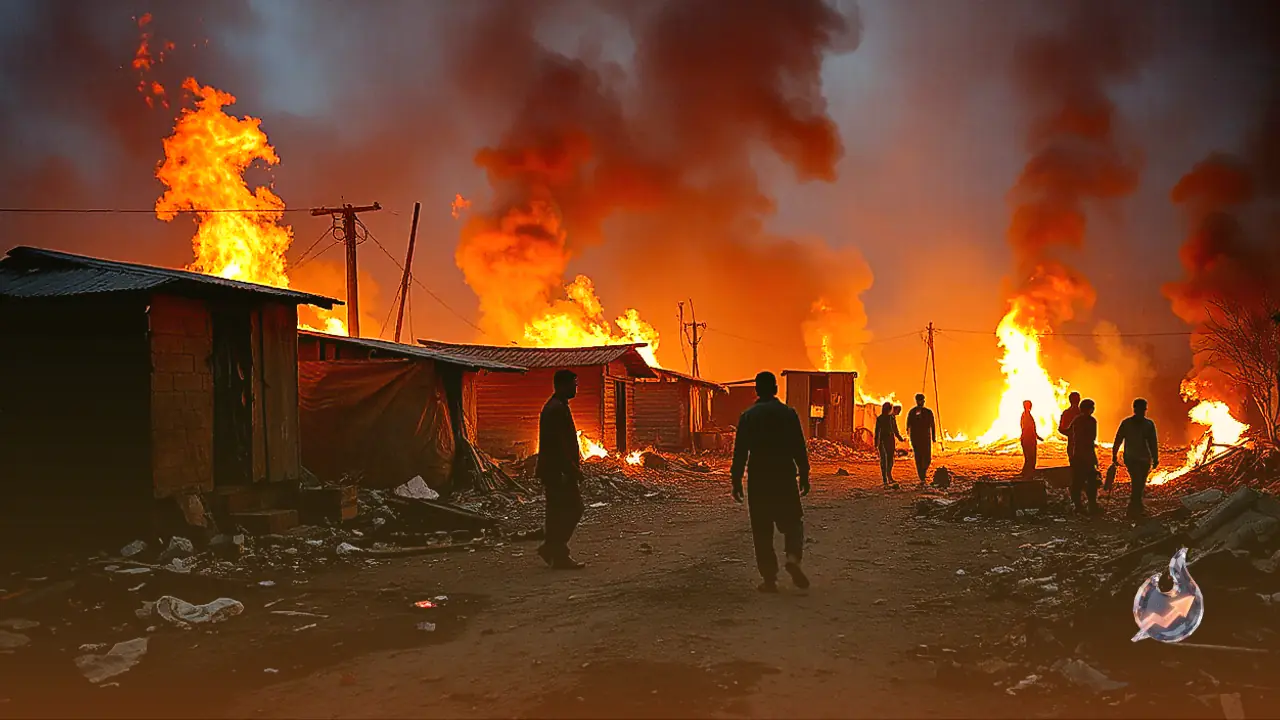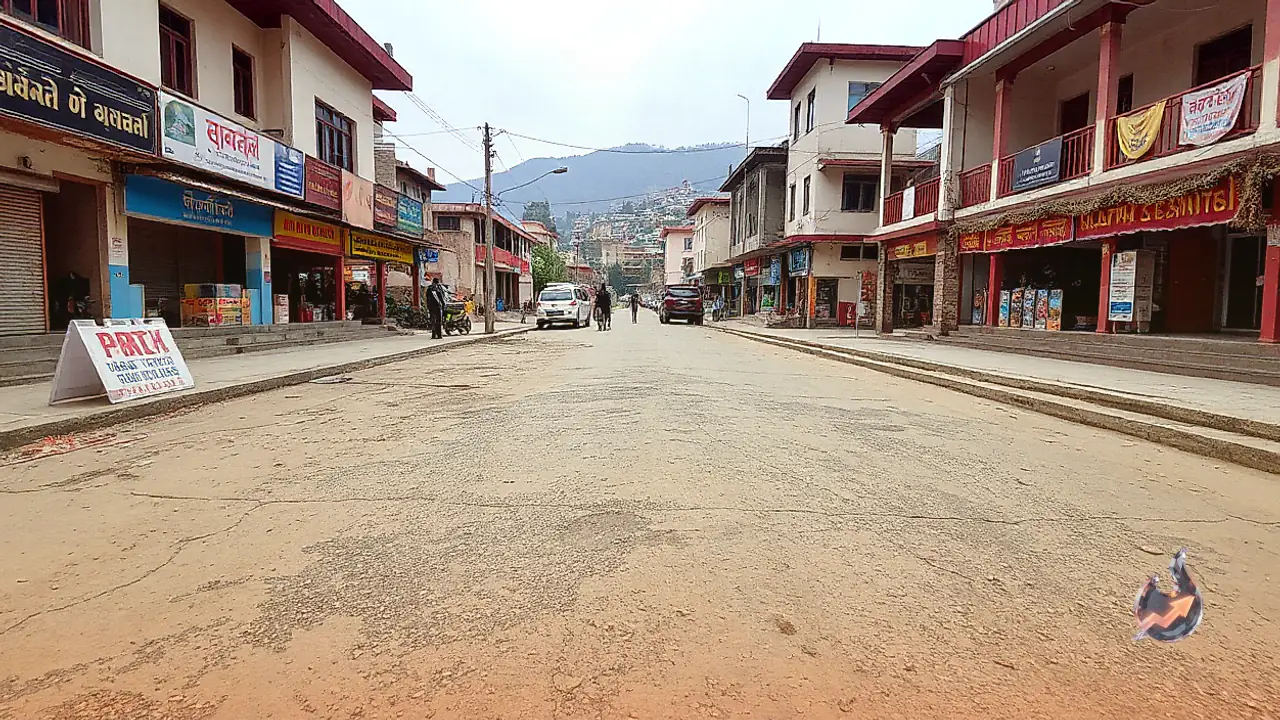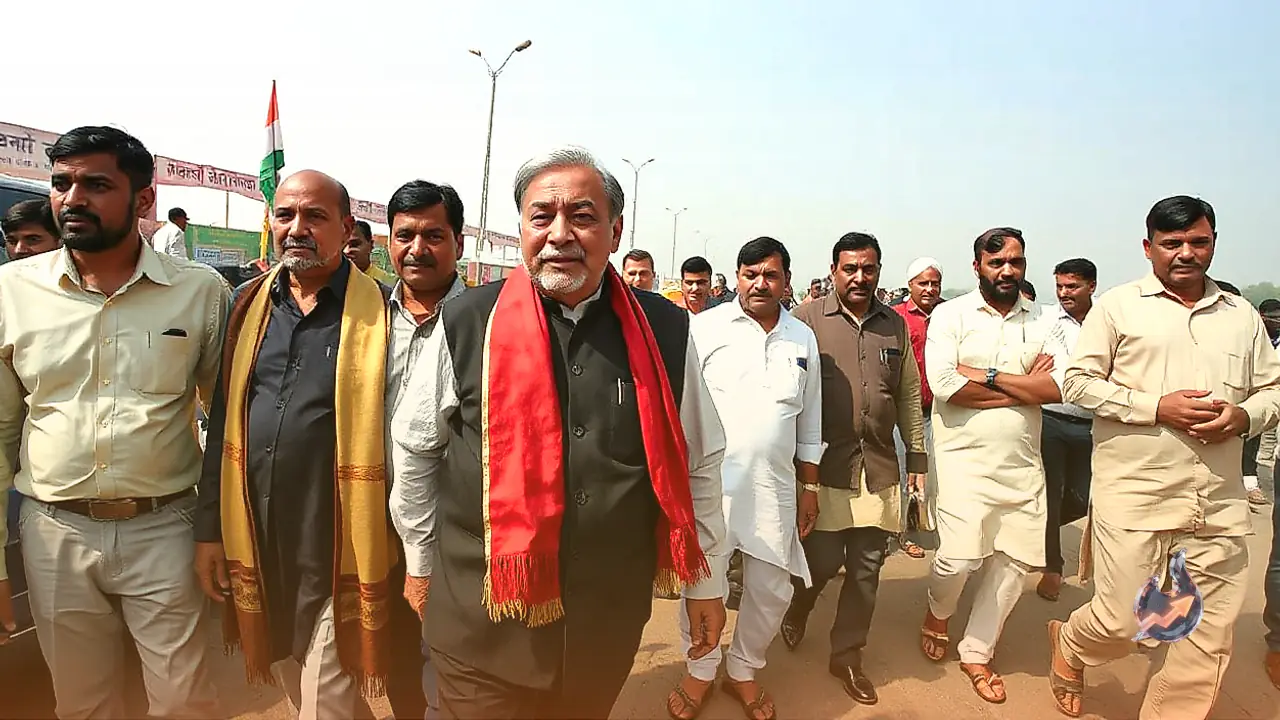
















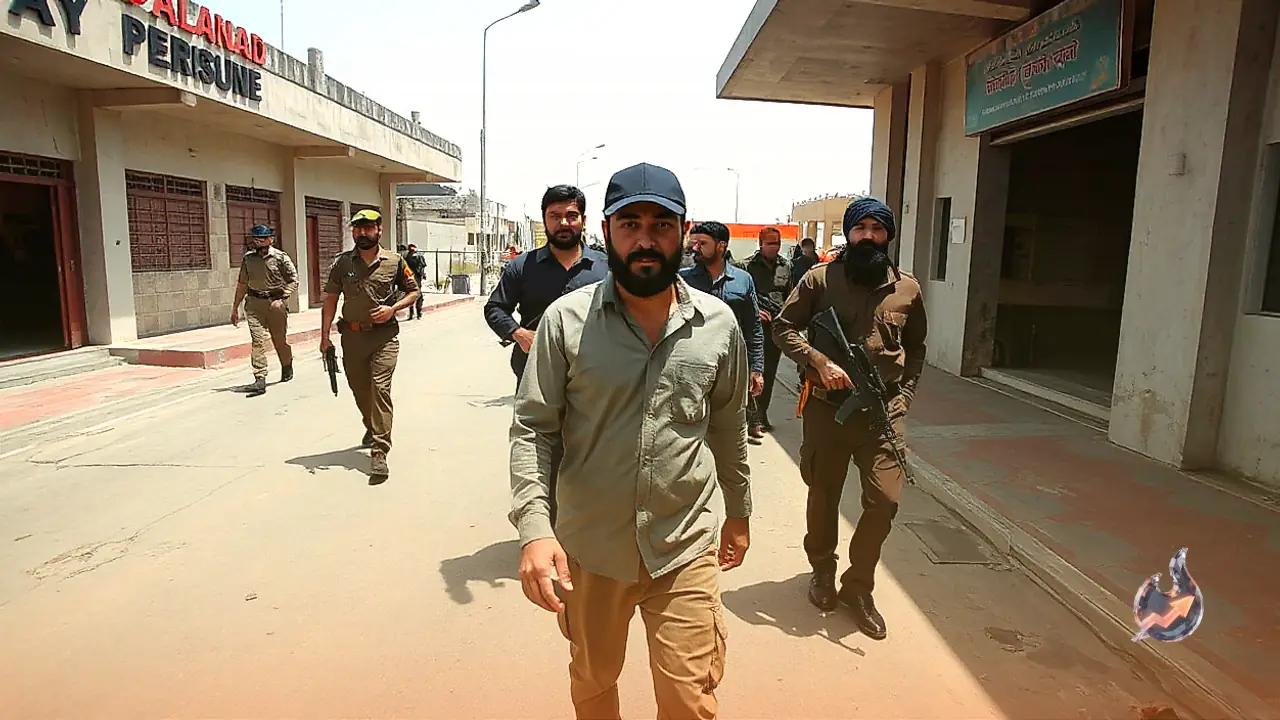

Security agencies have apprehended key fugitive Kulwant Singh in connection with the hand grenade explosion near the city police station premises in Jalalabad, located in Punjab's Fazilka district. His arrest marks a pivotal breakthrough for counter-terror investigators seeking to dismantle an illicit cross-border module. Inquiry details suggest that Kulwant had operational links with Pakistan-based operatives, identified in intelligence inputs as Shehzad Bhatti and a handler going by the name Omar Chacha. Beyond orchestrating explosive attacks, Kulwant is accused of actively operating inside a broader syndicate that managed cross-border narcotics trafficking alongside the logistics of military-grade munitions. The fugitive had also been named in a separate investigation in Sri Ganganagar, Rajasthan, where roughly 8 kg of Pakistan-origin RDX was seized, giving investigators a direct path to map out the interconnected networks operating across state lines.
Late-Night Hand Grenade Attack Near Jalalabad Police Station
The grenade incident took place during the early hours of 13 September 2026, at approximately 1:46 AM, right within the vicinity of the city police station in Jalalabad. Local law enforcement registered FIR number 177 under stringent statutory provisions to pursue the perpetrators. Initial counter-action led to the arrest of Gurpreet alias Gori and Manpreet Singh alias Mani. Subsequent interrogations quickly broadened the operational trail, resulting in the arrests of Ramandeep Kaur and Gurpreet Singh alias Vicky on 16 September. As the questioning progressed, the identities of additional associates, Sukhwinder alias Sukha and Lakhwinder alias Ladi, came to light. Throughout this sequential unraveling, Kulwant Singh remained the primary elusive figure whose capture was considered vital to understanding the full operational blueprint of the strike.
Examining the Roles of Omar Chacha and Shehzad Bhatti
Intelligence inputs tracking the syndicate designate Omar Chacha as an alleged handler affiliated with Pakistan's intelligence agency, the ISI. According to these findings, he maintained direct communication channels with Indian assets, issuing tactical guidance for the coordinated distribution of drugs and volatile explosives. The investigative trail pursuing this network has been referenced in security briefings under the operational heading 'Operation Omar Chacha D', though formal verification regarding his genuine identity and precise organizational standing remains underway. Concurrently, Pakistan-based Shehzad Bhatti features prominently in the inquiry. Bhatti's network has faced intensified pressure following actions initiated against him by the Indian government under the Unlawful Activities (Prevention) Act. Interrogators are questioning Kulwant to map financial transactions and uncover how local criminal networks were enlisted to receive and transport hazardous consignments.
The Rajasthan RDX Seizure and Broader Explosives Chain
The second major dimension of the inquiry leads directly to Rajasthan's border corridor, revolving around FIR number 210/26 filed at the Ravla police station in Sri Ganganagar district. That specific case centers on the interception of approximately 8 kg of RDX, believed to have been dispatched directly across the international frontier from Pakistan. Kulwant Singh was formally declared wanted in this case as well, with Lakhwinder alias Ladi surfacing as a linked individual in the same proceedings. Forensic teams and investigative officers are currently examining whether the munitions recovered in Sri Ganganagar shared a common supply pipeline with the hand grenade detonated in Jalalabad. Intelligence notes have additionally pointed toward a potential tie-in with a railway track blast in Rajasthan, although official confirmation and detailed documentation regarding that specific linkage remain pending.
Prior Criminal Record and Bathinda Jail Connections
A resident of Alike village in Punjab's Ferozepur district, Kulwant Singh, son of Harmesh Singh, has had repeated encounters with law enforcement. State police records reveal more than 10 criminal cases registered against him, the vast majority involving the illegal trade and distribution of narcotics. Kulwant served an eight-month sentence inside Bathinda jail before his release in August 2026. Investigators suspect that his incarceration period served as the incubator where he forged direct lines of contact with associates tied to Shehzad Bhatti's overseas syndicate. Almost immediately after walking out of prison, he re-entered the criminal underground, becoming deeply entangled in the operational buildup that culminated in the Jalalabad police station incident.
Stringent Anti-Terror Charges and Financial Inquiries
Law enforcement authorities have invoked stringent counter-terror and explosives legislation across both cases. The Jalalabad FIR incorporates Sections 3, 4, and 5 of the Explosive Substances Act, along with Sections 15, 16, 18, 18B, and 20 of the UAPA, in addition to relevant clauses from the Prevention of Damage to Public Property Act and the Arms Act. In parallel, the Ravla police station FIR number 210/26 in Rajasthan invokes corresponding provisions of the Explosive Substances Act alongside multiple sections of the UAPA. With Kulwant now under custodial interrogation, investigators are concentrating on peeling back the financial apparatus of the cross-border narco-terror apparatus, working to ascertain how proceeds generated through drug sales were routed to bankroll explosive consignments and violent acts.