





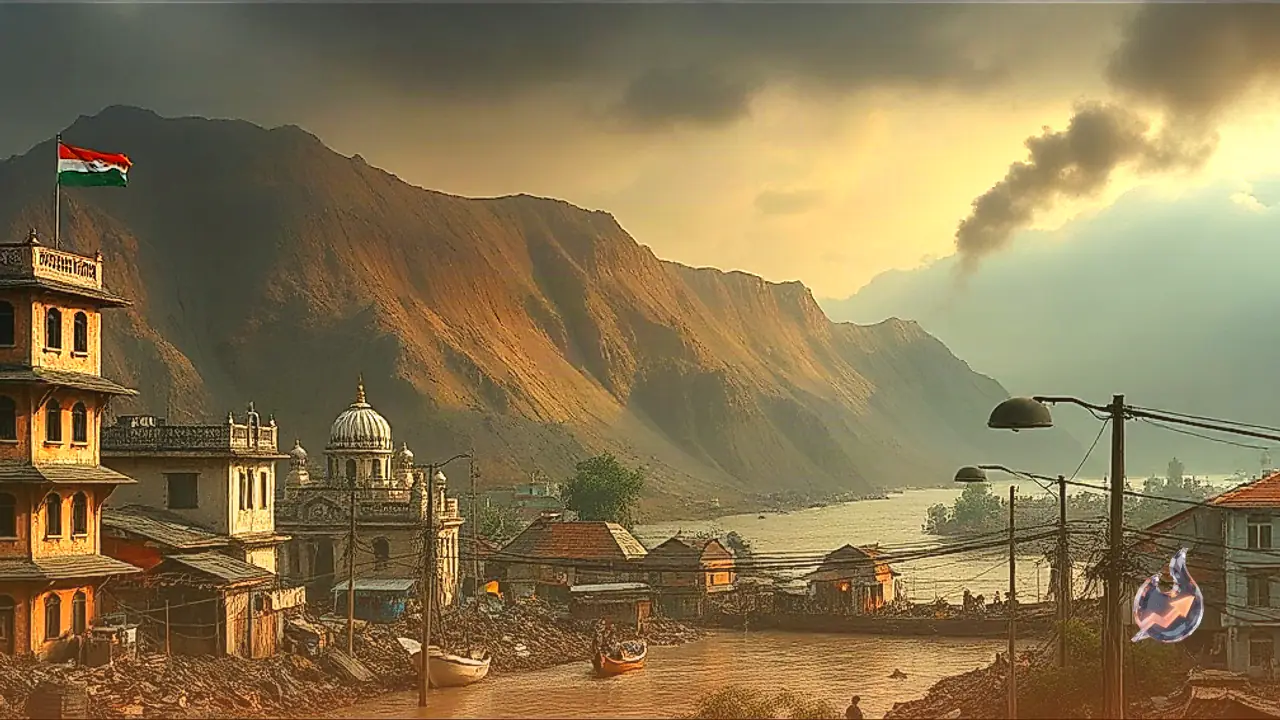















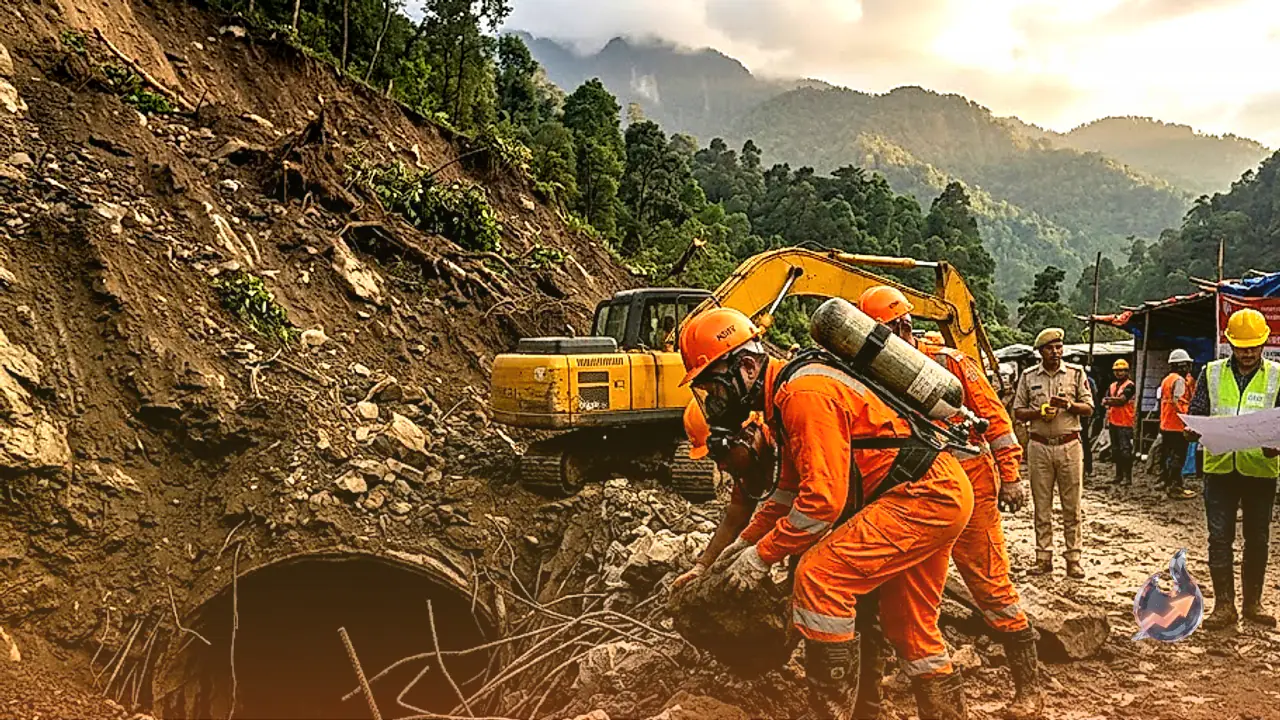

A landslide at a hydropower tunnel construction site in Sikkim has left at least eight workers dead and another 19 fighting for their lives underground, with rescuers battling dangerously high levels of methane gas to reach them. The tunnel, located near Samardung and Jholunge in Sikkim's Namchi district, is being built by Patel Engineering as part of the Teesta Stage-6 hydroelectric project. District authorities confirmed that eight bodies have already been recovered from the site, even as the search for the remaining trapped workers continues.
Bodies moved to hospitals as multiple agencies join the rescue
The bodies recovered so far have been shifted to the STNM district hospital in Gangtok and to the Namchi district hospital, according to a statement from Sikkim's Information and Public Relations department. The Namchi district administration is coordinating the rescue effort alongside district officials, the SDRF, the NDRF, Sikkim Police, fire and emergency services, the health department and other agencies. The statement added that the Sikkim State Disaster Management Authority is monitoring the situation closely and will share further updates as the operation progresses.
How many workers are trapped? The count keeps shifting
Namchi district collector Anupa Tamling said soon after the incident that around 27 workers were feared to be trapped inside the Samardung tunnel, but cautioned that the figure could not be confirmed because rescuers did not yet have a clear picture of conditions inside. She said a team from the National Disaster Response Force had entered the tunnel and begun rescue operations, and that a firmer estimate of the number of workers inside, and their condition, would only be possible once that team came back out.
Tamling later gave a more detailed breakdown of how officials arrived at the estimate. She said initial reports suggested close to 19 workers were trapped inside the tunnel. Three more Patel Engineering employees then went in to help with the rescue, and two of them also ended up trapped, taking the company's own tally of people stuck inside to 21. On top of that, six employees of NHPC were reported to be inside the tunnel as well, pushing the overall estimate to 27. Tamling stressed that the real number could turn out to be lower or higher, and that nothing could be confirmed until the NDRF team physically reached the exact spot where the workers are believed to be trapped.
Cause of the landslide still unclear, workers describe hearing a blast
Officials have not yet been able to establish what triggered the landslide. The district collector said some of the workers who managed to escape the tunnel told authorities they heard a loud, explosion-like sound from inside just before they ran out. A number of their colleagues, however, were unable to get out in time and remain trapped inside.
Thick methane gas is making the rescue extremely difficult
Tamling said the concentration of methane gas inside the tunnel is unusually high, and that this has turned the rescue operation into an especially difficult one. The first NDRF team to enter the tunnel focused on safely bringing out firefighters who had gone in immediately after the incident. A second NDRF team then entered the tunnel and the rescue operation is continuing. Officials said gas levels inside are so high that rescuers have still not been able to reach the point where the trapped workers are believed to be, and several rescue personnel have had to turn back before they could even establish contact with those inside.
Response teams were alerted within minutes of the incident
According to Tamling, NDRF teams stationed in Siliguri and Pakyong, along with the SDRF, were alerted the moment word of the incident came in. She said the landslide occurred at around 3:09 pm on July 20, and that the NDRF and SDRF teams were informed even as officials were still on their way to Samardung. Fire department personnel and police made two attempts to enter the tunnel without specialised safety equipment, but the dangerous conditions inside meant they were unable to reach the trapped workers.