


















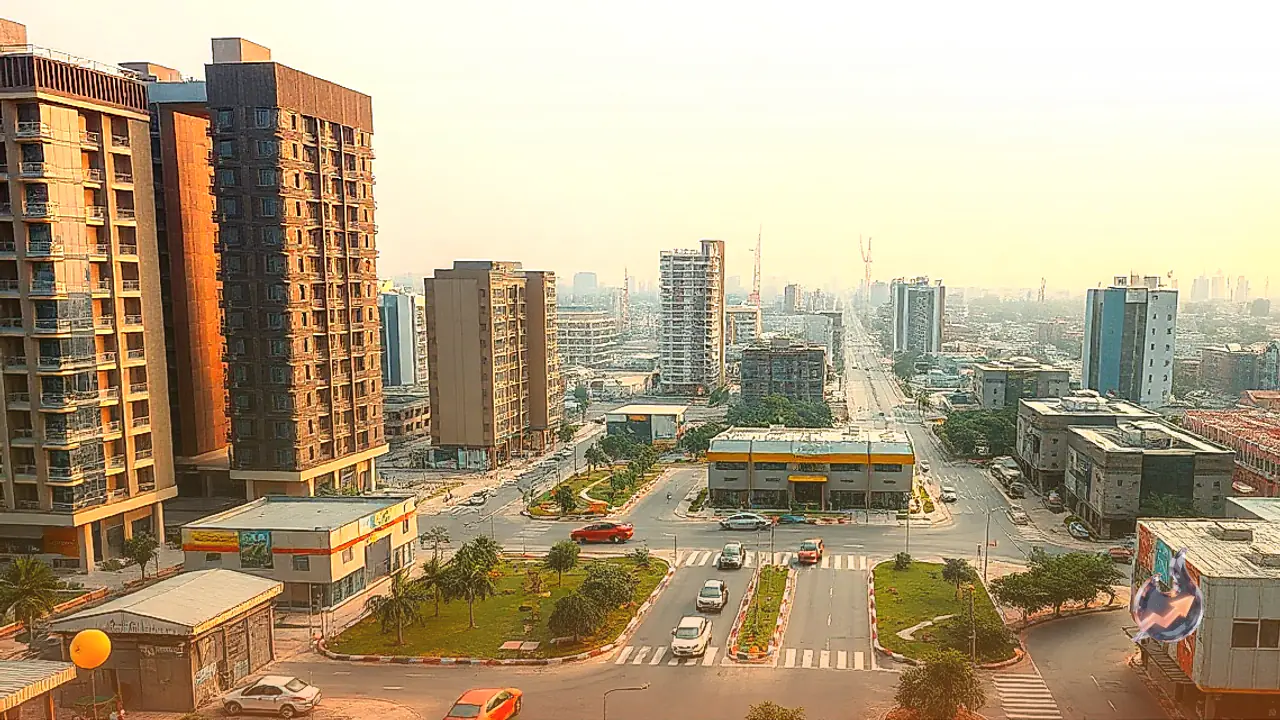

Delhi is preparing for a major structural transformation over the coming decades following the formal approval of Master Plan 2047. Under this long-term urban strategy, six new self-contained sub-cities and planned townships will be constructed across peripheral and outer regions of the national capital. Designed on the lines of well-established, organized suburban hubs such as Rohini and Dwarka, these new zones will see systematic expansion of residential housing, road infrastructure, public transit networks, educational institutions, and employment centers over the next 20 years.
Geographic Breakdown and Allocation of the 6 New Sub-Cities
The master plan outlines six designated development zones stretching across North, West, and South Delhi to ensure balanced regional growth
- Zone P-1: Encompasses the undeveloped lands lying beyond the currently inhabited boundary of Narela, which will be built out as an expanded Narela sub-city.
- Zone N: Located in North-West Delhi, integrating the suburban tracts of Narela, Bawana, and Kanjhawala into a consolidated development belt.
- Zone P-2: Situated in North Delhi, extending past Bakhtawarpur village to include Tigipur and its surrounding rural corridors.
- Zone L: Positioned in West Delhi, comprising the extensive land hinterland situated behind Dwarka and Najafgarh, stretching all the way to the Dhansa border.
- Zone K-1 and Zone K-2: Located strategically around the established residential and commercial hubs of Dwarka and Vasant Kunj.
- Zone J: Situated in South Delhi, covering Ghitorni and its neighboring suburban localities for targeted modern development.
Managing Demographic Growth and Upgrading Urban Infrastructure
Projections by the Delhi Development Authority (DDA) indicate that the capital's population will expand substantially by the year 2047. To handle this demographic transition without overwhelming existing civic systems, Master Plan 2047 unifies housing, transportation, environmental protection, public utilities, and job generation into a single integrated roadmap. The primary goal is to alleviate mounting urban congestion in older, densely populated Delhi neighborhoods while establishing planned, sustainable suburban clusters equipped with wide roads, reliable power and water grids, health services, and transit connectivity.
Building Commercial Hubs and Leveraging Real Estate Partnerships
Rather than functioning merely as bedroom communities, these six sub-cities are planned as economically vibrant townships. DDA is preparing to establish commercial hubs across selected villages and surrounding areas, stimulating local business enterprise and creating diverse employment opportunities. Alongside government schools and colleges, private investment will be actively incentivized. DDA plans to collaborate closely with private real estate developers to accelerate construction timelines, driving comprehensive infrastructural development across outer Delhi over the next two decades.