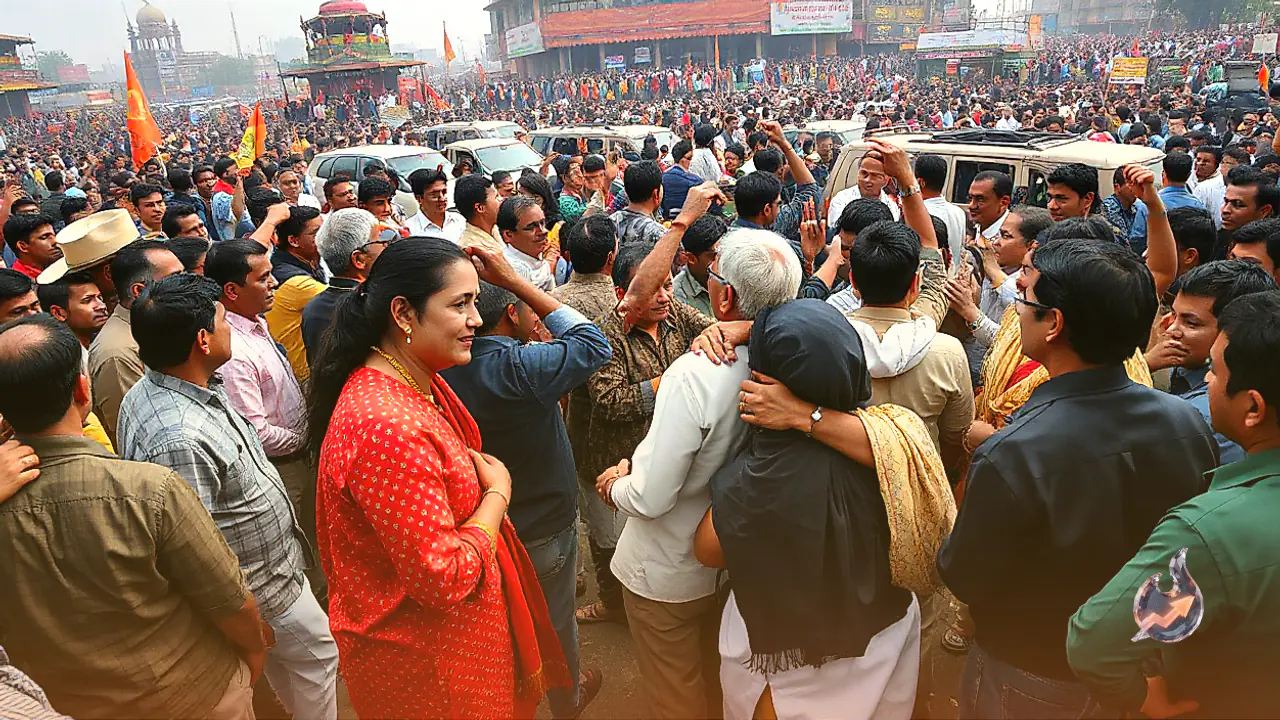

















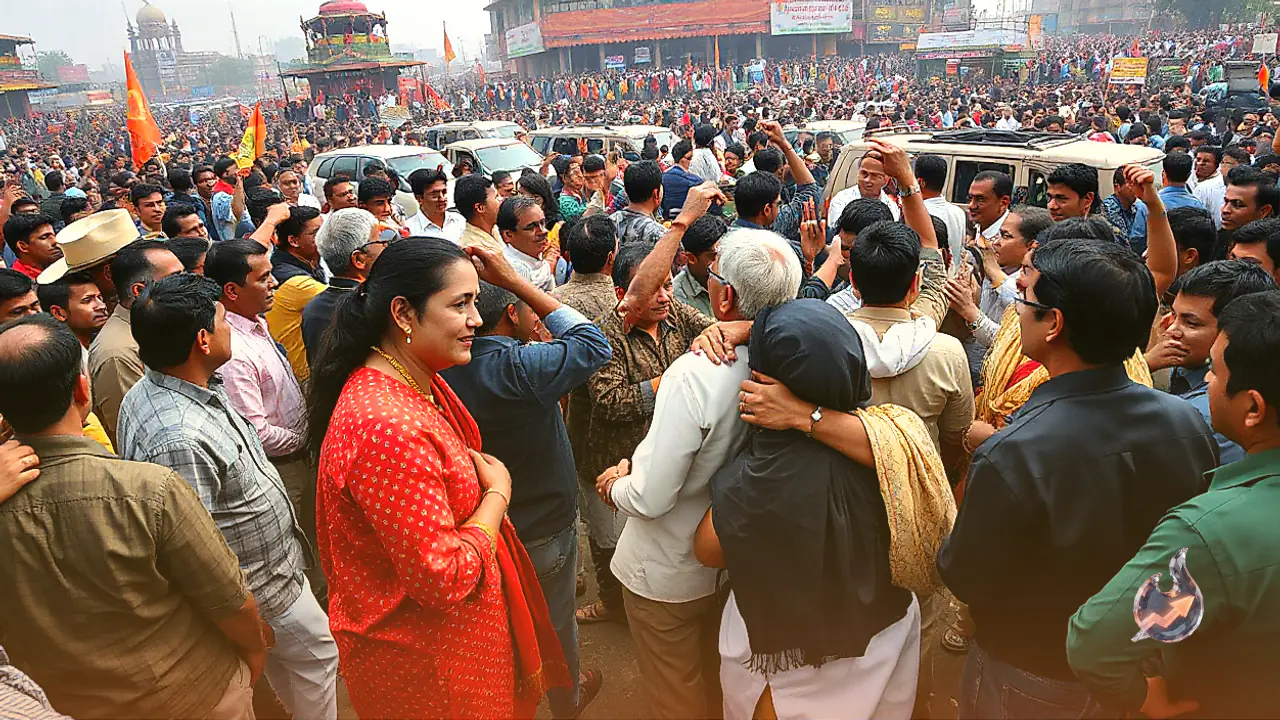

A fresh dynamic in national politics came into full view during a joint opposition gathering in the capital city. At Delhi's historic Ramlila Maidan, where leaders convened for the INDIA bloc mega rally against alleged vote tampering, Trinamool Congress supremo Mamata Banerjee exhibited an unmistakable shift in political posture. Known for prioritizing her regional dominance and frequently keeping the Congress party at an arm's length on national issues, the West Bengal leader demonstrated a strategic willingness to move past historical rivalries to forge a united front.
Reframing Alliances from the Ramlila Maidan Stage
Taking her place directly alongside Sonia Gandhi, the Trinamool Congress leader signaled a renewed alignment with the top Congress leadership. Opening her address with direct deference, she stated,
“My greetings to my leader Sonia ji.”This public display of allegiance underscored a deliberate effort to redefine personal and institutional ties that had seen frequent friction in recent years. She further complimented Congress parliamentarian Rahul Gandhi, characterizing him as a youthful leader carrying forward a resilient fight.
In a gesture that caught many observers by surprise, Banerjee also explicitly named M. A. Baby, general secretary of the Communist Party of India (Marxist), acknowledging a political organization that has served as her fiercest opponent in Bengal for decades. Alongside mentions of Congress president Mallikarjun Kharge, Samajwadi Party chief Akhilesh Yadav, and Rashtriya Janata Dal leader Tejashwi Yadav, her remarks conveyed an unmistakable commitment to presenting a cohesive challenge to the ruling establishment.
Underlying Catalysts and Changing Electoral Calculations
Observers note that this warmth is anchored in evolving strategic necessities rather than sudden sentiment. Historically, both parties engaged in sharp public exchanges across Bengal as the regional party worked to consolidate traditional Congress voter bases. At the federal level, persistent disagreements regarding leadership hierarchies and seat sharing arrangements frequently strained the coalition framework.
However, the ice began to thaw when Rahul Gandhi extended vocal support to Banerjee as questions arose regarding the electoral process and outcomes in the state elections. Subsequent closed-door meetings in New Delhi involving Sonia Gandhi, Rahul Gandhi, and Banerjee provided a foundation for rebuilding mutual trust. These discreet discussions resolved lingering grievances and established a workable channel of communication between the two high commands.
Implications for Coalition Strategy and Future Contests
Banerjee's current stance highlights a pragmatic realization that confronting the Bharatiya Janata Party effectively on the national stage requires the collective weight of both regional powerhouses and pan-Indian organizations. Bypassing Congress at this stage would present significant risks to building an all-encompassing electoral challenge.
By honoring Sonia Gandhi and sharing the dais with long-standing ideological rivals, Banerjee reinforced the classic political adage that alliances are inherently fluid. Driven by shifting imperatives, this reconciliation injects fresh momentum into the wider opposition coalition ahead of major national tests.