



















Over 7,000 Metric Tonnes of Waste Cleared from Haridwar Ganga Ghats in 24 Hour Sanitation Drive After Kanwar YatraIndia
13 Aug 2026, 12:22 am (1 day ago)· 2

Over 7,000 Metric Tonnes of Waste Cleared from Haridwar Ganga Ghats in 24 Hour Sanitation Drive After Kanwar Yatra

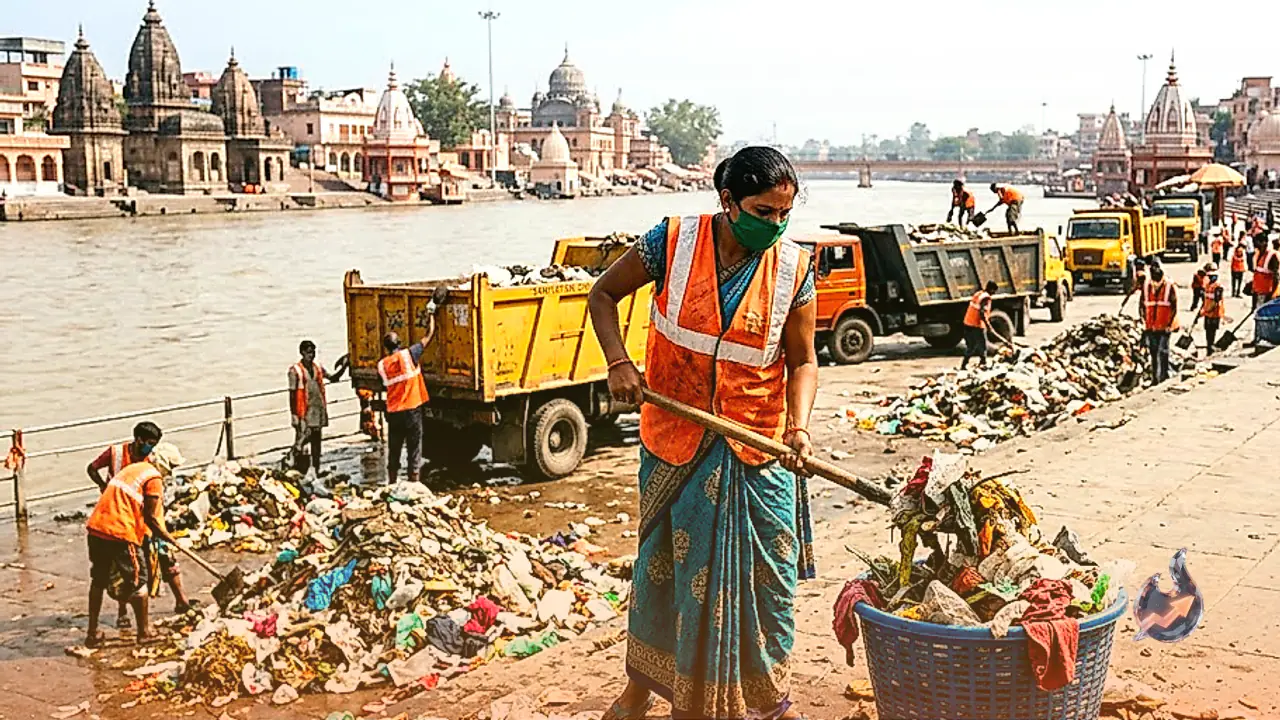
Following the conclusion of the Kanwar Yatra, Haridwar administration deployed over 1,000 workers and 89 large trucks to clear 7,000 metric tonnes of garbage left behind along the Ganga riverbanks.

Following the conclusion of the annual Kanwar Yatra, the holy city of Haridwar in Uttarakhand witnessed massive piles of garbage left behind along the banks of the Ganga river. While millions of pilgrims retrieved sacred Ganga water and departed for their homes, they left behind immense quantities of discarded clothing, footwear, polyethene bags, torn luggage, and decaying food items across the riverfront. To restore cleanliness to the revered site, the local municipal administration launched a massive round the clock sanitation drive.

Accumulation of 7,000 Metric Tonnes of Garbage and Deployment of Workforce

Immediately after the pilgrimage ended, the riverbanks presented a severe sanitation challenge, with decaying organic waste and wet clothes creating foul odors across the area. Officials estimated the total accumulated waste at 7,000 metric tonnes. To address this crisis, more than 1,000 sanitation workers were deployed, working continuously through the night to clear the riverfront.

Removal of Waste Using Heavy Machinery and 89 Large Trucks

Due to the sheer volume of trash scattered across the banks, heavy mechanical equipment was deployed for collection. Over 89 large trucks were utilized to transport the gathered garbage out of Haridwar city. According to official statements, more than 48 million pilgrims visited Haridwar during this season, creating significant operational strain. Although the administration conducted nightly cleaning operations throughout the event to clear daily waste, the volume spiked sharply toward the end.

Disruption During Final Two Days and 95 Percent Clearance Achieved

The accumulation intensified during the final two days of the pilgrimage due to a massive influx of devotees carrying Dak Kanwar. The overwhelming crowd density prevented sanitation teams from carrying out regular cleaning operations during those final 48 hours, leading to the rapid accumulation of the 7,000 metric tonnes of waste. Chief Municipal Commissioner Nandar Kumar stated that cleanup operations achieved 95 percent completion across key sites, including Subhash Ghat, Nai Ghat, Alaknanda Ghat, and Vishnu Ghat.

Ganga Aarti Resumed Following Cleanup Drive

Following the successful sanitation operation, the traditional Ganga Aarti ceremony was conducted with full ceremonial fervor. Attendees praised the rapid response of the municipal workers while emphasizing that visiting pilgrims must exercise greater personal responsibility regarding public cleanliness. The pilgrimage period also saw a tragic incident earlier when 4 Kanwariyas hailing from Chandigarh drowned in the Gangnahar canal while attempting to rescue a fellow pilgrim. Separately, SDRF personnel successfully rescued a drowning individual from the Ganga river in Haridwar.


Also read

Questions & Answers

How much garbage was collected from the Ganga ghats in Haridwar after the Kanwar Yatra?
Approximately 7,000 metric tonnes of waste was accumulated and collected from the Ganga riverbanks post pilgrimage.
How many sanitation workers and vehicles were deployed for the cleanup?
Over 1,000 workers were deployed along with heavy machinery and more than 89 large trucks to clear the accumulated trash.
How many pilgrims visited Haridwar during this Kanwar Yatra?
According to official figures, over 48 million pilgrims visited Haridwar during the event.
Which major ghats have achieved 95 percent cleanliness status?
Chief Municipal Commissioner Nandar Kumar stated that Subhash Ghat, Nai Ghat, Alaknanda Ghat, and Vishnu Ghat have been 95 percent cleaned.
Why were sanitation operations disrupted during the final two days?
Sanitation operations were halted during the last two days due to the extreme rush of pilgrims arriving with Dak Kanwar.

Comments 5

Rohan Verma@rohan-verma·1d ago

The mobilization to clear 7,000 metric tonnes of waste within 24 hours after an influx of over 48 million pilgrims highlights the immense environmental management challenge posed by massive religious gatherings. Future mega-events will require decentralized waste disposal strategies and stronger public participation frameworks to mitigate long-term ecological pressure on the riverine ecosystem.

Karan Malhotra@karan-malhotra·1d ago

This situation highlights not only the massive challenge of sanitation management but also raises critical questions regarding administrative protocols for public safety and crowd control. Managing an unprecedented gathering of over 48 million pilgrims while maintaining order along the riverbanks proved to be highly complex, resulting in tragic incidents despite rescue efforts. Moving forward, the municipal and security authorities must formulate more robust, proactive strategies integrating crowd management and environmental preservation for such large-scale events.

Rohan Verma@rohan-verma·1d ago

This situation highlights that waste management in mega-events cannot rely solely on post-event cleanups. The record influx of 48 million pilgrims proves that future gatherings require continuous monitoring and proactive containment strategies to prevent severe ecological and public health crises.

Karan Malhotra@karan-malhotra·1d ago

The influx of over 48 million pilgrims during the Kanwar Yatra posed severe challenges to public health, sanitation, and crowd management in Haridwar. While clearing 7,000 metric tonnes of waste within 24 hours highlights administrative responsiveness, this incident necessitates a stricter legal and regulatory framework for waste management and environmental protection during future mass religious gatherings.

Rohan Verma@rohan-verma·1d ago

This massive congregation serves as a major test of infrastructure and administrative coordination not just for Uttarakhand, but also for Uttar Pradesh and neighboring states as millions of pilgrims transit through border regions. Relying solely on post-event cleanup drives is no longer sustainable. Future mega-pilgrimages require stringent solid waste management policies and strict regulatory enforcement at the source itself, ensuring a sustainable balance between mass religious tourism and ecological preservation along the river basin.

Citizen journalism

Become a TrendKia journalist

Voice of the people

Share news, photos and videos from your area with TrendKia and let your voice reach the nation. Every citizen a journalist.

Join now
CH 01 LIVE
TrendKia TV ON AIR