
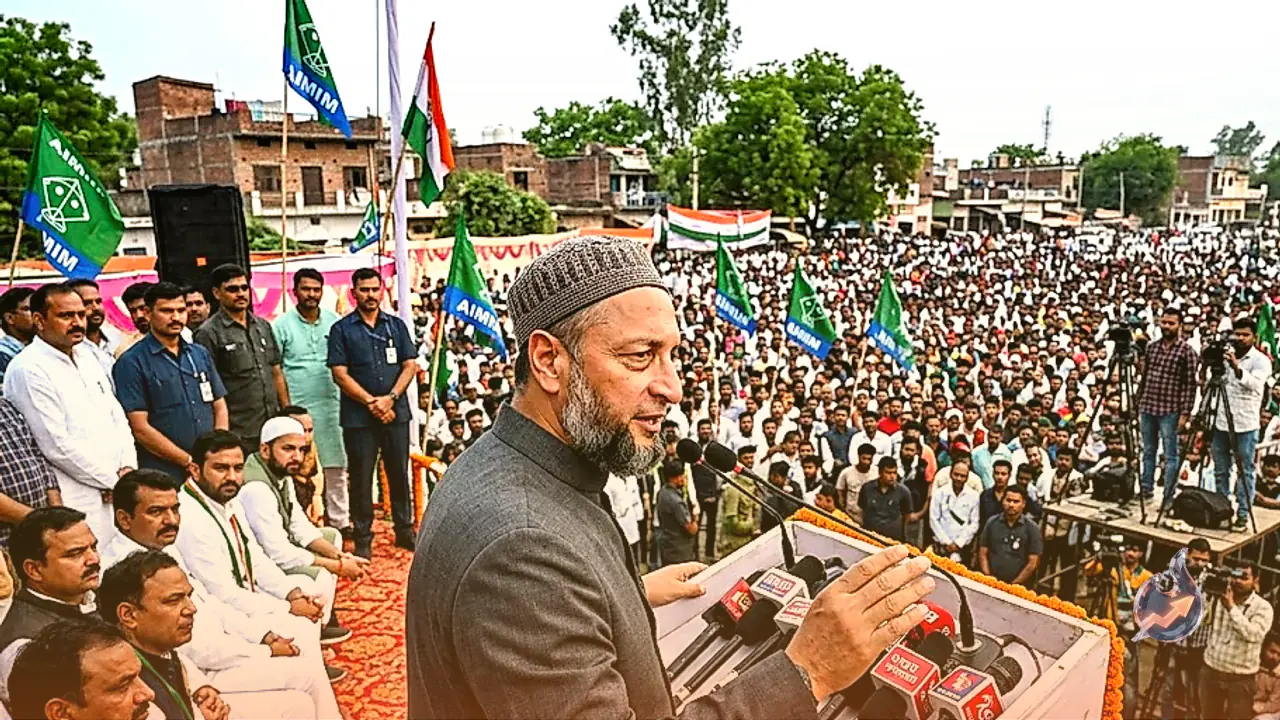
















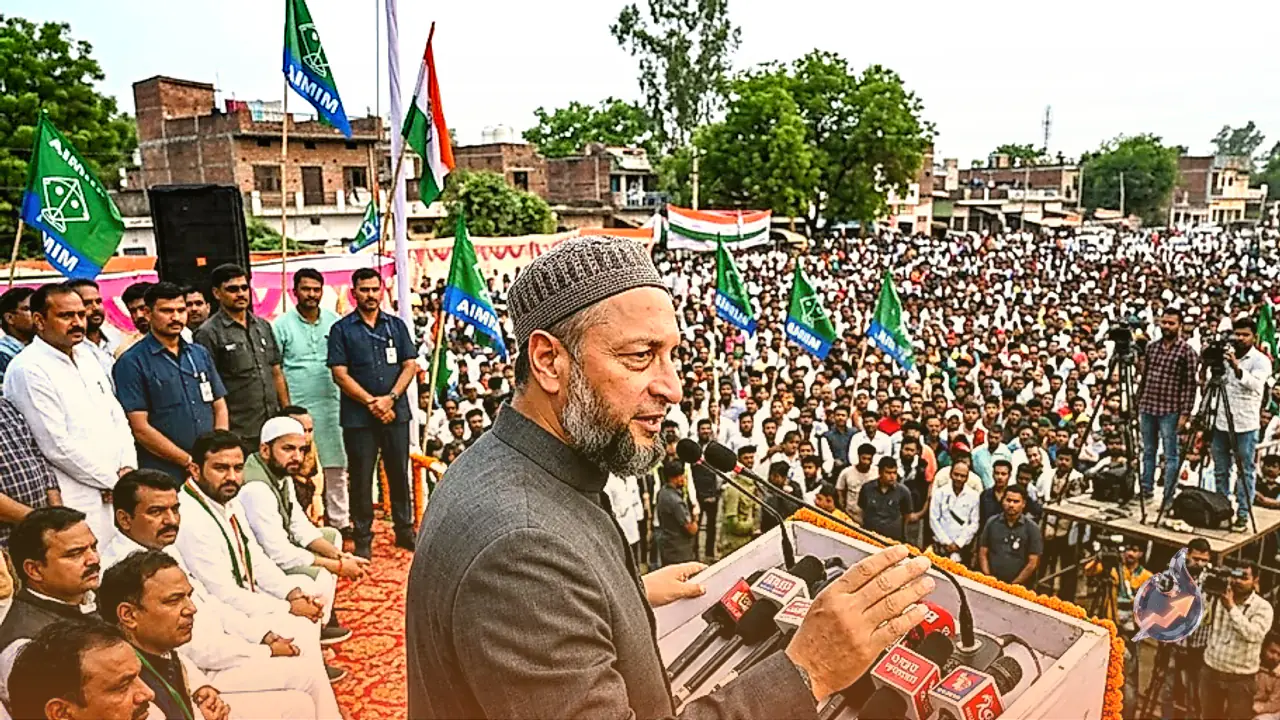

With four hundred and three assembly constituencies, Uttar Pradesh remains the most populous state in India and the ultimate testing ground for national political strategies. Even with assembly elections still ahead on the calendar, major political players across the state have already begun aligning their core arithmetic. The ruling Bharatiya Janata Party, under the leadership of Chief Minister Yogi Adityanath, is preparing its campaign pitch centered on governance, law and order enforcement, and statewide infrastructure development. On the other side of the aisle, Samajwadi Party chief Akhilesh Yadav has anchored his strategy to the PDA formula, representing backward classes, Dalits, and minorities. Meanwhile, Congress continues to seek greater organizational relevance through coalition politics, and Bahujan Samaj Party leader Mayawati is working to rebuild her historical core vote base. Into this high-stakes multi-cornered contest, Asaduddin Owaisi has entered with renewed vigor, disrupting established calculations.
The strategic thrust of Asaduddin Owaisi extends well beyond confronting the ruling Bharatiya Janata Party. His primary competitive target is the broader opposition camp, particularly the Samajwadi Party, which has traditionally enjoyed a formidable claim over the minority voting demographic in Uttar Pradesh. By actively campaigning for these votes, Owaisi aims to dismantle the conventional assumption that regional opposition outfits hold an exclusive entitlement to minority support. His expanding footprint directly challenges the comfort zone of leaders such as Akhilesh Yadav, Rahul Gandhi, and Mayawati, forcing them to re-evaluate their regional outreach and grassroots loyalties.
The Political Storm Triggered Around Ayodhya
The evolving electoral contest witnessed a dramatic spike in temperature following recent political engagements centered on Ayodhya. On October 8, Samajwadi Party president Akhilesh Yadav attended a Shrimad Bhagwat Katha religious gathering organized by party legislator Pawan Pandey in Ayodhya. During the event, Yadav publicly challenged Chief Minister Yogi Adityanath to contest the upcoming assembly elections directly from the Ayodhya constituency. That single remark instantly thrust Ayodhya into the epicenter of state politics, sparking intense speculation across political circles regarding whether the two leaders would indeed engage in an unprecedented electoral duel.
However, the momentum behind that confrontational rhetoric quickly shifted. Shortly after departing Ayodhya and reaching Ballia, Yadav appeared to step back from his original remarks, clarifying that he had not thrown down an electoral challenge but had merely offered friendly advice to the Chief Minister. Despite this diplomatic recalibration, the prospect of a direct electoral showdown between Yogi Adityanath and Akhilesh Yadav in Ayodhya for 2027 appears practically non-existent based on statements from senior party leaders. Nonetheless, the incident firmly refocused statewide political attention onto Ayodhya and its potent symbolic resonance.
Spiritual Symbols and the Clash of Ideological Narratives
Yadav's appearance at the religious gathering in Ayodhya generated considerable controversy beyond his political comments. Visuals from the event showed the Samajwadi Party leader holding Lord Shiva's trident in one hand and Lord Krishna's Sudarshan Chakra in the other, flanked by religious figures amid the blowing of conch shells. Draped in traditional yellow ceremonial attire and holding a damru, video clips of his presence rapidly circulated across social media platforms, followed by another clip depicting him on stage holding a mace. The prominent use of traditional religious motifs marked a noticeable stylistic departure that drew immediate political scrutiny.
Sharing one of the videos on social media platform X, Yadav published an original verse stating that defending humanity is a collective obligation when discrimination persists, and that taking up the trident and Sudarshan Chakra becomes necessary when state authority oppresses marginalized communities. The Bharatiya Janata Party swiftly seized upon the visit, pointing out that despite being physically present in Ayodhya, Yadav did not visit the Ram temple to offer prayers to Ram Lalla. Responding to the criticism, Yadav addressed the matter by asserting that Lord Ram and Lord Krishna represent the same divine entity, explaining that reverence for one embodies reverence for the other. Political observers interpreted the theological explanation as a delicate balancing act designed to appeal to Hindu voters without alienating his secular political base.
BJP Highlights Yogi Adityanath's Electoral Record
Against the opposition's evolving symbolic posturing, the Bharatiya Janata Party relies heavily on the administrative track record and personal standing of Yogi Adityanath. First assuming the chief minister's office in 2017, Adityanath led the party to a decisive re-election victory in 2022. That victory made him the first chief minister in Uttar Pradesh history to secure a consecutive term after serving a full five-year tenure. In the 2022 assembly elections, the BJP-led alliance secured 273 of the 403 total seats, with the BJP alone capturing 255 seats alongside an impressive vote share of approximately 41 percent.
Heading into the next electoral cycle, the BJP is projecting that proven governance model, emphasizing rigorous law enforcement measures and broad welfare initiatives as its core achievements. Party leaders maintain confidence that the administration will return to power with an even greater majority. The inability of rival parties to present an effective counter to the Chief Minister's statewide image continues to form the central tactical challenge confronting opposition strategists across Uttar Pradesh.
PDA Calculations and the Challenge Posed by AIMIM
To mount a viable challenge against the ruling party, the Samajwadi Party remains steadfastly committed to its PDA alliance model, uniting backward classes, Dalits, and minority communities. This specific social coalition yielded remarkable dividends during the 2024 parliamentary elections, where the Samajwadi Party secured 37 of the 80 Lok Sabha seats in Uttar Pradesh, while its partner Congress won 6 seats. The performance stood as one of the Samajwadi Party's finest historical showings in national elections, validating the effectiveness of broad-based social engineering.
Relying on the strength of that recent electoral breakthrough, Akhilesh Yadav has made clear his intention to preserve the existing partnership with Congress. When questioned in Lucknow on October 2 regarding the possibility of an alliance with the All India Majlis-e-Ittehadul Muslimeen, Yadav affirmed unequivocally that the coalition already in place would continue forward unchanged. With no formal seat-sharing accommodation extended to Owaisi's outfit, AIMIM is poised to contest contested minority-dominated constituencies independently. Any fragmentation of the minority electorate caused by Owaisi's campaign could complicate the Samajwadi Party's regional math, ensuring that Uttar Pradesh's political landscape remains fiercely contested in the months ahead.