

















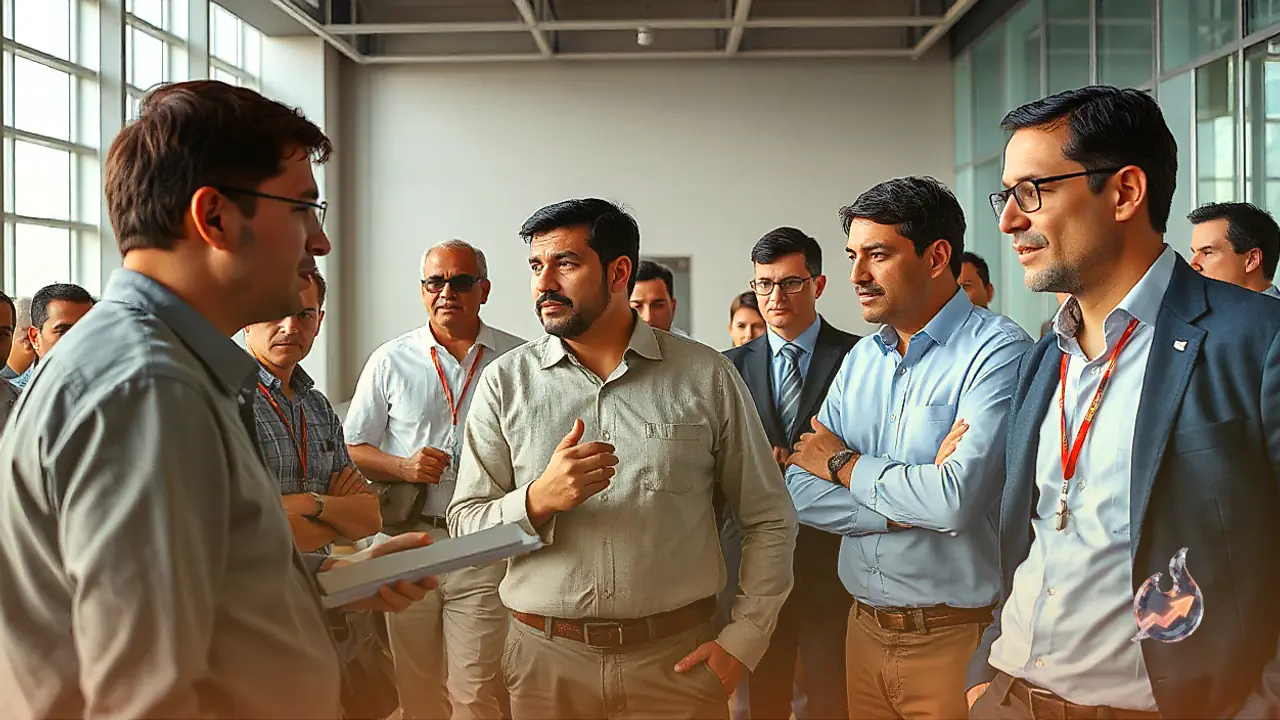

Addressing Indian science and technology research scholars in Berlin, Union Commerce Minister Piyush Goyal explored the opportunities and administrative complexities surrounding initiatives to bring global Indian talent back home. He underscored that while India possesses a vast pool of highly skilled professionals across the world, any state-funded scholarship or incentive program must be designed strictly within the checks and balances of a democratic framework.
Democratic Accountability and Policy Criticism
Union Commerce Minister Piyush Goyal noted that whenever the government contemplates launching funded repatriation packages or scholarships to attract top talent, domestic critics quickly step in to question the expenditure. Pointing specifically to Abhijeet Dipke, founder of the Cockroach Janata Party (CJP), Piyush Goyal remarked that public figures of that nature begin questioning why individuals or external bodies should get involved if funding and scholarship allocation is ultimately the state's responsibility.
Highlighting the friction created by such public skepticism, Piyush Goyal noted that elements of this sort emerge to cause frustration and distract administrative focus. Consequently, policymakers in India must construct repatriation programs with extreme caution, balancing strategic national objectives against potential abuse and public scrutiny that defines the country's vibrant democracy.
Contrasting China's System With Indian Democracy
When asked by attendees whether India could replicate state-backed programs similar to China's initiatives that bring back overseas scientists, researchers, and technical experts to bolster domestic research and curb brain drain, Piyush Goyal acknowledged China's aggressive outreach toward overseas academics of Chinese origin. He remarked that such initiatives are designed to reinforce domestic technological capacities and mitigate brain drain effectively.
However, the minister emphasized that while talent-attraction schemes serve a clear purpose, the political architecture behind them cannot be overlooked. He pointed out the stark difference between an authoritarian regime and a constitutional democracy. Making a lighthearted comparison regarding regulatory enforcement, Piyush Goyal remarked that fear of state repercussion in China keeps people from misusing state funds because violators risk disappearing. In contrast, he quipped that if such a state program were misused in India, the resulting accountability and public outcry would make the minister himself disappear.
Inviting Solutions From Overseas Scholars
Acknowledging the vast footprint of skilled Indians internationally, Union Minister Piyush Goyal stated that talented professionals from India can be found across all corners of the globe. The central challenge lies in designing workable mechanisms to draw that expertise back into India's domestic economy without opening loopholes for financial or procedural irregularities.
He invited the students and researchers present at the Berlin interaction to submit concrete ideas that could assist the government in formulating balanced incentive policies. Piyush Goyal asked the scholars to think of actionable ways the country could welcome back its finest minds and attract top skills to contribute to domestic growth, urging them to propose models that blend professional advancement with institutional integrity.
Emotional Bonds With the Homeland and Bilateral Mission
Touching upon the motivations that drive diaspora professionals to return, the minister observed that relocating back home is rarely an exclusively financial decision. Pointing to the emotional attachment individuals maintain with their native country, Piyush Goyal encouraged the researchers to preserve a sense of contribution toward their homeland as their careers progress, emphasizing the value of giving back to the society where their roots lie.
Union Minister Piyush Goyal is conducting an official diplomatic and trade visit to Germany and the Netherlands from October 22 to October 27. Accompanying him on this European tour is a comprehensive delegation comprising approximately 100 Indian businesses and startups, aimed at deepening bilateral trade ties, fostering commercial collaboration, and advancing technological exchanges.