

















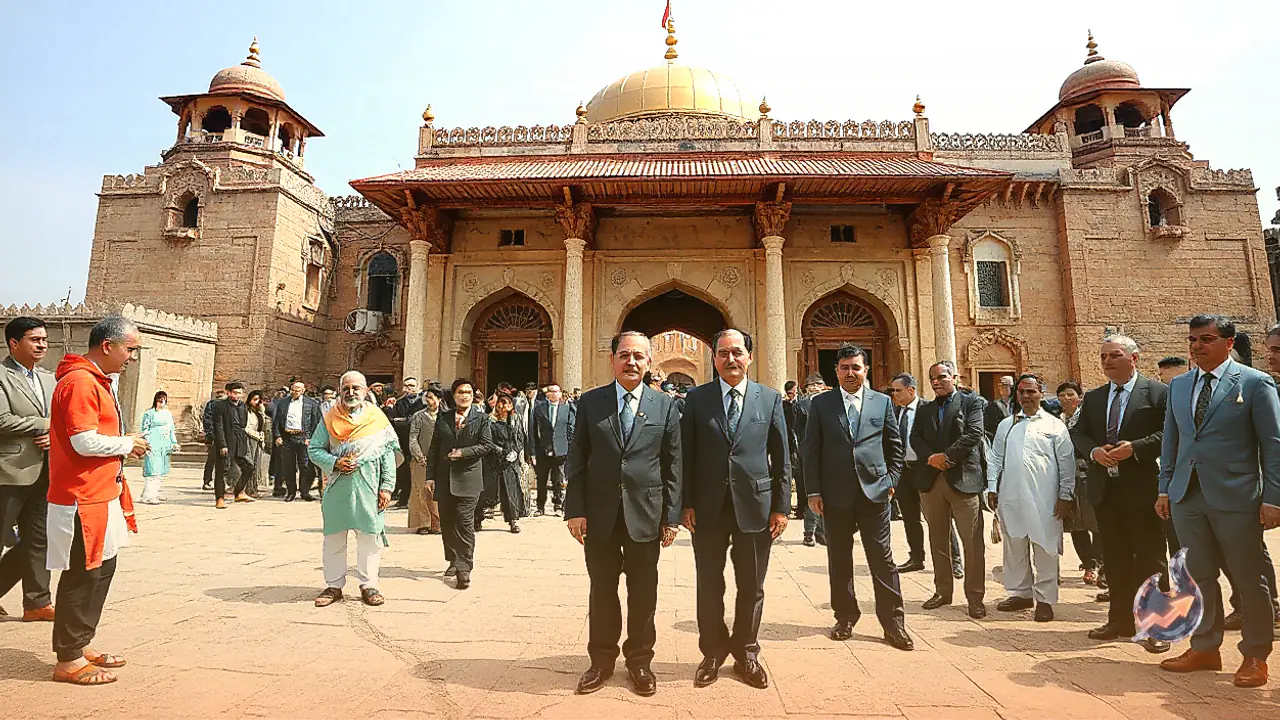

External Affairs Minister S. Jaishankar reached Azerbaijan as part of his diplomatic itinerary, marking the first independent bilateral visit by an Indian foreign minister in eight years. The trip drew widespread attention across digital platforms and mainstream media alike, as discussions focused on strengthening political, economic, and mutual relations between the two nations. A key highlight of the visit was his trip to the historic Atashgah fire temple located in the heart of Baku.
Sharing photographs of the sanctuary on the social media platform X, S. Jaishankar described the site as a enduring testament to the ancient cultural linkages shared between India and Azerbaijan. Azerbaijan is frequently referred to as the land of fire, a region where the natural and spiritual significance of fire dates back centuries. This diplomatic engagement underscores not only contemporary bilateral cooperation but also the deep historical and cultural heritage that binds the two regions together.
The location of the temple is built over a natural gas vent where subterranean gases once burned spontaneously. The Absheron peninsula has been recognized since antiquity as a territory of eternal flames. Records dating back to the fifth century mention natural fires emerging from the rocks near Baku. During the Sasanian era, under the influence of Zoroastrianism, fire worship sites likely flourished in the vicinity. Tenth-century Arab geographer Al-Istakhri also documented the presence of fire worshippers near Baku. Although subsequent Islamic conquests left many early fire shrines in ruins, the intrinsic significance of the natural flames persisted.
The present stone complex that visitors see today was primarily constructed during the seventeenth and eighteenth centuries. It was built and developed largely by Indian merchants and pilgrims, specifically Hindu and Sikh communities hailing from the Multan and Punjab regions of the Indian subcontinent. These traders traveled to Baku via traditional Silk Road and Caspian Sea trade routes, venerating the natural fire as Jwala Ji.
The architectural layout of the complex is pentagonal, featuring a central altar surrounded by monastic cells and caravan-sarai style outer walls. Atop the complex stands a Trishul, a sacred symbol of Hinduism. The stone walls contain approximately twenty-one inscriptions, predominantly written in Sanskrit and Gurmukhi scripts, along with one inscription in Persian. These engravings are dedicated to prayers and hymns praising Ganesha, Jwala Ji, and Shiva.
Historical records show that in 1683, German traveler Engelbert Kaempfer described the burning flames flickering from seven distinct sources at the location. Later in the eighteenth century, English merchant Jonas Hanway similarly documented the presence of Indian devotees at the site. The sanctuary served as a shared spiritual center for Hindu, Sikh, and to some extent Zoroastrian pilgrims. Indian merchants combined their commercial activities with religious worship at the grounds. While certain sources suggest the ancient site may have had earlier Zoroastrian origins, the existing structural architecture and inscriptions clearly reflect profound Hindu and Sikh influences.