





















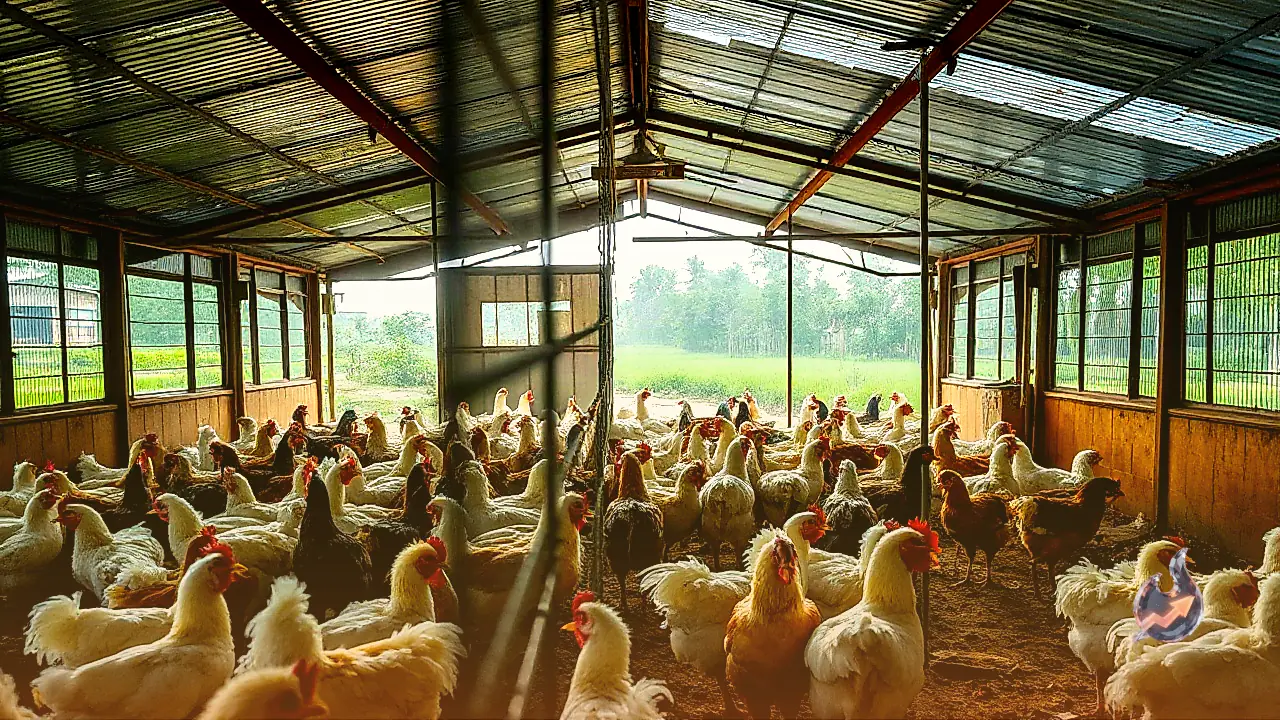

The arrival of the monsoon season brings severe operational hurdles for poultry farmers in rural areas. Continuous rainfall causes a steep rise in humidity, dampness, and moisture levels inside poultry sheds. In many cases, rainwater enters directly into the shelter premises, significantly multiplying the risk of disease outbreaks among the flock. Veterinary specialists warn that if shed cleanliness is ignored and chickens are forced to stay on wet floors, contagious infections can rapidly transmit from a single bird to the entire flock, leading to devastating economic losses for farmers.
Dangers of Shed Moisture and Toxic Ammonia Gas Buildup
Maintaining a completely dry and hygienic environment within the poultry shed is the primary challenge during the rainy season. According to Dr. Poonam Soren, Senior Veterinarian at the Deoghar Krishi Vigyan Kendra, chickens must not be kept in damp or wet conditions under any circumstances. She advises poultry keepers to regularly sprinkle lime inside the poultry shed every two to three days.
When damp soil mixes with chicken droppings, harmful ammonia gas is released. Exposure to this pungent gas inflicts severe damage on the delicate respiratory systems of chickens. Inhaling ammonia gas over extended periods escalates respiratory distress and leads to a noticeable surge in flock mortality rates.
Identifying Ranikhet Disease Symptoms and Viral Outbreaks
Dr. Soren highlights that the threat of Ranikhet disease, a highly contagious and dangerous condition, reaches its peak during the monsoon months. In addition to Ranikhet disease, high humidity and unsanitary surroundings foster respiratory ailments, diarrhea, and diverse viral infections.
Farmers need to remain extremely vigilant if they notice specific warning signs among their chickens. Key symptoms requiring immediate attention include
- Sudden lethargy in birds, accompanied by a sharp decline in feed and water intake.
- Breathing difficulties characterized by audible rattling sounds or gasping.
- A sudden and heavy drop in egg production among laying hens.
Best Practices for Feed, Drinking Water, and Shed Hygiene
Proper management requires keeping the poultry shed well-ventilated at all times. If the floor bedding material, such as wood shavings or paddy husk, becomes wet or damp, it should be removed instantly and replaced with dry, clean bedding.
Birds must strictly be provided with clean, safe drinking water, and their watering vessels should be washed and sanitized daily. Poultry feed must be stored carefully to shield it from moisture and mold accumulation, as feeding damp or moldy feed causes severe gastrointestinal issues. Furthermore, waterlogging around the exterior of the shed must be prevented, as stagnant water serves as a major breeding ground for disease-causing pathogens.
Quarantine Protocols, Timely Vaccination, and Professional Care
To prevent disease transmission across the farm, strict biosecurity protocols must be implemented. If any chicken exhibits illness symptoms, it should be isolated immediately from healthy birds. Additionally, newly acquired chickens from outside should never be introduced directly into the existing flock; they must be kept separately in quarantine for several days while their health status is monitored.
To safeguard the flock against Ranikhet disease and other infectious illnesses, age-appropriate vaccinations must be administered without delay. In the event of sudden chicken deaths or rapid disease spread, farmers should avoid self-medicating the birds and instead contact the nearest veterinarian or animal husbandry department officials promptly.