















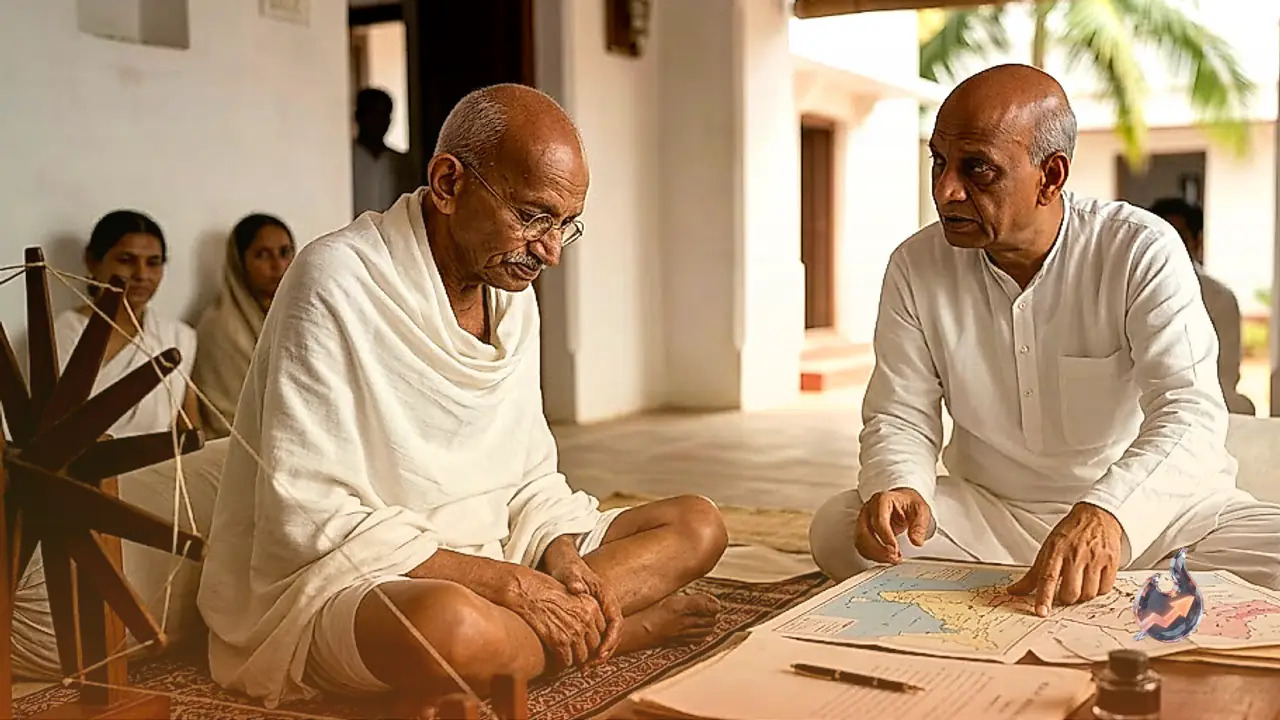

August 8, 1947, remains one of the most critical and emotionally charged days in modern Indian history. With precisely seven days remaining until the declaration of India's independence, a wave of excitement swept across the subcontinent as the end of British colonial rule drew near. However, aboard a train traveling from Lahore to Patna, Mahatma Gandhi was consumed by intense sorrow rather than celebration. Gazing out of the train window, Gandhi was heartbroken over the impending partition of the country and the horrific communal violence consuming the region. The terrifying scenes he had witnessed during his stay in Lahore had shaken his core.
During his days in Lahore, Gandhi had seen the tragic plight of Hindu and Sikh families being systematically displaced from their ancestral homes. Houses were set ablaze, and helpless citizens were forced to flee for their lives, abandoning all their hard-earned life savings. In refugee camps, tens of thousands were living under deplorable and degrading conditions. The grand vision of a united and triumphant free India had faded from Gandhi's eyes, replaced by the deep agony of a fragmented nation drowning in tragedy.
Memories of Quit India and the Pain of Independence
As the train journey progressed on that fateful day, Gandhi suddenly remembered that the date was August 8. Exactly five years earlier, on August 8, 1942, the historic All India Congress Committee session had been convened at the Gowalia Tank Maidan in Bombay. It was from that very ground that the ultimate call was delivered to the British rulers to leave India, accompanied by Gandhi's iconic 'Do or Die' slogan that mobilized millions across the nation into a decisive struggle for freedom.
Five years prior, though freedom seemed distant, the hearts of the people were filled with hope, unity, and an unshakable spirit of togetherness. But on August 8, 1947, with independence standing right at the doorstep, Gandhi felt only sorrow instead of joy. He felt the immense pain that the freedom for which millions had fought and sacrificed was arriving alongside the tragic division of the motherland, widespread bloodshed, and the complete collapse of human trust.
Five Major Historic Developments on August 8, 1947
That pivotal day was marked by five key historic developments that played out across different parts of the country, shaping the geopolitical landscape of the subcontinent
- The Anguish of Lahore and Punjab: Deeply distressed by the violence against Hindu and Sikh families in Lahore, Gandhi worked tirelessly to stem the tide of hatred. He personally visited refugee camps to listen to the grievances of the displaced. The tragedy unfolding in Punjab deeply wounded his spirit.
- Reflections on the 1942 Quit India Movement: Reflecting on August 8, 1942, Gandhi recalled how he and other top Congress leaders were arrested immediately after passing the historic resolution. While freedom was far off in 1942, hope was alive; in 1947, freedom was at hand, but the nation was engulfed in riots.
- Gandhi's Plan to Live in Pakistan: Believing that political independence was incomplete without mutual trust between Hindus and Muslims, Gandhi signaled his intention to move to Pakistan after independence to work toward establishing communal peace and protecting minorities.
- Jinnah's Geopolitical Eye on Jodhpur: As partition approached, Muhammad Ali Jinnah attempted to entice various princely states to join Pakistan or stay independent to weaken India. Jodhpur was a prime target due to its strategic geographical location and proximity to the border.
- Eruption of Riots in Kolkata: In eastern India, Kolkata witnessed a fresh outbreak of violent communal clashes. Neighborhoods and shops were set on fire, and targeted attacks escalated. Insurgents even threw homemade bombs at police officers who arrived to rescue trapped Hindu families, causing tensions to spread to nearby districts.
Jinnah's Strategy to Annex Jodhpur and the Intermediary Role of Bhopal
With the formal announcement of partition, the ruler of every princely state faced a crucial choice regarding accession. Muhammad Ali Jinnah aimed to convince maximum princely states along the border to join Pakistan, creating geographical disruptions for India. Jodhpur held immense strategic importance due to its large territory, location, and military value. Its integration into Pakistan would have posed a severe national security threat to India.
To win over the young Maharaja of Jodhpur, Jinnah offered an extraordinarily lucrative package. The commitments included unlimited supplies of weapons, guaranteed free food grains during famines or crop failures, unfettered access to the Karachi port, and the construction of a direct railway link connecting Jodhpur to the princely state of Hyderabad. Furthermore, Jinnah gave the Maharaja the option to declare Jodhpur an independent sovereign nation before August 15.
Dewan Venkatachari's Firm Stand and the Viceroy House Lunch
Instead of pressuring the Maharaja of Jodhpur directly, Jinnah used the Nawab of Bhopal as a secret channel to persuade the young ruler that joining Pakistan was in his best interest. Jinnah was confident that his enticing package would pull Jodhpur away from India. However, standing firmly against this plot was an astute and unyielding administrator.
Kadambi Seshachari Venkatachari (CS Venkatachari), the Dewan of Jodhpur, was a distinguished member of the Indian Civil Service (ICS) with immense administrative authority. The Maharaja relied heavily on Venkatachari's counsel for major governance decisions. Venkatachari immediately recognized the trap hidden beneath Jinnah's attractive offers, understanding that joining Pakistan or seeking independence would prove disastrous for both Jodhpur and India.
Simultaneously, Viceroy Lord Mountbatten was deeply concerned about the possibility of Jodhpur acceding to Pakistan, knowing it could trigger a dangerous domino effect among other border states. Realizing that Dewan Venkatachari was the key figure capable of guiding the Maharaja toward India, Mountbatten invited Venkatachari to Viceroy House (now Rashtrapati Bhavan) for a crucial lunch meeting on the afternoon of August 8, 1947.
At around 12:00 PM, Dewan Venkatachari arrived at Viceroy House in the official state car of Jodhpur. Over lunch, Lord Mountbatten urged that Jodhpur must make an immediate decision to sign the Instrument of Accession with India. Venkatachari clearly affirmed that Jodhpur belonged with India, neutralizing Jinnah's political trap and securing the state's integration into the Indian Union.