
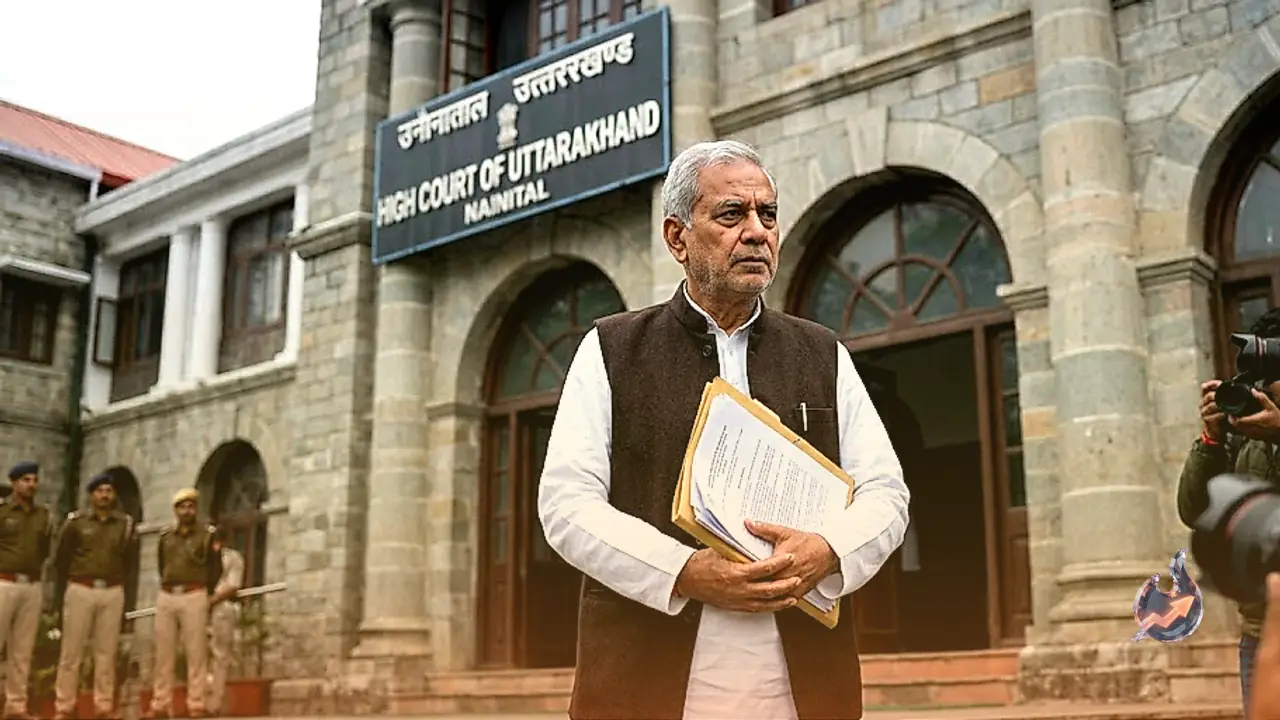

















A new administrative structure has been established to manage the daily operations and governance of the Shri Ram Janmabhoomi Temple in Ayodhya. Under this restructuring, retired Air Marshal Jitendra Mishra, who served in the Indian Air Force for 43 years, has been appointed as the first Chief Executive Officer (CEO) of the Ram Mandir Trust. Upon assuming his charge, Jitendra Mishra emphasized that after decades of military service to the nation, he will now dedicate his life to the administration of the temple. Simultaneously, key organizational changes were introduced within the trust: former treasurer Govind Dev Giri has taken over as the new General Secretary replacing Champat Rai, while Mahesh Bhagchandka, a prominent Delhi-based businessman active in Vishva Hindu Parishad, has been appointed as the new Treasurer.
Restructuring of Ram Temple Trust and Governance Goals
The appointment process was conducted to ensure administrative efficiency, operational transparency, and strong institutional credibility. Assigning the top executive position to a decorated former Air Force officer aims to strengthen public trust in the temple's governance and day-to-day management.
To maintain continuity within the organization, Govind Dev Giri transitioned into the role of General Secretary. Meanwhile, Mahesh Bhagchandka brings substantial corporate expertise to handle financial accounting and resource management. The newly constituted team faces the immediate task of enhancing operational standards, managing pilgrim facilities smoothly, and maintaining financial transparency.
Uttarakhand Madrassa Modernization: Inclusion of Science and Technology
Parallel to administrative reforms in Ayodhya, significant educational reforms have commenced in Uttarakhand. Chief Minister Pushkar Singh Dhami distributed authorization certificates to 26 madrassas that adopted the state's new modernization policy and updated syllabus. With this addition, the total number of recognized madrassas in the state has reached 33.
The government policy mandates that alongside religious studies, students in madrassas will now receive formal education in Mathematics, Science, and Computers. The deadline for madrassas to complete their registration under the new system is September 30. Previously, under the former Madrassa Board, a total of 452 registered madrassas operated in the state. While some traditional operators expressed reservations, the administration maintains that integrating modern academic subjects is essential to equip students for technical careers such as engineering, medicine, and scientific research. This step aligns with a vision expressed by Narendra Modi 12 years ago, advocating that youth should possess traditional knowledge alongside computer literacy.
Ladakh Water Conservation: Low-Cost Engineering Model
An innovative environmental initiative has been executed in Ladakh under the direction of Lieutenant Governor V.K. Saxena. At an expenditure of just Rs 10,000, barren and stony land in the high-altitude region was transformed into cultivable agricultural land within two days.
Previously, approximately 9 crore liters of water derived from melting glaciers flowed daily through a stream near Stok village in Leh and drained unused into the Indus River. Due to a lack of channelization, neighboring agricultural fields suffered severe water scarcity. The Lieutenant Governor instructed the Irrigation and Flood Control Department to divert this unutilized stream.
Using heavy excavators, workers constructed 200-meter-long diversion channels in just two days. This intervention successfully redirected around 8 crore liters of water daily into the Igoo-Phey Canal. Consequently, over 1,500 acres of farmland across 12 villages now receive sustained irrigation. The initiative will facilitate chemical-free organic farming, supplying fresh produce to local communities and defense personnel stationed in Ladakh.