





















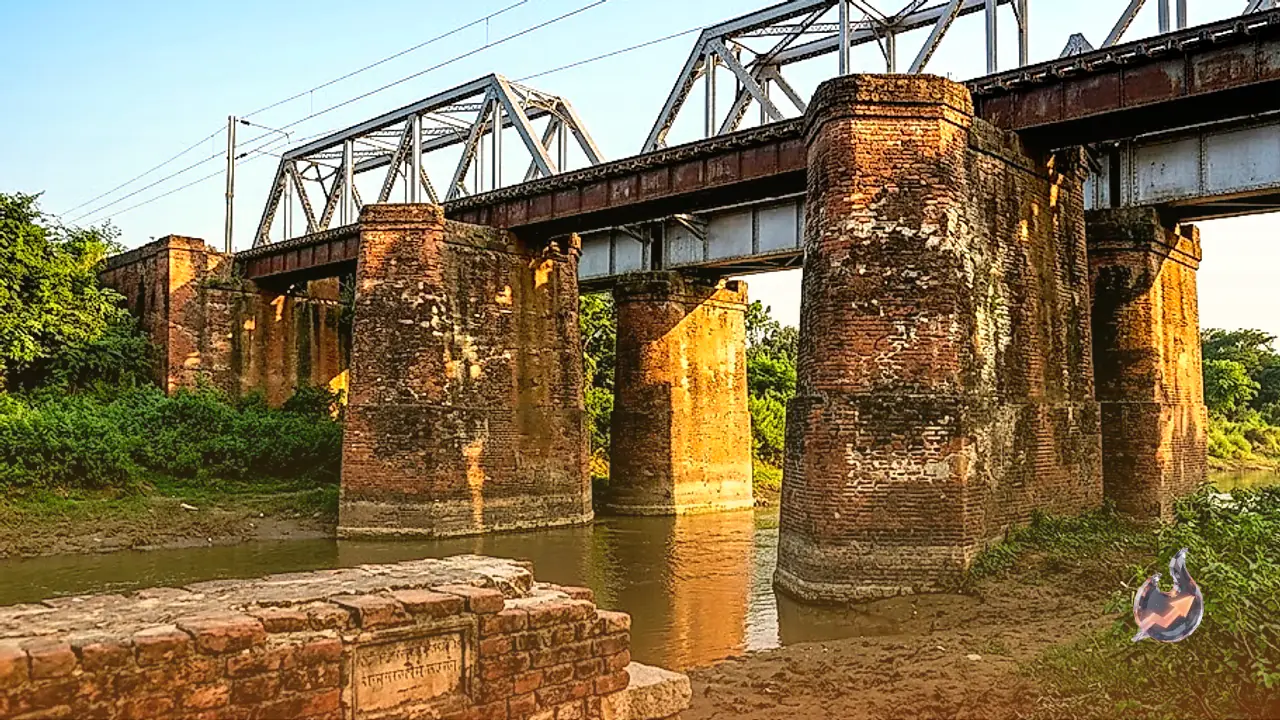

Situated in the Sangrampur region of Amethi district in Uttar Pradesh, the historic brick-built Thengha Bridge has stood as a silent witness to over two centuries of regional history. Located on the vital thoroughfare connecting Pratapgarh and Amethi, this architectural landmark is renowned not only for its antique engineering but also for its deep-rooted cultural and religious traditions. Built during the British colonial era, the structure remains one of the most significant historical heritages of the district today.
Construction of Thengha Bridge in 1820 AD
The brick bridge across the Thengha River was constructed in 1820 AD by Nazim Ghulam Hussain. Beneath the arches of this historic bridge flows the Malti River. The water bodies in this region have held immense ecological and historical significance over the centuries. The Thengha River originates at Machhiyan Taal, located in Pargana Jamo. Since ancient times, this river system has played a crucial role in local water management and regional transportation.
Excavation of Raja Ka Bandh for Flood Management
In 1845 AD, Raja Visheshwar Baks Singh of Amethi executed a major public works project aimed at protecting his kingdom from recurring floods. To ensure smooth drainage from several lakes across his territory, he ordered the excavation of a wide canal. This massive drainage channel came to be known locally as 'Raja Ka Bandh' (the King's Embankment). Flowing past Bhadar, the channel eventually became a major tributary of the Chamrauda River. In recent times, the canal has been re-excavated to restore its water drainage capacity.
Establishment of Lal Baba Temple and Local Traditions
Sharing insights into the heritage of the site, historian and lecturer Dr. Arjun Pandey highlights a unique legend surrounding the bridge. In its initial days, every attempt to construct the bridge ended in failure as the structure collapsed repeatedly. Following these recurring setbacks, local residents received spiritual indications, prompting them to conduct elaborate rituals and prayers at the site. Subsequently, the Lal Baba Temple was established, after which the bridge remained stable, transforming the location into a revered historic landmark.
Ancient Architecture and the Evolution of Civilizations
The region around Amethi houses several other historical structures alongside the Thengha Bridge that showcase ancient craftsmanship. Key heritages include the royal Rajmahal (palace), the historic Baavli stepwell, and the Navgrah Sagar water reservoir. According to historian and lecturer Dr. Arjun Pandey, both history and geography emphasize the central role of water bodies in human development. Ancient heritage surveys confirm that human civilizations historically flourished along the banks of rivers, streams, and lakes, a pattern clearly visible in the historical layout of Amethi.