

















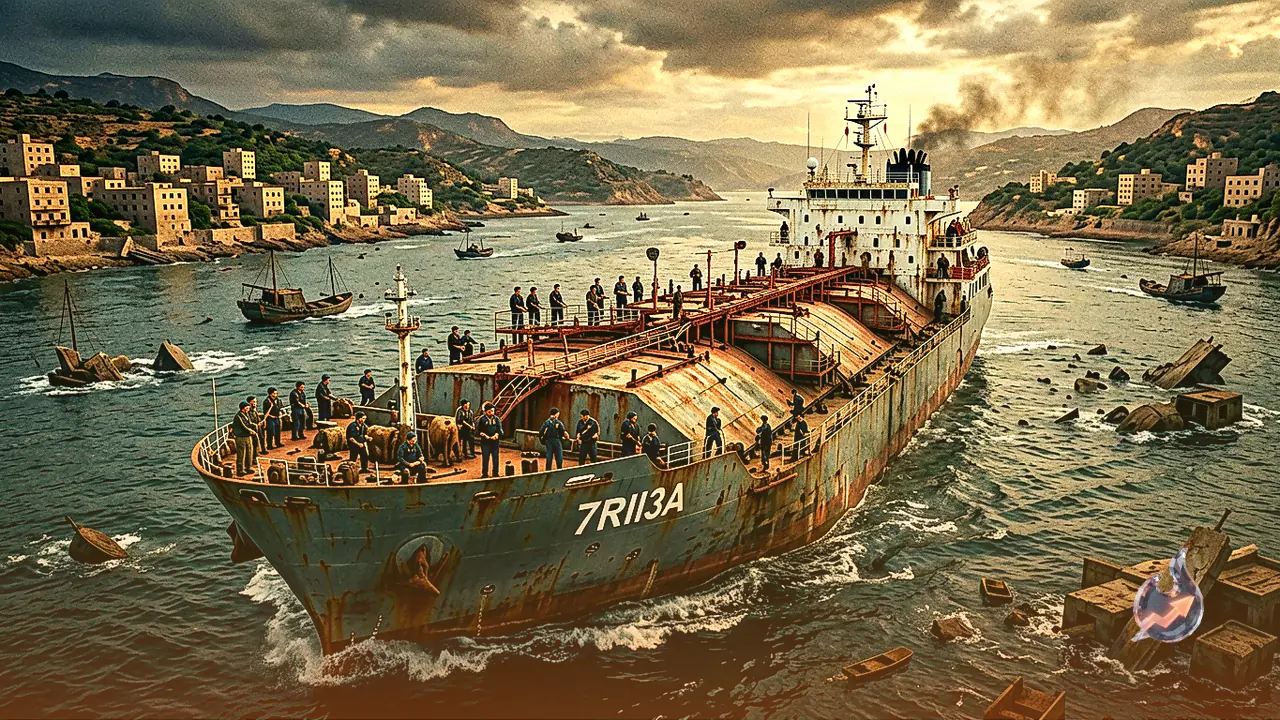

The escalation of conflict between Iran and Israel has turned critical maritime routes in the Middle East into high-risk zones for commercial shipping. Captain Raman Kapoor, an Indian oil tanker master who spent 75 terrifying days trapped in the Strait of Hormuz, has shared the intense mental toll and daily hazards faced by civilian mariners in active war theatres. Commanding a vessel loaded with 1,100,000 metric tons (MT) of crude cargo alongside a 23-member crew, Captain Kapoor navigated constant missile strikes, nearby explosions, and severe operational pressures before securing a safe return to India. He is now calling for urgent international policy reforms to safeguard merchant navy crews.
War Breakdown Conveyed by Local Iraqi Port Pilot
The outbreak of full-scale hostilies caught the vessel unprepared for immediate departure. Captain Kapoor learned of the war not through official corporate circulars or administrative communications, but from a local pilot at an Iraqi port while cargo operations were finalizing. Shortly afterward, port authorities issued strict orders directing the tanker to vacate its berth immediately, proceed to a designated safe anchorage, and wait for further instructions without advancing. Recognizing the gravity of the situation, Captain Kapoor summoned all 23 crew members to the bridge to disclose the situation transparently. The crew comprised diverse age groups, ranging from a 21-year-old junior seafarer to a seasoned bosun with 30 years of maritime experience.
Daily Safety Briefings and Missile Evacuation Drills
Despite being immobilized in an active conflict zone, essential shipboard maintenance and safety protocols continued without pause to maintain operational readiness and manage psychological stress. Every morning at 8:00 AM, the captain conducted mandatory safety briefings to review emergency procedures. In the afternoons, the crew performed simulated missile attack responses and abandon-ship mock drills. Daily inspections of emergency power generators, fire control systems, and damage containment equipment were strictly enforced to ensure immediate response capability in the event of a direct hit.
Explosion Within 1 Mile Shakes the Vessel
The terror confronting the crew became starkly visible during an evening meal. A massive explosion detonated less than 1 mile from the vessel, illuminating the port side with a brilliant flash and sending violent shockwaves through the hull. Coffee cups were thrown from tables, and structural vibrations reverberated throughout the accommodation block. Following that incident, the heavy silence that settled between successive explosions became a constant source of psychological anxiety for everyone on board.
36-Hour Ship-to-Ship Cargo Transfer Under Threat
Operational tension peaked when the shipping company ordered a Ship-to-Ship (STS) cargo transfer inside the war zone. The crew initially resisted the directive, citing a recent missile attack on another vessel engaged in a similar transfer nearby. After receiving explicit assurances of naval patrols, security boat escorts, and war zone risk bonuses, the crew executed the STS transfer over a grueling 36-hour period. Throughout the operation, watchkeepers scanned the sky every 15 minutes for approaching projectiles. Extended isolation, separation from families, and uncertainty surrounding crew relief brought several seafarers close to resignation and open mutiny.
Relief Arrives on May 12 with May 14 Sign-Off
Relief finally materialized on May 12 when official confirmation arrived regarding Captain Kapoor's replacement. On May 14, after 75 days of continuous exposure to war zone hazards, Captain Kapoor signed off the vessel safely. However, thousands of commercial seafarers remain stranded in high-risk maritime corridors across the globe, continuing to transport essential commodities under direct threat.
Demands Submitted to International Maritime Organization
Following his return, Captain Kapoor emphasized the stark contrast between public perception and the reality of commercial shipping. He highlighted that over 90 percent of global trade relies on unarmed merchant mariners who receive minimal public recognition until casualties occur. Captain Kapoor urged the International Maritime Organization (IMO) and global bodies to establish guaranteed safe corridors in conflict zones. Furthermore, he demanded that seafarers be granted the legal right to refuse sailing into active war zones without risking termination of employment, stating that seafarers require enforceable rights and physical safety rather than mere expressions of sympathy.