



















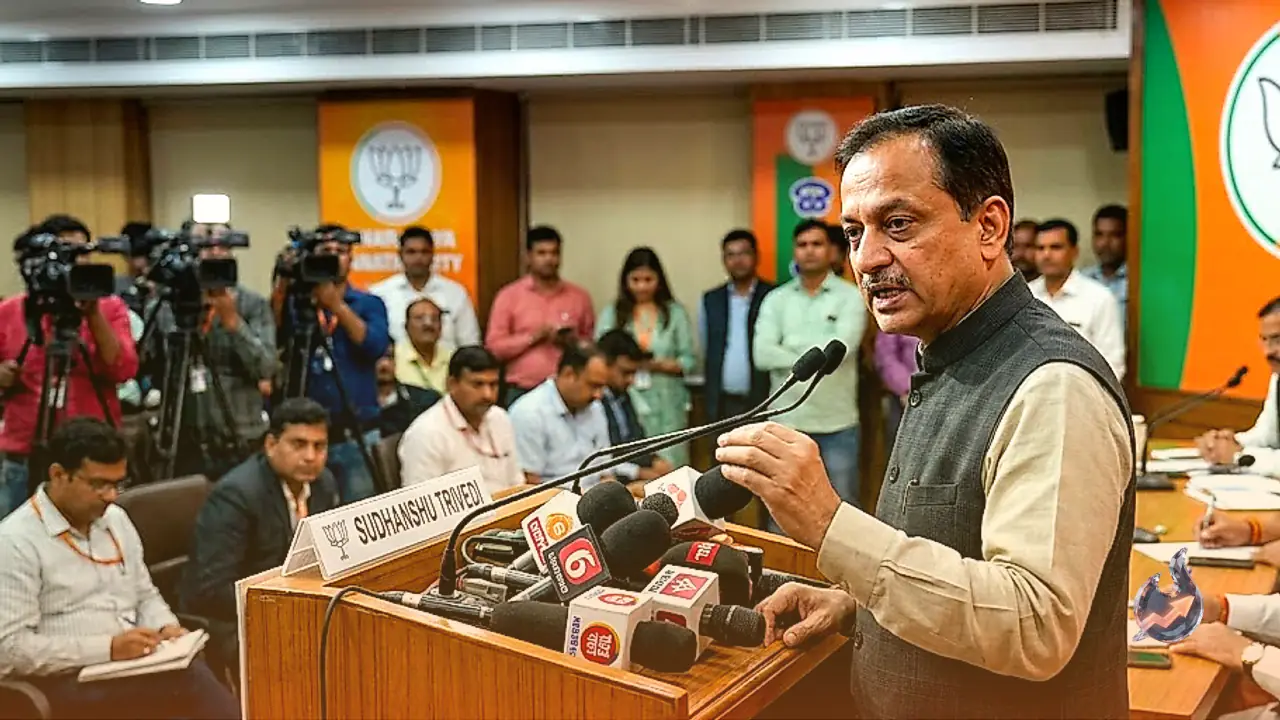

Addressing reporters at the Bharatiya Janata Party headquarters in New Delhi, national spokesperson and Rajya Sabha Member of Parliament Dr. Sudhanshu Trivedi launched an extensive critique against the Indian National Congress and allied opposition groups. He stated that recurring electoral setbacks have driven the primary opposition party to rely on baseless rhetoric and misleading claims. Trivedi remarked that the leading family of the Congress party, which maintained political control across four generations, is now attempting to create unnecessary controversies around democratic institutions. He urged citizens to closely examine the public statements made by Rahul Gandhi and other key party functionaries over recent years.
Detailed Accounting of the 13 Crore Voter Revisions
Responding directly to the allegation that 13 crore voters were improperly removed during the Special Intensive Revision or SIR process, Trivedi presented a breakdown of the underlying administrative records. He explained that within the 13 crore entries referenced by opposition leaders, 2.8 crore individuals are deceased. Furthermore, 6.3 crore voters have permanently shifted away from their previously registered locations, 1 crore listings represent duplicate entries of the same voter across rolls, and 3 crore individuals were marked as absent during field verification.
The spokesperson noted that the verification system includes clear remedies, ensuring that any genuine resident holding an Aadhaar card or valid documentation can step forward and restore their registration. He directly challenged Rahul Gandhi and the Congress party to explain how non-existent entries, deceased persons, and duplicate records could legitimately be defended as active democratic rights.
Historical Contradictions on Voter Duplication
Trivedi highlighted that prominent Congress figures had themselves previously raised persistent alarms regarding duplicate names in electoral records. Senior leaders including Abhishek Manu Singhvi, Ashok Gehlot, Sachin Pilot, and K.C. Venugopal repeatedly drew attention to instances where single individuals appeared multiple times across different constituency lists. Rahul Gandhi had likewise pointed out the issue of voter duplication on multiple public occasions.
Holding up these earlier stances, the BJP spokesperson questioned whether Congress was speaking the truth in 2016, 2018, 2020, and 2021 when its leaders demanded the purging of duplicate voters, or whether their current protest against administrative cleanups reflects their true position. He argued that the opposition shifts its narrative purely out of political convenience rather than institutional principle.
Criticism Over Attacks on National Institutions
Drawing an analogy to the television quiz format of Kaun Banega Crorepati, Trivedi suggested that a nationwide contest could well be created to count every domestic institution that the Congress party has criticized. He listed key bodies that had faced scrutiny from the opposition, ranging from the Indian Army and the Indian Air Force to the broader defense establishment. He emphasized that financial and commercial enterprises like the Life Insurance Corporation of India or LIC, Hindustan Aeronautics Limited or HAL, the State Bank of India or SBI, the Securities and Exchange Board of India or SEBI, and domestically manufactured healthcare vaccines had all been targeted with unsubstantiated allegations.
He noted that neither the Indian judiciary nor the mainstream domestic media had been spared from skepticism. Trivedi argued that attacking the integrity of established national bodies has become a default strategic habit for the Congress party whenever administrative outcomes or regulatory findings fail to serve its immediate political interests.
Parallels with Ration Card and MGNREGA Cleanups
The spokesperson maintained that systematic verification of official lists is a routine and necessary administrative duty in India, conducted specifically to ensure that state entitlements reach genuine beneficiaries. He cited historical welfare reforms, pointing out that after the current government assumed power, thorough inspections of public distribution records resulted in the cancellation of 5.8 crore fake ration cards registered under non-existent identities.
Similarly, following comprehensive verifications carried out after 2019 under the Mahatma Gandhi National Rural Employment Guarantee Act, authorities detected and removed 4.45 crore fake job cards belonging to individuals who did not exist yet were drawing official wage payouts. Trivedi contended that those who previously exploited welfare channels through fictitious identities are now attempting to leverage deceased and duplicate entries within the voter lists to distort the democratic framework.
Historical Context and Ground Campaign Commitments
Examining past electoral records, Trivedi pointed out that the preceding nationwide SIR exercise took place in 2003. He questioned the governing footprint of the Congress party prior to that date, stating that the party had already permanently lost power across states that collectively accounted for 228 Lok Sabha parliamentary seats well before the 2003 revision occurred. He added that this severe political decline was already established before Rahul Gandhi entered active electoral politics.
Concluding his remarks, Trivedi raised questions about Rahul Gandhi's personal dedication to state-level assembly campaigns. While leaders like Home Minister Amit Shah spend up to 25 continuous days in election states such as West Bengal overseeing local ground operations, the Congress leader rarely dedicates sustained campaign time. Trivedi called upon the Congress party to cite any assembly election since 2004 where Rahul Gandhi remained stationed within a single contesting state for a full ten days, a week, or consecutive periods of ten to fourteen days.