






















Persistent odors lingering inside reusable water bottles despite washing them thoroughly with soap do not necessarily mean it is time to discard them. In most situations, these unpleasant smells arise from trapped moisture, tiny water residues left behind, or grime caught inside the rubber seal of the lid. Daily use combined with keeping bottles tightly capped for prolonged stretches often aggravates this problem. Fortunately, routine kitchen staples can restore freshness without requiring harsh commercial cleaners or costly replacements.
Why Water Bottles Develop Persistent Odors
Rinsing a bottle with plain water and immediately refilling it frequently leaves a film of residual moisture inside. Whenever a container remains sealed shut over extended intervals, this damp environment acts as a breeding ground for stale odors. Often, the core issue is not even the bottle's main body, but rather the hard-to-reach crevices in the lid and the surrounding rubber gasket. Consequently, even when the container appears spotless from the outside, an unpleasant smell greets the drinker. Plastic containers are particularly susceptible to absorbing and holding onto these odors over time.
The Salt, Vinegar, and Rice Deep-Cleaning Method
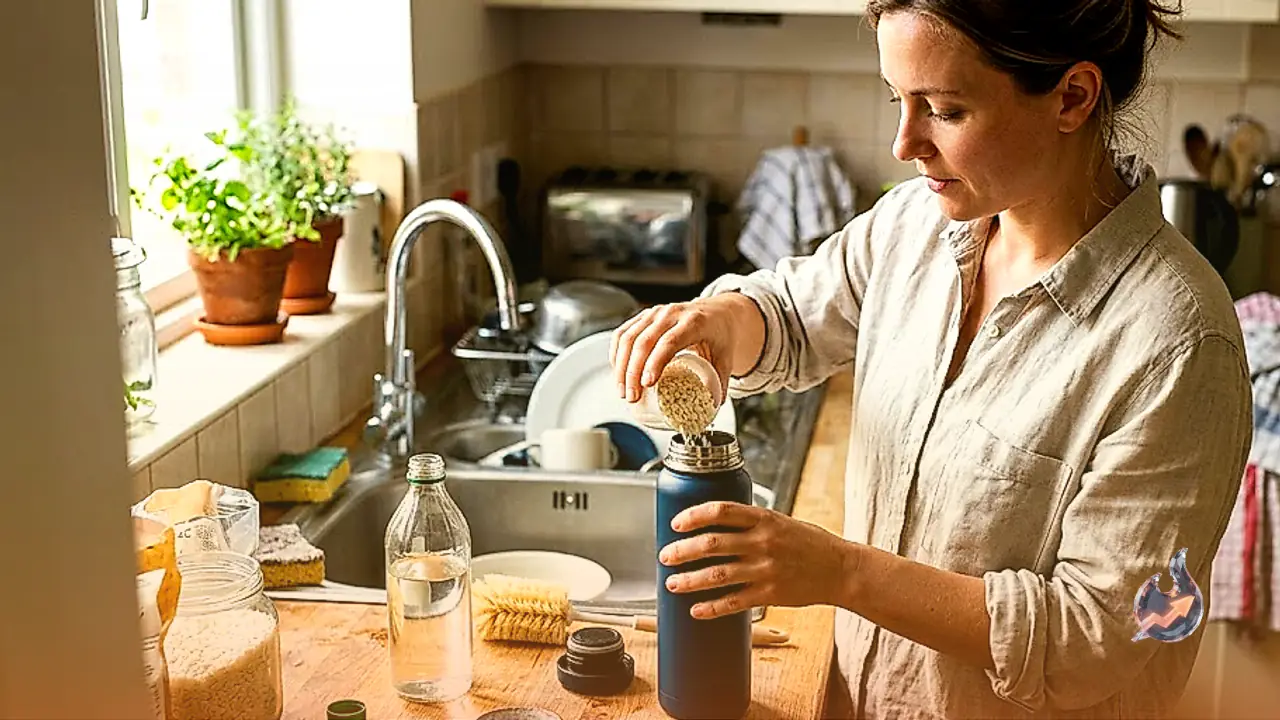
This straightforward household approach requires just one spoonful of salt, one spoonful of vinegar, one spoonful of uncooked raw rice, and a small splash of water. Begin by emptying the bottle completely, then add the salt, vinegar, and rice directly inside. Pour in just enough water to allow movement, ensuring the bottle is not filled to the brim. Fasten the cap securely and shake the container vigorously for a brief period.
The mechanics of this blend make it remarkably practical. Uncooked grains of rice act as gentle, abrasive scrubbers against the internal walls, dislodging any stubborn grime or film clinging inside. Meanwhile, vinegar provides natural acidity to break down residues, and salt adds supplemental friction to accelerate the cleaning process. After shaking thoroughly, allow the mixture to sit undisturbed for a few minutes so the acidic components can work on the residue.
Rinsing Steps and Servicing the Bottle Lid
Once a few minutes have elapsed, uncap the bottle and empty the contents completely. Rinse the container thoroughly using clean, fresh water. If any hint of vinegar scent remains, rinsing the bottle two or three additional times will clear it out completely. Paying attention to the cap, rubber seal, and smaller contours is just as vital as cleaning the main cylinder. Moisture and organic film regularly settle into these tight spaces, which leads directly to bad odors if neglected.
Preventive Habits for Long-Term Freshness
Avoiding bad smells in the first place requires simple daily habits. Never leave water sitting inside a capped bottle for several continuous days. After daily use, empty the container, wash it promptly, and let it air dry completely before capping it again. Removing the cap and drying both parts separately ensures no trapped dampness remains.
Nevertheless, if stubborn odors persist despite repeated cleaning, if visible mold appears on the surface, or if an older bottle has developed heavy interior scratches, relying solely on home remedies is not recommended. Under those circumstances, replacing the bottle is the safest course of action, as hygiene should never be compromised when it comes to daily drinking water.