























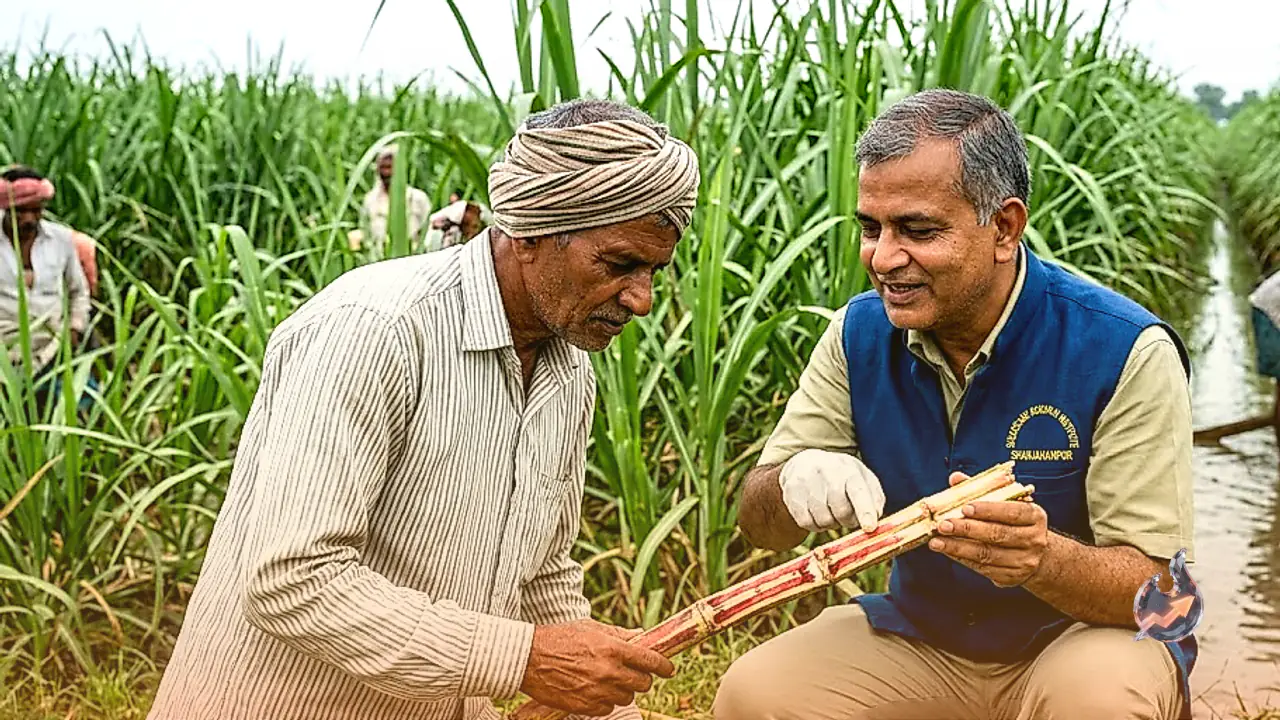

As the monsoon rains set in, sugarcane growers face a critical threat in the form of red rot, a devastating fungal disease capable of wiping out entire standing crops. Agricultural experts at the Sugarcane Research Institute in Shahjahanpur have advised farmers to implement immediate preventive measures, particularly when neighboring plots show signs of infection. Dr. Sanjeev Kumar Pathak, Extension Officer at the institute, emphasized that flowing rainwater acts as a primary vector for transferring the pathogen between fields. Left unchecked, red rot causes sugarcane stalks to dry out completely, making early symptom identification and prompt field management essential for saving crops.
Identifying Early Symptoms on Sugarcane Foliage
Although the initial fungal infection often takes hold shortly after sowing during March or April, clear physical manifestations become prominent only with the arrival of monsoon moisture. As environmental humidity rises, the foliage exhibits early warning signs. The infection strikes the third and fourth leaves of the sugarcane canopy first, which are considered the plant's primary active leaves. The margins of these leaves begin to dry and turn brown, gradually causing the entire top crown to wither. Regular field inspections allow farmers to spot these subtle leaf discolorations before the disease spreads extensively across the field.
Internal Stalk Inspection and Definitive Symptoms
To confirm the presence of red rot beyond visual leaf observations, farmers must inspect the internal structure of suspicious sugarcane stalks. Splitting an infected cane longitudinally reveals a distinct reddening of the internal pulp or pith. Within this red tissue, characteristic white transverse spots or bands appear horizontally across the stalk. This combination of red pulp and white cross bands is the definitive diagnostic marker of red rot infection. The fungal attack disrupts the plant's vascular system, blocking water and nutrient transportation and ultimately leading to the rapid desiccation of the entire stalk.
Proper Disposal of Infected Plants and Soil Sanitization
Even if only one or two sugarcane plants display red rot symptoms, immediate containment is necessary to prevent an outbreak. Farmers should uproot the entire infected clump along with its roots without delay. The removed plants must be carried far away from the cultivation area and thoroughly destroyed by burning or deep burial. To sanitize the soil at the uprooting site, farmers should apply 10 to 20 grams of bleaching powder into the exposed hole before covering it with fresh soil. This step neutralizes lingering soil pathogens and shields surrounding healthy root systems.
Field Bunding and Surface Water Management
Red rot spores spread rapidly across fields through surface water runoff during heavy rainfall. If an adjacent field harbors the disease, contaminated water flowing into surrounding plots can swiftly infect healthy sugarcane stands. To block this pathway, establishing robust earthen bunds around all four perimeters of the field is crucial. Effective bunding prevents external runoff from entering the farm while containing internal field water, thereby safeguarding both the individual farmer's investment and nearby agricultural properties from widespread crop loss.
Biological Soil Treatment Using Trichoderma
Long term crop protection relies heavily on biological soil management to suppress fungal pathogens naturally. Incorporating 5 kilograms of Trichoderma per acre into the soil during the monsoon season offers an effective defense mechanism. Trichoderma is a beneficial fungus that actively feeds on and eliminates harmful soil-borne pathogens responsible for red rot. Applying Trichoderma when soil moisture is high allows the beneficial microbes to colonize the root zone rapidly, stopping soil infection and maintaining healthy sugarcane growth throughout the rainy period.