
















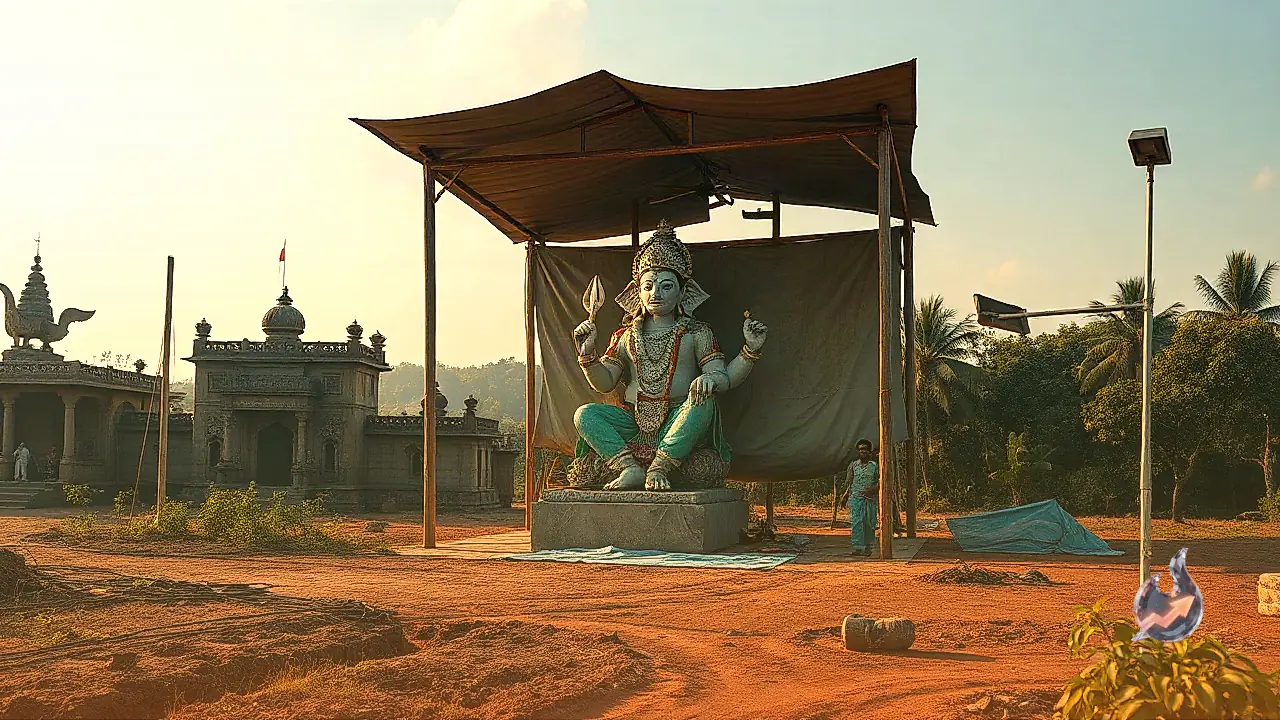

While grandiose ancient sculptures across southern India are typically preserved within the sacred sanctums of monumental stone temples, a remarkably rare historical monolith in Telangana stands right in the middle of agricultural fields under a humble tin structure. Known locally as the Aishwarya Ganapathi, this colossal depiction of Lord Ganesha is situated in Avancha village within the Thimmajipeta mandal of Nagarkurnool district. Archaeologically, it ranks among the largest single-stone Ganesha carvings surviving anywhere in India, drawing both devout pilgrims and heritage enthusiasts to this quiet rural setting.
Single Granite Boulder and Distinct Relief Architecture
The defining technical aspect of this monolithic deity is that it was fashioned entirely without structural joints or assembled blocks. Ancient sculptors carved the sacred form directly from a single gargantuan mass of natural granite rooted in the ground. Rising from the ground, the monument measures approximately 30 feet in height and extends across a width of about 15 feet. Artistically, the work adheres to classical high-relief craftsmanship. Seen from the front, the divine iconography of Lord Ganesha projects boldly and distinctly from the stone, whereas the reverse side remains completely unworked, preserving the raw natural texture of the underlying granite ridge.
Twelfth-Century Chalukyan Origins and Unfinished Legacy
Historical epigraphs and scholarly records establish that this monolithic carving dates back to the dawn of the twelfth century, precisely around 1113 AD during the reign of the Western Chalukya dynasty. During this era, Tailapa, the son of the prominent Kalyani Chalukya emperor Vikramaditya-VI, designated the Avancha region as his seat of provincial administration. Under his governance, royal sculptors embarked on the ambitious task of shaping the colossal boulder into an imposing sacred image. Historical accounts indicate that sudden regional warfare or political upheaval halted construction work before completion, leaving the monumental figure visibly unfinished to this day.
Community Devotion and Untapped Heritage Potential
A deep reservoir of religious faith surrounds Aishwarya Ganapathi among local villagers. Regional tradition holds that paying homage to this colossal deity brings lasting peace, spiritual contentment, and material prosperity into the lives of worshipers. Footfall swells considerably during the festival of Ganeshotsav as well as monthly Sankashti Chaturthi observances, when devotees assemble from surrounding areas. Despite spanning nearly 900 years of antiquity and possessing immense archaeological value, the site spent centuries awaiting formal institutional conservation. To guard the weathered stone against harsh summer sunlight and heavy monsoon downpours, local residents pooled their own resources to erect a functional protective roof overhead.
Geographically, this historic relic lies roughly 80 to 85 kilometres away from the bustling capital city of Hyderabad and merely 12 kilometres from the town of Jadcherla. Cultural advocates and neighborhood residents maintain that proactive intervention by state tourism authorities and the archaeology department could readily transform this overlooked medieval sculpture into a prominent national monument and a thriving destination for heritage travel.