





















Earthquake tremors were recorded across two distinct regions in India on Saturday, October 10. While the western district of Bharuch in Gujarat shook during the late hours of the night, Meghalaya in the northeast witnessed ground shaking early in the morning. Both domestic events remained at lower intensities, sparing the areas from severe destruction. Simultaneously, a far more violent seismic crisis unfolded in Central America, where Panama was jolted by a high-intensity quake that damaged civic infrastructure.
Early Morning Tremors in Meghalaya's Eastern West Khasi Hills
Residents across Eastern West Khasi Hills in Meghalaya experienced sudden underground shaking early Saturday morning. The event took place at 6:33:33 AM, catching many households just as they were waking up. Startled by the sudden vibration, several residents rushed out of their houses into open clearings to ensure safety.
Seismic records indicate that the disturbance measured a magnitude of 2.7 on the Richter scale. The hypocenter was located at a shallow depth of roughly 5 kilometers beneath the surface. Because the overall energy released remained quite low, authorities confirmed that no structural collapses or casualties occurred across the affected district.
Midnight Tremor Recorded Near Bharuch in Gujarat
A few hours prior to the shaking in Meghalaya, seismic activity disturbed sleep in Gujarat. At 2:07:56 AM on Saturday, October 10, tremors ran through Bharuch. The unexpected vibrations woke up residents in the middle of the night, prompting brief moments of panic inside residential neighborhoods.
The tremor registered a magnitude of 3.1, with its seismic focus placed at a depth of around 10 kilometers beneath the ground. The epicenter was pinpointed within the Bharuch area, roughly 54 kilometers northeast of Surat. Because the magnitude stayed within mild boundaries, no loss of life or structural damage was reported from Gujarat either.
Violent 7.7 Magnitude Quake Causes Widespread Damage in Panama
Contrasting with the minor activity in India, the Central American country of Panama endured a severe tectonic shock on October 9. The region was rocked by a massive 7.7 magnitude earthquake, triggering extensive panic. This severe tremor was subsequently followed by a major 6.6 magnitude shock alongside numerous successive aftershocks.
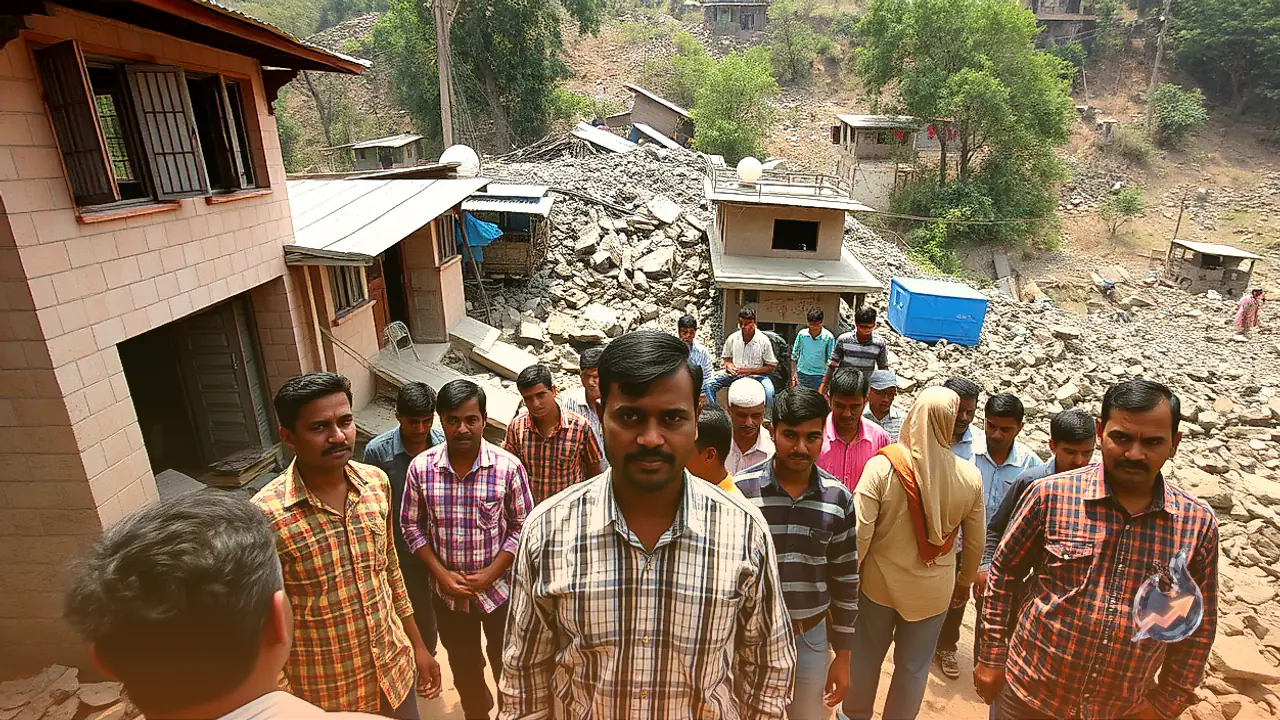
The immense ground motion forced masses of people out of shaking structures into city streets. The shocks caused observable structural damage to various buildings and opened up cracks across roadway networks. Power distribution networks were disrupted across several sectors. While initial findings indicated no mass fatalities, several injuries were confirmed among the populace. Emergency monitors initially activated a tsunami warning following the primary shock, which was subsequently withdrawn after risk evaluations.