























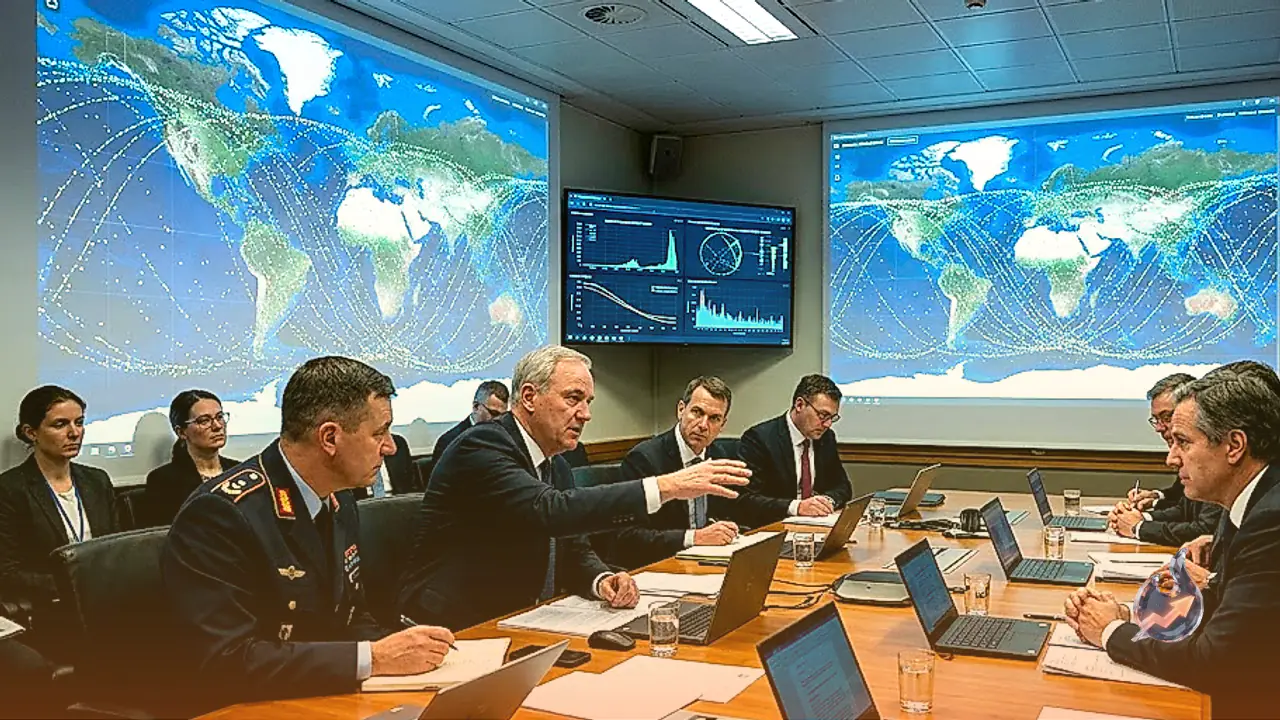

In an increasingly interconnected digital ecosystem, reliable communications infrastructure serves as the fundamental backbone of national security and economic sovereignty. When critical communications networks become dependent on decisions made by foreign private entities, nations face complex strategic trade-offs. An analysis by the Takshashila Institution has highlighted the potential security risks and strategic dependencies associated with Starlink's satellite internet infrastructure, noting how centralized foreign control can influence national decision-making during crisis situations.
Orbital Dominance and Concentrated Governance Structure
Starlink has established itself as the largest satellite constellation in history, operating more than 10,000 active satellites in low Earth orbit. This constellation accounts for roughly two-thirds of all operational satellites currently encircling the planet, with long-term blueprints aiming to deploy up to 42,000 orbital units. The rapid cadence of Falcon launches by SpaceX enables the deployment of thousands of additional spacecraft each year.
Following the February 2026 merger between SpaceX and AI venture xAI, the combined entity achieved an estimated market valuation of $1.25 trillion. Despite holding an equity stake of approximately 42 to 43 percent, Elon Musk commands 79 percent of the total voting rights due to a specialized dual-class share structure. Consequently, operational policies, network priorities, and geographic access decisions for Starlink remain concentrated under a single individual's direct oversight.
Connectivity Control and Strategic Vulnerabilities
The primary strategic concern identified in the Takshashila report centers on the unilateral ability to enable or disable satellite communications. Such capabilities restrict a government's authority over domestic telecommunications continuity during emergencies. In scenarios involving external conflict or severe natural disasters where uninterrupted connectivity is essential, a private provider retains the technical means to restrict access. Conversely, when internal stability requires localized communication suspensions, satellite signals can bypass local regulatory directives.
This operational dynamic is further shaped by SpaceX's deep integration with the United States defense and governance apparatus. Musk has held significant political influence within the Washington establishment, serving as a close associate of President Donald Trump and leading the Department of Government Efficiency. Critical defense operations, Space Force programs, and NASA lunar exploration initiatives rely extensively on SpaceX launch infrastructure.
Simultaneously, SpaceX remains subject to United States regulatory jurisdictions, federal licensing, and government contracting rules. If broader foreign policy interests diverge, regulatory pressure could be exerted on network operations or data handling protocols, reinforcing the reality that foreign-based mega-constellations operate under the legal framework of their home jurisdiction.
Precedents from the Conflicts in Ukraine and Iran
Global events over recent years illustrate how satellite internet access can alter tactical realities. Following the escalation of hostilities with Russia in February 2022, Ukrainian forces relied heavily on Starlink for battlefield communications and operational coordination. However, access was subsequently restricted during specific military plans, such as a request to activate coverage near Crimea for naval operations, which was declined by company management.
By March 2025, Musk publicly stated on social media that Starlink formed the backbone of the Ukrainian military front, asserting that disabling the network could cause frontline operations to collapse rapidly. This episode demonstrated how private operational decisions can directly affect sovereign military engagements.
The situation in Iran presented the inverse dynamic. In early 2026, approximately 50,000 Starlink terminals were smuggled into Iran. Amid nationwide protests and domestic internet shutdowns, satellite signals over the country were deliberately activated. The International Telecommunication Union acknowledged that while Starlink possessed the technical capability to shut off the smuggled terminals, the company chose to keep transmission active.
Security Discoveries in Manipur and the Andaman Islands
The operational implications of unauthorized satellite gear have already surfaced within India's borders. In December 2024, Indian security forces recovered Starlink hardware from an insurgent hideout in Manipur. While assurances had been given that satellite coverage beams over India were inactive, terminal spillover along the Myanmar border allowed the devices to function on the ground.
Similarly, law enforcement authorities in the Andaman and Nicobar Islands intercepted Starlink communication devices in the possession of narcotics traffickers. The presence of unmonitored satellite receivers in sensitive maritime and border corridors presents immediate challenges for border enforcement, intelligence agencies, and national regulatory oversight.