




















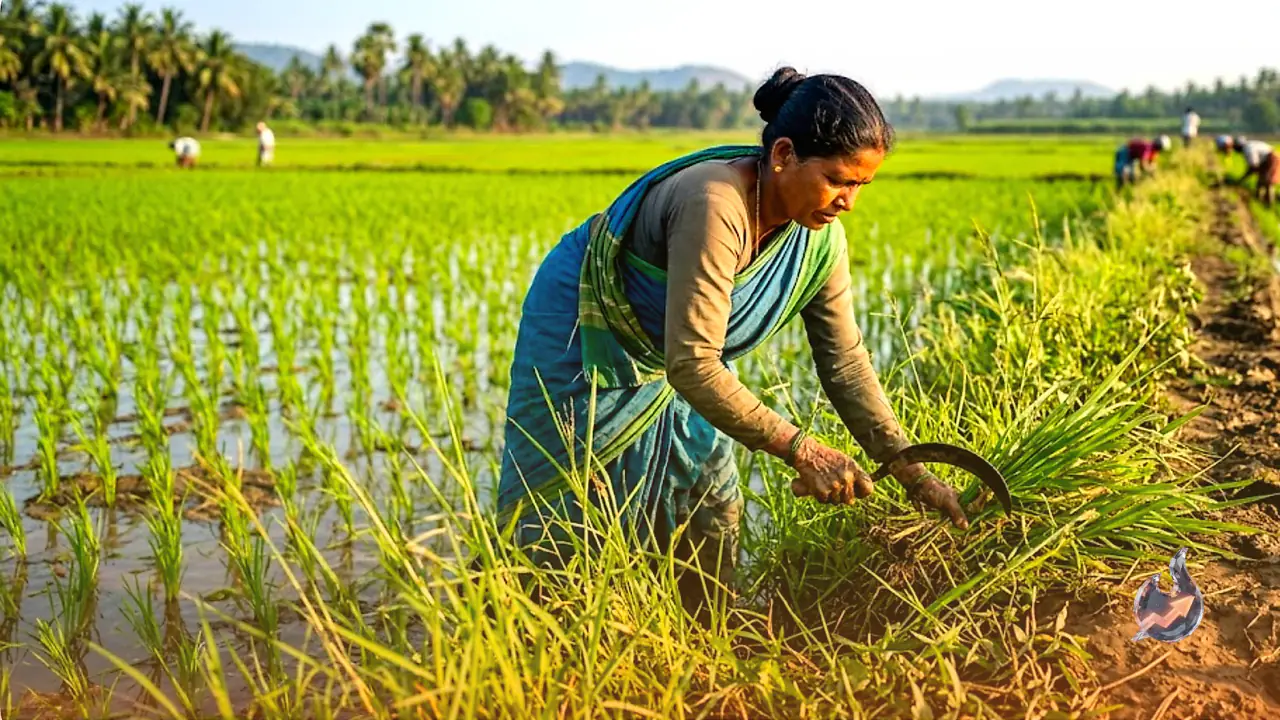

With the arrival of the Kharif season, farmers in Shahjahanpur are actively engaged in preparing their fields for rice transplanting. However, during this busy period, the wild weeds growing along the boundaries, or bunds, of the fields are frequently overlooked. According to agricultural experts who spoke to TrendKia, these boundary weeds do not just steal essential nutrients, sunlight, water, and air from the main crop. They also serve as a secure breeding ground and hiding spot for devastating pests and plant diseases. Eliminating these weeds at the very beginning is therefore a critical step toward ensuring robust crop protection.
A Breeding Ground for Pests and Diseases
Ranjodh Singh, an enterprising young farmer, told TrendKia that boundary weeds are the primary vector for pest infestations in the main field. Often, when farmers apply protective sprays to their main crop, insects temporarily migrate to the weeds on the bunds to survive. As soon as the chemical's effect fades, these pests return to ravage the newly transplanted paddy plants. Clearing the bunds before transplanting is essential to permanently disrupt this survival cycle.
Scientific Weed Management with Paraquat Dichloride 24% SL
Manually weeding or cutting tough boundary grass is both labor-intensive and highly expensive. As a modern, scientific alternative, the herbicide Paraquat Dichloride 24% SL has proven to be highly effective. This contact herbicide starts drying up weed leaves within a few hours of application. It allows farmers to control stubborn weeds effectively without causing any damage to the structural integrity of the bund soil.
Correct Dosage and Essential Safety Guidelines
While applying this chemical, farmers must adhere strictly to the recommended dosage. Dilute 200 ml of Paraquat Dichloride 24% SL in a standard 25-liter spray tank. The spraying should be done carefully and only on the boundary weeds. It is highly recommended to spray when the wind is completely calm to prevent the chemical from drifting onto other green crops. For personal safety, farmers must wear protective face masks and gloves during the entire application process.