


















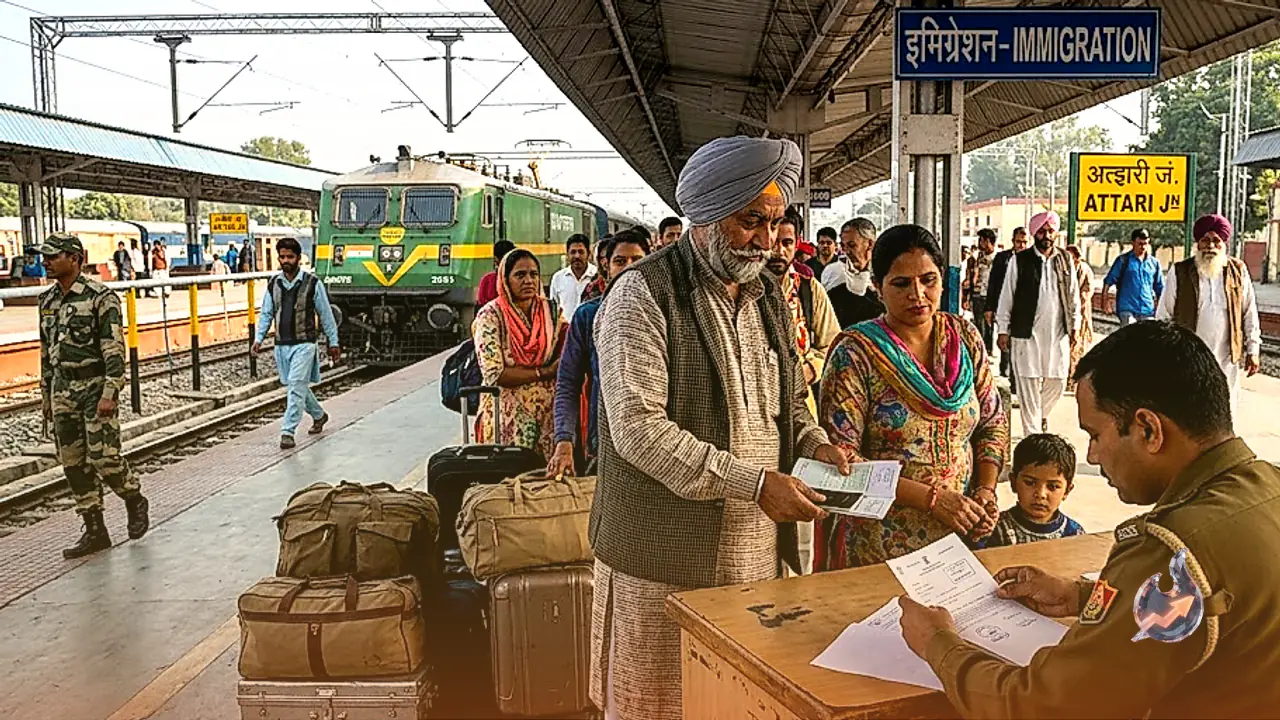

Situated in the Amritsar district of Punjab, very close to the international border separating India and Pakistan, Attari Railway Station holds a distinctive place in the country's transportation history. For decades, this facility operated under specialized protocols where traveling across the border required passengers to present valid passports and visas. Recognized widely as the final railway stop on the Indian side, the station served as the primary terrestrial transit gateway for cross-border rail travel between the two neighboring nations.
Border Rail Hub and International Clearance Protocols
During the period when cross-border trains were active, Attari Railway Station functioned much like an international border terminal or airport. Extensive security, customs, and immigration facilities were set up within the station complex to examine travelers before they could proceed. Passengers intending to travel from India to Pakistan, or those arriving in the reverse direction, had to undergo rigorous clearance procedures. Obtaining valid visa documentation and undergoing passport verification were mandatory requirements to fulfill all statutory immigration formalities prior to boarding.
A widespread misconception exists regarding these security measures, suggesting that anyone entering the physical precinct of Attari Railway Station was required to possess a passport and visa. However, historical records confirm that these strict documentation rules applied exclusively to travelers embarking on or disembarking from international train services. Domestic visitors, station personnel, and local commuters navigating the station grounds for domestic railway activities were not subjected to international visa regulations.
Origins of the Samjhauta Express and Historical Context
The operational necessity for these international clearance procedures emerged following a diplomatic agreement signed between India and Pakistan in 1976. This accord established the legendary Samjhauta Express, a specialized passenger train intended to build bilateral bridges between the citizens of both countries. The primary objective behind launching this service was to facilitate cultural exchanges, strengthen humanitarian ties, and enable family members separated by the 1947 partition to visit one another across the border.
The Samjhauta Express operated on a defined route connecting Attari on the Indian side to Wagah on the Pakistani side. Over the decades, thousands of passengers utilized this rail link to travel across the border, making Attari Railway Station a pivotal junction for international diplomacy and civilian transport.
Suspension of Rail Services Following the Pulwama Attack
The long-standing rail connection experienced a major disruption in February 2019. Following the Pulwama terror attack, security conditions deteriorated rapidly, leading to heightened military and diplomatic tensions between India and Pakistan. In light of these escalating security concerns, the operation of the Samjhauta Express was indefinitely suspended by authorities.
Since the suspension in February 2019, all international passenger train services through Attari Railway Station have remained completely shut down. The international immigration desks, specialized customs counters, and dedicated holding areas within the station facility have effectively remained inactive regarding cross-border passenger traffic.
Current Operational Status and Tourism at the Attari-Wagah Border
At present, Attari Railway Station remains fully under the administrative control and operational management of Indian Railways. The station continues to handle standard domestic rail requirements and regional infrastructure functions. However, international rail connections to Pakistan show no immediate signs of resumption, keeping the cross-border passenger facilities in a state of indefinite hiatus.
Despite the closure of international train operations, the surrounding area remains a major attraction for travelers. Located just a short distance from the railway station, the Attari-Wagah border checkpoint draws substantial crowds of both domestic and foreign tourists every evening. Visitors gather in large numbers to witness the famous 'Beating Retreat' ceremony conducted jointly by border security forces, preserving the historical and strategic prominence of this border region in Punjab.