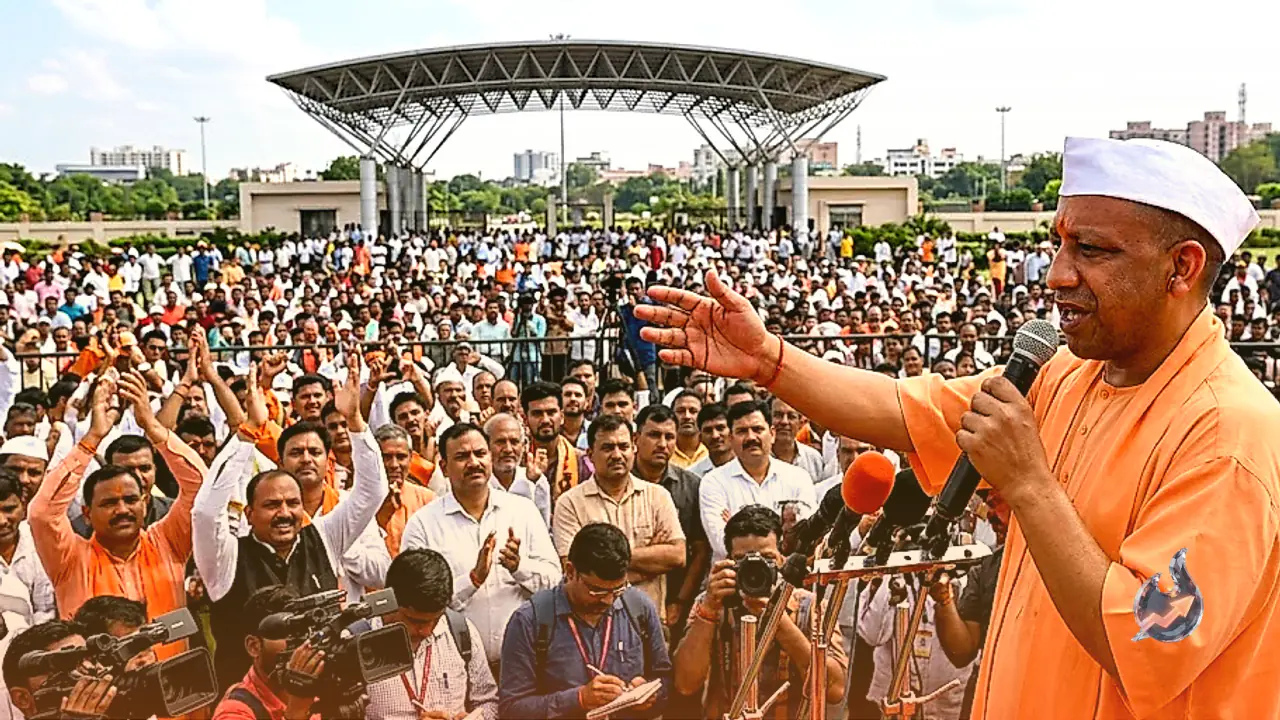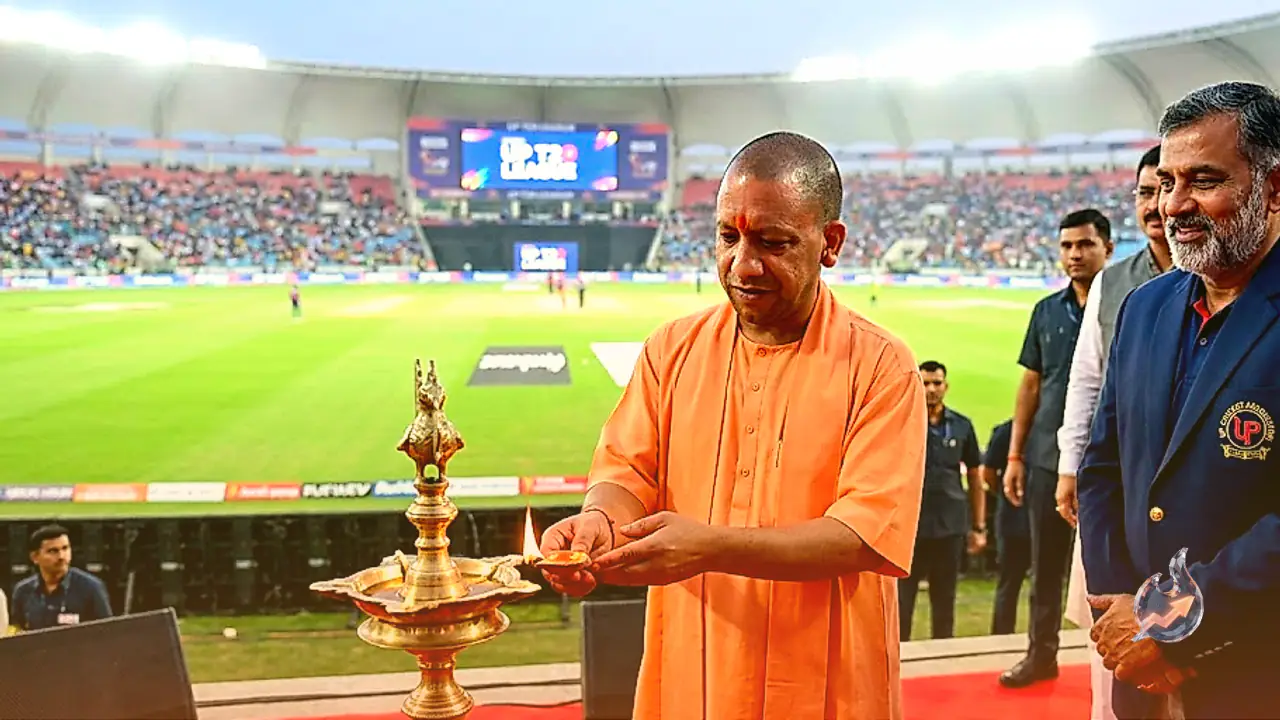



















Uttar Pradesh Chief Minister Yogi Adityanath has launched a fierce rhetorical offensive against the Samajwadi Party, accusing its members of historical land grabbing and neglecting the state's development. This political confrontation highlights the deepening ideological divide in the state as both parties clash over governance, property security, and cultural heritage. The ongoing dispute has now expanded into a larger debate over governance models and state policies.
The Accusation of Land Grabbing and Poor Governance
Chief Minister Yogi Adityanath expressed his views on the social media platform X, stating that development was never a part of the Samajwadi Party's agenda. According to him, the party's tenure was marked by lawlessness, where members would immediately occupy any vacant plot of land they saw. This statement targets the core of the opposition's historical reputation regarding law and order, suggesting that public and private properties were unsafe before the current administration took charge.
Clashes Over Ayodhya and the Ram Temple
The verbal war between the ruling party and the opposition has also intensified over religious and cultural sites. Yogi Adityanath asserted that both the Samajwadi Party and the Congress felt deep pain upon seeing the grand Ram Temple standing where the Babri structure once was. He declared that these opposition parties have absolutely no right to speak on matters concerning Ayodhya, given their historical stance on the dispute. This narrative aims to portray the opposition as culturally disconnected from the state's heritage.
Opposition Retaliation and Internal Conflicts
In response to the government's attacks, Samajwadi Party leaders have raised their own counterpoints. Samajwadi Party MP Virendra Singh from Chandauli criticized the Modi government's twelve years in power, raising serious questions regarding the implementation of the Skill Development Scheme and other initiatives under the PDA perspective. Meanwhile, the Samajwadi Party continues to struggle with internal factionalism. Disputes such as the ongoing friction between Ruchi Veera and ST Hasan show that internal unity remains a challenge for the main opposition party in Uttar Pradesh.
Broader Political and Financial Dynamics
The political sparring in Uttar Pradesh is part of a wider national debate on development and state finances. For instance, in Bihar, political leader Bijendra Yadav recently addressed concerns about public funds by stating that the treasury is not empty, noting that governments worldwide, from the United States to India, borrow from the World Bank to fund infrastructure. On the electoral front, the Bharatiya Janata Party has seen significant boosts, such as in Himachal Pradesh, where the Congress was completely wiped out in BJP President JP Nadda's home district of Bilaspur, failing to open its account as the BJP secured nine seats.
The Chief Minister's social media remarks triggered intense debates online. While many supporters praised the current administration for establishing strict law and order and stopping illegal land occupations, critics questioned the government's own record on issues like teacher recruitment, employment delays, and local governance.