



















Following the sudden directive from US President Donald Trump to scale back joint military exercises with South Korea, political and military circles in Seoul have witnessed a sharp surge in activity. South Korea has made it unequivocally clear that it will not allow its joint defense framework with America to be compromised, while simultaneously initiating work on fresh options to bolster its own military readiness.
The most significant shift in this unfolding scenario is that South Korea is now placing far greater emphasis on reducing its reliance on American military assistance and strengthening its indigenous defense power.
Military Exercises Continue Despite Reduced US Presence
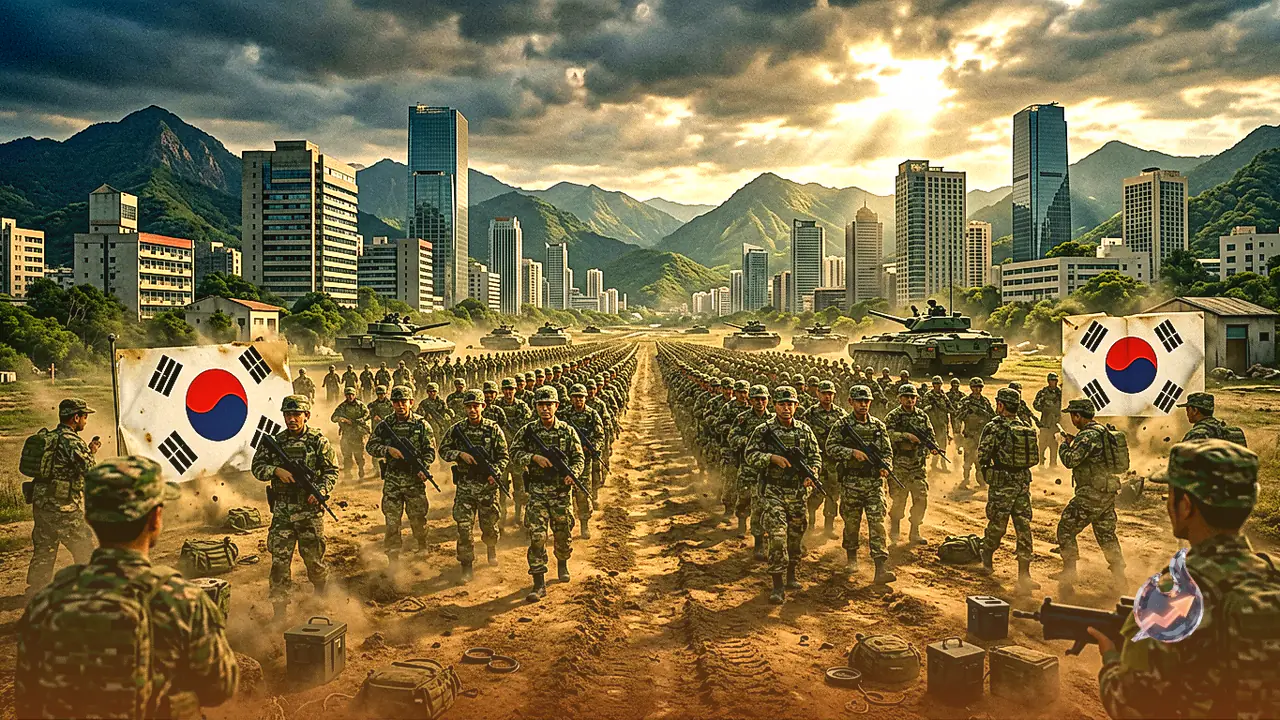
Even in the wake of Trump's directives, South Korea decided to move forward with the Ulchi Freedom Shield military exercise. South Korea deployed approximately 18,000 of its troops into the drills. Despite a noticeable drop in the participation of American service members, Seoul flatly refused to completely scrap its pre-scheduled program.
Furthermore, South Korea has maintained active coordination with military personnel from 11 different countries associated with the United Nations Command. The primary objective of this effort is to partially bridge the operational gap created by the reduced participation of US troops.
Preparing for Modern Warfare Challenges
The South Korean military may also alter its approach to conducting drills. Instead of large-scale field maneuvers, greater emphasis could be placed on smaller-scale field exercises, combat simulations inside command centers, and specialized training programs.
Preparing to counter modern warfare technologies such as drone attacks, cyberattacks, and the disruption of GPS signals forms a crucial part of these preparations. This sends a clear signal that despite diminished US participation, the South Korean military stands ready for any potential crisis.
Strengthening Independent Military Capability
The most consequential change in South Korea's long-term strategy following Trump's decision involves ramping up its own military strength. President Lee Jae-myung has been emphasizing the reinforcement of the nation's independent defense capacity. This directly implies that South Korea wishes to rely less on the US for its security in the future compared to past years.
Preparing to Take Command in Wartime
South Korea is actively considering another critical option: accelerating the process of taking over wartime Operational Control, commonly known as OPCON. Under the existing framework, a special command and control structure governs the interaction between US and South Korean forces during wartime situations.
Seoul wants South Korean generals to exercise more direct control over their troops during combat once specific conditions are fulfilled. This would ensure that if the US unexpectedly curtails any military exercise in the future, the impact on South Korea's military preparedness remains minimal.
Keeping an Eye on Trump-Kim Talks
Another major concern for South Korea involves potential talks between US President Donald Trump and North Korean leader Kim Jong Un. Seoul desires that if talks materialize between Washington and Pyongyang, Washington must not unilaterally decide on any major issue concerning South Korea's security.
South Korea is likely to emphasize that if the US offers any security concessions to North Korea, Pyongyang must take concrete reciprocal steps regarding its nuclear weapons and military capabilities.
Trump's decision is also widely attributed to Iran-related considerations. Trump had sought South Korea's assistance in the American campaign against Iran, but Seoul declined to participate.
South Korea is currently deliberating whether it can provide limited non-combat or maritime security assistance to ease tensions in its relationship with the US. However, Seoul wishes to avoid any step that would drag it directly into an Iran conflict or violate domestic laws.
What the Decision Taught Seoul
Trump's abrupt decision to cut back on military exercises delivered a stark message to South Korea. Seoul now recognizes that while the American security guarantee remains vital, depending entirely on the US carries substantial risks.
Consequently, South Korea aims to preserve its military alliance with the US while simultaneously advancing its missile power, defense spending, war readiness, and independent command capabilities. This dual strategy is set to become the ultimate test for the US-South Korea alliance in the times ahead.