



















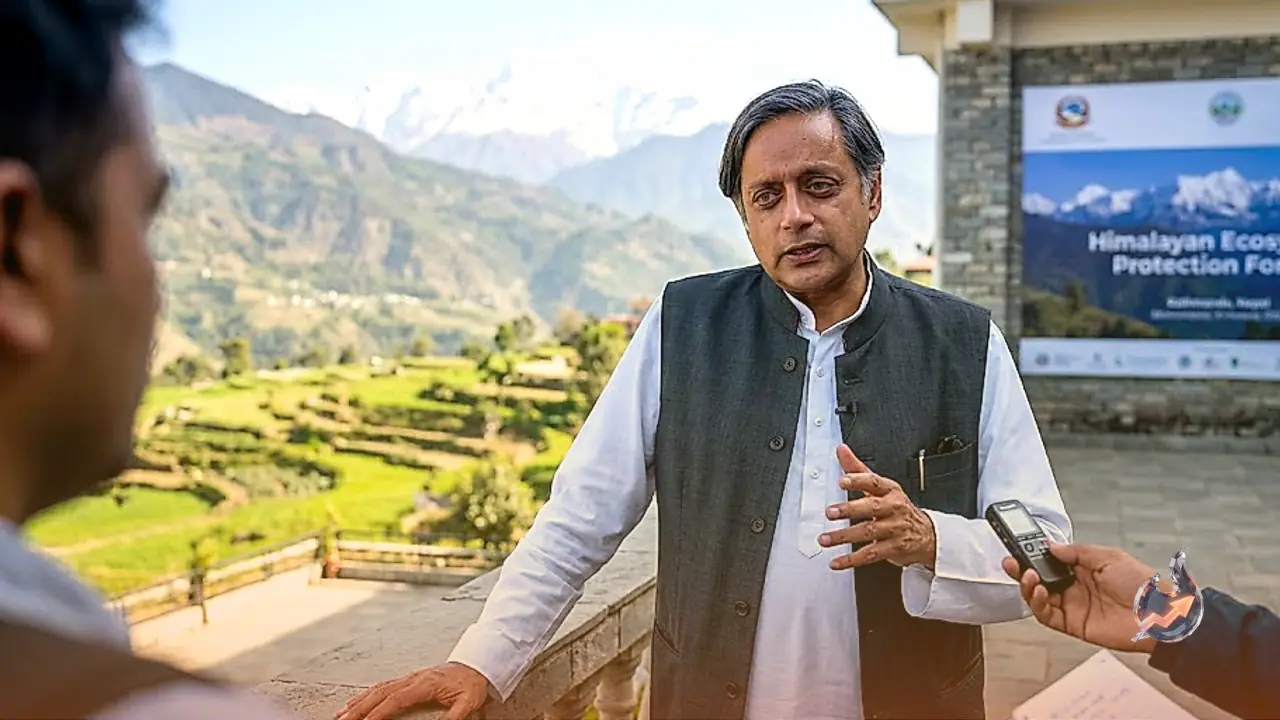

Shashi Tharoor has raised crucial concerns regarding the environmental sustainability of the Himalayan region, emphasizing the urgent necessity of cross-border environmental governance. Sharing key insights from his recent column titled TharoorThink in The Indian Express through his official account on X, he questioned whether India, China, and Nepal can establish a joint cooperative framework to manage their shared mountain ecosystem effectively. The central argument highlights how smaller vulnerable nations in the region are bearing an unequal and heavy burden of global climate change consequences without having contributed significantly to the problem.
Addressing Disproportionate Climate Impacts on Nepal
The core issue brought forward centers on the reality that Nepal is currently paying a steep price for global warming driven by external industrial activities. Rapidly melting glaciers, unpredictable monsoons, fragile slope stability, and frequent flash floods present growing existential risks to local communities in Nepal. Tharoor stressed that while major global polluters generate massive carbon emissions, smaller Himalayan nations absorb the environmental devastation. This growing ecological imbalance necessitates targeted support, climate justice, and structured cooperation from larger neighboring nations that share the same ecological boundaries.
The Need for Regional Ecological Cooperation
Effective preservation of the delicate Himalayan mountain ecosystem requires structured diplomatic and scientific coordination between India, China, and Nepal. Transboundary rivers, glacial lakes, and river basins interconnect these three nations naturally, meaning environmental degradation or sudden climate events in one territory directly impact downstream regions. Without a shared regulatory and monitoring body, uncoordinated infrastructure building, land usage, and deforestation risk magnifying disaster vulnerability. A joint cross-border mechanism could focus on sharing crucial hydrological data, managing glacial lake outburst flood hazards, standardizing environmental protection guidelines, and setting up joint disaster response protocols.
Public Reaction and Online Debate
The post triggered active discussion and varied reactions across social media platforms. Many observers welcomed the call for regional solidarity, emphasizing that natural rivers and climate phenomena pay no heed to geopolitical borders. Supporters suggested practical measures such as establishing unified mobile emergency warning systems across India, Nepal, and neighboring borders to alert citizens about approaching floods or landslides. Meanwhile, several users pointed to diplomatic friction and historical tensions, arguing that environmental responsibility must be balanced with geopolitical realism and that major global industrial powers must honor climate compensation commitments for vulnerable South Asian nations.