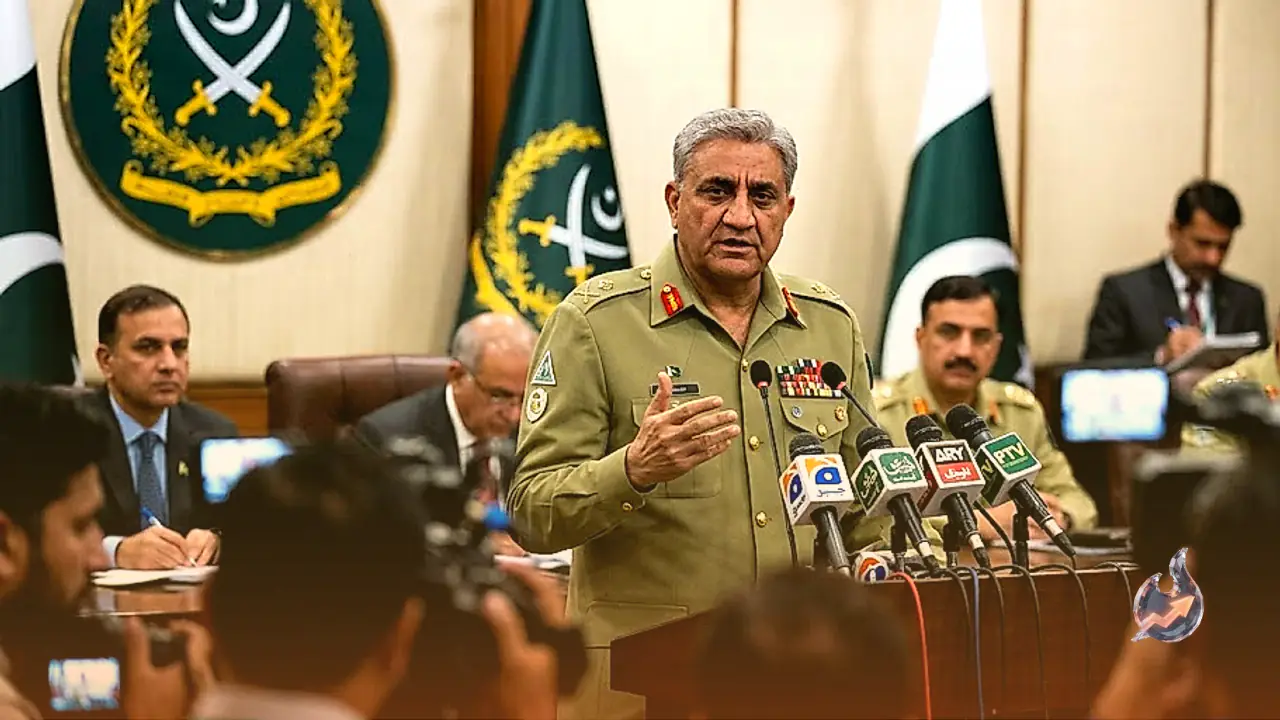





















Following the deadly terror attack in Pahalgam, Jammu and Kashmir, in April 2025, India has taken an uncompromising stance by completely suspending the 60-year-old Indus Waters Treaty with Pakistan. In the wake of this decisive move, Islamabad has been approaching various international forums, including the Permanent Court of Arbitration (PCA) in The Hague, seeking intervention. However, the Indian government has firmly declared that any interim rulings or orders passed by the Hague tribunal hold no validity against India's sovereign policies and are nothing more than meaningless pieces of paper. New Delhi has delivered a clear message to Islamabad that bilateral agreements and cross-border terrorism cannot coexist, reiterating that no treaty obligations will be reconsidered until Pakistan takes concrete, verifiable, and permanent action against terrorist networks on its soil.
The Hague Tribunal Order and India's Jurisdictional Boycott
Pakistan's Ministry of Foreign Affairs recently lodged a formal protest against India's refusal to comply with the directives of the Permanent Court of Arbitration based in the Netherlands. Islamabad maintains that the 1960 water-sharing agreement remains legally binding on both nations and asserts that no country has the right to unilaterally modify or suspend its provisions. The Court of Arbitration in The Hague ruled during its proceedings that the Indus Waters Treaty of 1960 should remain operational. Armed with this tribunal judgment, Pakistani officials have been raising complaints across multiple international platforms to put pressure on New Delhi.
In stark contrast, India has rejected the entire proceedings of the Hague tribunal, calling them fundamentally flawed and legally invalid from their inception. New Delhi deliberately chose not to participate in the hearings conducted by the Permanent Court of Arbitration in the Netherlands. India's core legal argument rests on the fact that the creation of this specific arbitral tribunal directly violates the original dispute resolution framework established under the 1960 treaty. Because the tribunal itself was constituted outside the agreed treaty rules, India maintains that its rulings, interim orders, and directives carry no legal standing over Indian national policy or sovereign water management decisions.
The Pahalgam Terror Attack and Security Rationale for Suspension
The suspension of the Indus Waters Treaty by India is not a routine diplomatic disagreement; rather, it is directly anchored in severe national security concerns triggered by cross-border terrorism. In April 2025, a brutal terrorist attack occurred in the Pahalgam region of Jammu and Kashmir. Pakistan-backed terrorists targeted innocent civilians, killing 26 people, the majority of whom were tourists visiting the Kashmir valley. The heinous massacre shocked the nation and prompted New Delhi to re-evaluate its strategic posture toward Islamabad.
Responding swiftly to the tragedy, the Indian government put the Indus Waters Treaty on hold. India established a firm diplomatic principle: the blood of innocent citizens and the peaceful sharing of river waters cannot flow together. New Delhi made it explicitly clear that until Pakistan permanently dismantles its state-sponsored terror infrastructure and demonstrates credible, verifiable steps to stop cross-border attacks, India will not honor or execute any obligations under the water agreement. National security and the protection of Indian lives remain the non-negotiable foundation of India's current policy.
Framework and Rights Under the 1960 Indus Waters Treaty
The Indus Waters Treaty was signed in 1960 following mediation by the World Bank to resolve water allocation between India and Pakistan after partition. Under the terms of the treaty, the waters of the six rivers comprising the Indus basin were divided between the two neighboring countries. India was granted full and exclusive rights over the eastern rivers, namely the Ravi, Beas, and Sutlej. India exercises complete control over the usage, storage, and diversion of these three rivers.
Conversely, the bulk of the water from the western rivers, which include the Indus, Jhelum, and Chenab, was allocated to Pakistan. However, the treaty explicitly granted India limited non-consumptive usage rights on these western rivers. Under these provisions, India is entitled to construct run-of-the-river hydroelectric power projects and store limited water for agricultural and domestic needs. Over the decades, Pakistan has repeatedly raised objections against India's legitimate power projects, bypassing the treaty's designated mechanisms to seek international arbitration. India's stance remains firm: Pakistan's violation of the original dispute mechanism invalidates its current appeals to third-party bodies.
Pakistan's Diplomatic Strain and Rejection of Third-Party Mediation
India's decision to suspend the treaty has triggered widespread panic in Islamabad over potential disruptions to its agricultural and drinking water supplies. In response, Pakistan has been aggressively trying to involve international institutions and third parties to force India back to the negotiating table. Islamabad raised the water dispute at various regional forums, including the Shanghai Cooperation Organisation (SCO).
Despite these efforts, Pakistan's diplomatic campaign has failed to yield results. India remains steadfast in its position that all issues between the two nations are strictly bilateral and that no third-party mediation or international interference will ever be accepted. Furthermore, while Pakistan claimed that its strategic partnership with China remained unaffected by evolving India-China relations, diplomatic reality told a different story. During the SCO summit in Bishkek, when Pakistani Prime Minister Shehbaz Sharif raised the Indus water issue, Chinese President Xi Jinping offered no response whatsoever, maintaining complete silence. This reaction highlighted Pakistan's increasing diplomatic isolation on the issue of cross-border terrorism and water rights.