






















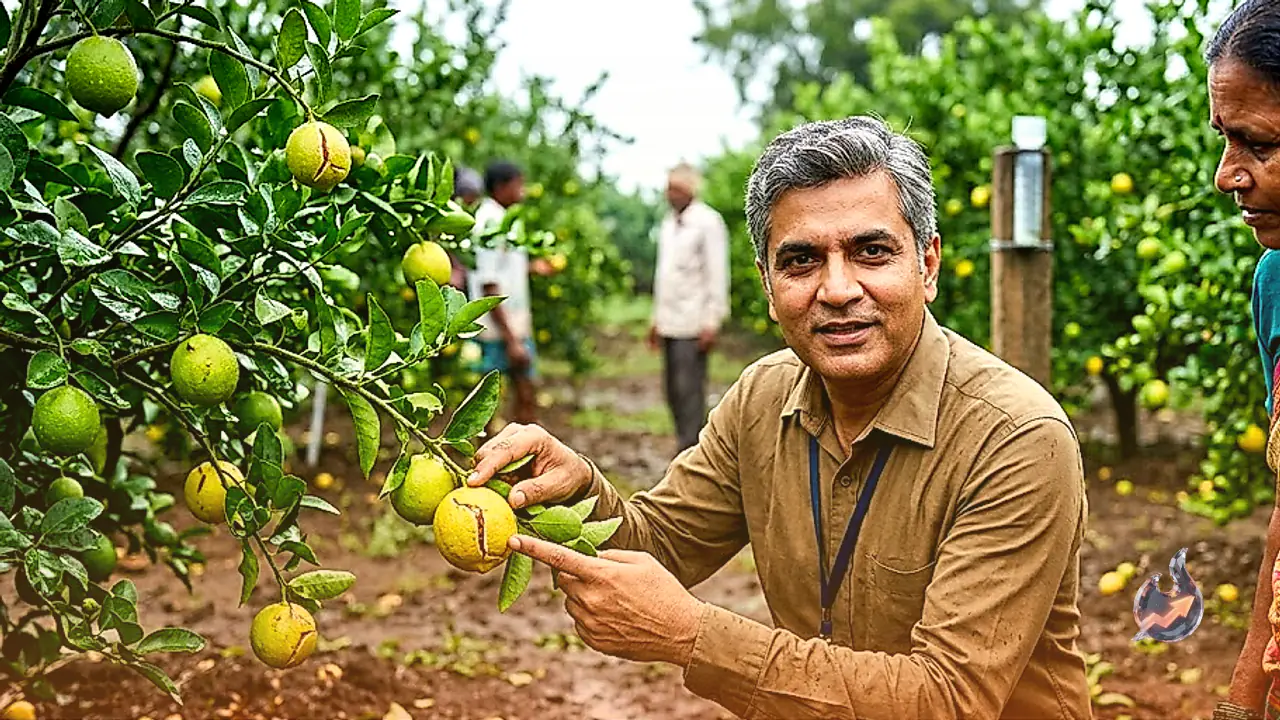

Citrus growers frequently observe lemons cracking and splitting open on the tree during the monsoon season. This phenomenon damages the quality of the harvest and leads to substantial crop losses. District Horticulture Officer Dr. Puneet Kumar Pathak points out that an abrupt imbalance in soil moisture is the primary physiological driver behind this issue. When citrus trees experience a sudden surge in water absorption after a dry spell, the internal pulp expands at a much faster rate than the outer rind. Because the fruit skin lacks sufficient elasticity to accommodate this rapid growth, it cracks under internal pressure. Implementing timely orchard management techniques is essential to overcome this seasonal challenge.
Regulating Soil Moisture and Ensuring Proper Drainage
Continuous rainfall during the monsoon months causes soil moisture levels to rise abruptly. Trees that have weathered dry conditions absorb large quantities of water within a short span, pushing the pulp to expand beyond the rind capacity. Dr. Puneet Kumar Pathak advises orchard owners to prioritize efficient rainwater drainage throughout their groves. Creating raised soil mounds around the trunk ensures that excess runoff flows away immediately rather than accumulating around the root zone. When water sits stagnant at the base, tree roots are unable to respire properly, which hampers their capacity to absorb key mineral nutrients from the soil.
Addressing Essential Micronutrient Deficiencies
A shortage of critical micronutrients, particularly calcium and boron, significantly increases the vulnerability of lemon rinds to splitting. Calcium provides structural strength to the fruit skin, whereas boron reinforces cell walls and maintains rind durability. Rainwater frequently leaches these vital minerals out of the topsoil during heavy downpours. To prevent nutrient depletion, growers should apply fertilizers containing calcium and boron or spray these micronutrients around the root zone right at the onset of the monsoon season. Reinforcing the fruit rind with essential nutrients helps it withstand internal growth pressure without rupturing.
Utilizing Organic Manure and Soil Mulching Techniques
Heavy applications of synthetic fertilizers should be avoided during the rainy season because rainwater easily washes them away before plants can absorb them. Instead, growers ought to enrich the soil with well-rotted cow dung manure or vermicompost. Organic soil amendments enhance overall soil structure and water retention, smoothing out sharp moisture fluctuations. Furthermore, applying a protective layer of mulch around the tree base is highly effective. Spreading dried grass, straw, or dry leaves creates a physical buffer that shields topsoil from heavy raindrops and keeps moisture levels consistent, preventing roots from taking in sudden excess water.
Pruning Dense Canopy and Controlling Fungal Pests
Light canopy management is vital during the humid monsoon months. Farmers must prune dry, overcrowded, or diseased branches to allow sunlight and fresh air to penetrate into the inner foliage. Dense foliage traps ambient moisture, creating ideal breeding grounds for fungal infections and harmful diseases. Additionally, damp conditions encourage pest attacks that damage the protective outer skin of developing lemons, making them susceptible to cracking when exposed to water. Spraying a natural neem oil solution every 15 to 20 days creates a protective shield over the fruit and deters insect damage effectively.
Harvesting Ripe Lemons Promptly and Regular Monitoring
Leaving fully matured lemons on the tree during rainy periods substantially increases the risk of fruit splitting. Ripe lemons absorb rainwater rapidly, causing their skins to burst open within days. As soon as lemons reach full maturity, they should be harvested without delay to preserve crop quality. Continuous monitoring of the grove is equally important. Routine inspections enable growers to detect early signs of pest infestations, nutrient stress, or fruit cracking, allowing them to implement corrective measures before significant losses occur.