






















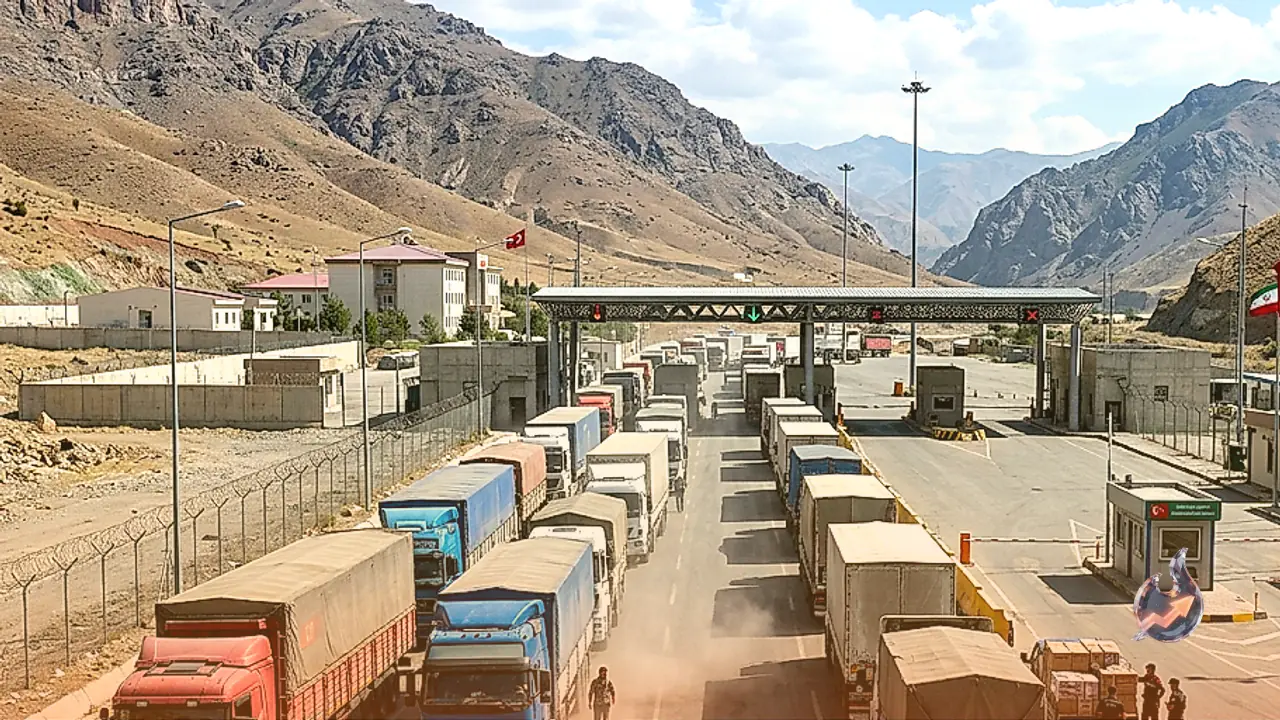

Washington is aggressively ramping up pressure on Tehran's neighbors to isolate Iran economically, demanding that countries like Pakistan, Turkey, and Iraq shut down cross-border commerce and rigorously inspect all incoming goods. However, these nations have shown strong reluctance to fully comply with American directives. Facing resistance from Islamabad and Ankara, the US has now turned to Saudi Arabia for diplomatic intervention to force compliance.
Leveraging Riyadh's Military Ties
According to reports, American officials have urged Saudi leadership to leverage its deep military connections with Pakistan and Turkey to compel both governments into cracking down on trade routes linked to Iran. Washington calculates that choking off these commercial corridors will drastically cut the flow of vital supplies and material support reaching the Iranian state.
Why Pakistan Keeps Borders Open
Islamabad has resisted American calls to completely seal its frontier with Iran. While some border zones were temporarily shut down under the guise of bolstering security, crossings were swiftly reopened. Shahid Rind, an adviser to the chief minister of Balochistan, noted that the temporary closures were merely intended to curb smuggling and improve local security. Following a visit to Iran by Asim Munir, the pathways were operational again. Economic survival remains a major driving force, as countless residents in these borderlands depend entirely on cross-border trade for their livelihoods. Shutting down transit permanently would devastate local commerce and trigger widespread civil unrest.
Turkey and Iraq Push Back
Pakistan is not alone in pushing back against American border demands. Turkey has refrained from overhauling its existing frontier regulations, while Iraq has openly stated that closing all border crossings with Iran is entirely unfeasible. Iraqi Foreign Minister Fuad Hussein revealed that the US had pushed to shut down every border checkpoint except for two. He explained that implementing such a sweeping closure would deal a catastrophic blow to the Iraqi economy. Although Iraq temporarily closed the Sheeb border crossing to crack down on illicit smuggling, it has steadfastly avoided a total blockade.
A Complex US-Saudi Dynamic
American strategists are banking on Saudi Arabia's influence, reinforced by military alliances through the Makkah Pact, to sway Pakistan and Turkey. Yet, ties between Washington and Riyadh regarding Iran have historically experienced friction. Reports indicate that back in July, Saudi officials urged the US to intensify economic pressure on Tehran. Conversely, in September, when Riyadh pressed for direct military strikes against Houthi forces, President Donald Trump declined, limiting American involvement to intelligence sharing and target designation.
Launching Task Force Iron Gate
To spearhead these containment efforts, the US officially launched ‘Task Force Iron Gate’ on November 7. The stated objective of this initiative is to halt the illicit trafficking of weapons, advanced military technology, and restricted cargo moving across land corridors and the Caspian Sea. The operation specifically targets supply lines feeding regional militant proxies backed by Iran, including the Houthis, Hezbollah, and Hamas.