

















Amid rising political rhetoric surrounding upcoming assembly elections, All India Majlis-e-Ittehadul Muslimeen leader Waris Pathan has made a striking statement regarding Muslim political leadership in Uttar Pradesh. The remarks come at a time when discussions about minority representation and electoral influence in the state have intensified significantly.
A Shift Toward Leadership and Global Examples
The leader asserted that Muslims will no longer cast ballots merely to make other candidates victorious, but will instead win elections and enter legislative assemblies themselves. Drawing a parallel with the electoral success of Abdul El-Sayed in Michigan, USA, the argument was made that community members can achieve similar milestones at home. He expressed confidence that one day Abdul will not only lead Uttar Pradesh as chief minister but also serve as the prime minister of India, fighting for justice and acting as a voice for the poor.
Stepping Beyond Traditional Roles
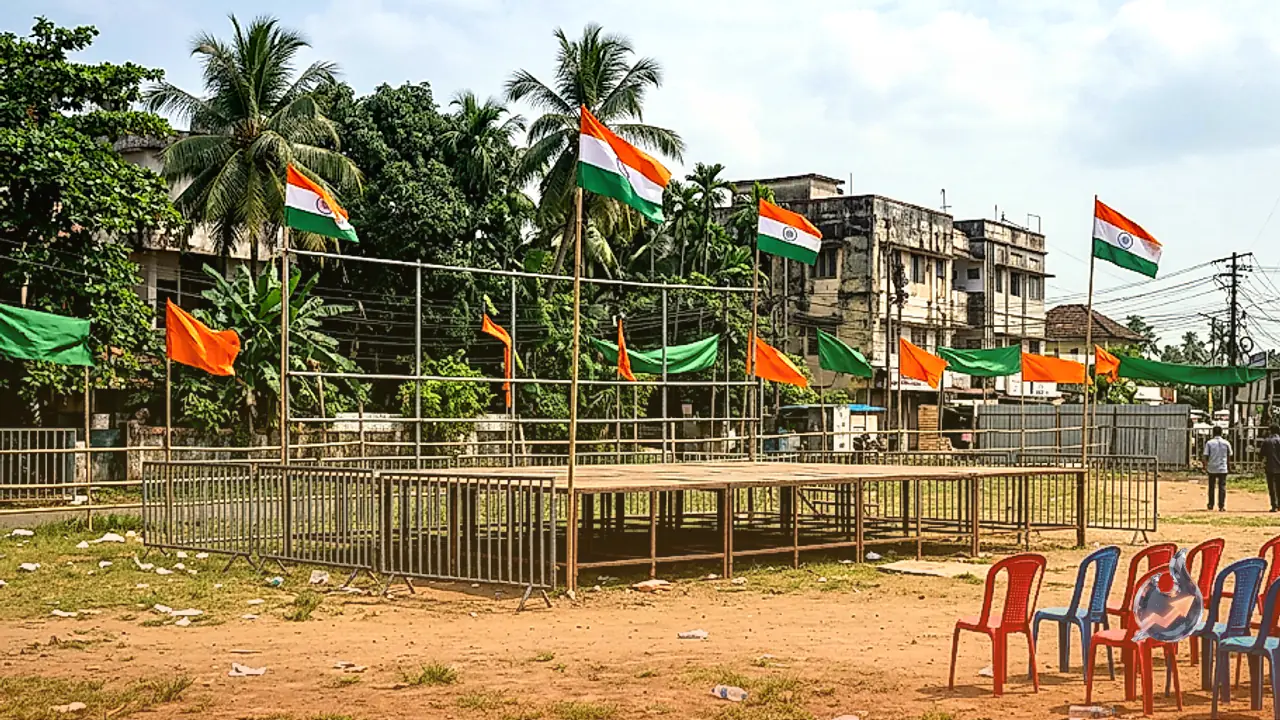
Addressing historical prejudices, Pathan remarked on past taunts faced by the community, emphasizing that those days are gone. He declared that community members will no longer arrange seating at rallies but will instead occupy high political offices and win elections. Reference was also made to prior statements by party chief Asaduddin Owaisi, who maintained that voters would no longer act as a passive vote bank and would instead emerge as leaders and representatives.
Criticism Directed at Congress and Samajwadi Party
The opposition parties faced sharp criticism for allegedly exploiting the community exclusively for electoral gains. Pathan accused both Congress and the Samajwadi Party of failing to improve the social, economic, and educational standing of Muslims. To substantiate these claims, he cited findings from the Mahmood-ur-Rahman Committee and the Ranganath Misra Commission, highlighting the persistent backwardness within the demographic.
Addressing Crises and Opposition Silence
The discourse also touched upon contentious local issues, including bulldozer actions against madrasas in Uttar Pradesh and the imprisonment of Azam Khan. The opposition was challenged to explain why they remained absent or failed to stand alongside the community during times of crisis. The narrative suggested that self-proclaimed secular parties often abandon their allies when tangible support is required.
Clarifying Population Demographics
Addressing debates concerning population growth rates, Pathan presented specific figures to counter prevailing narratives. He claimed that the total fertility rate among the community has been steadily declining, citing data points of 4.4 for 1992-93, 2.6 for 2015-16, and 2.3 for 2021. He alleged that certain political figures deliberately propagate false perceptions and fuel hatred for political advantage.
Wider Political Context and Alliances
Earlier statements by party leadership had underscored the necessity for various political factions to unite in order to challenge the current administration, though it was noted that regional parties must respect community autonomy rather than taking support for granted. The overarching message reiterated that the community demands its rightful political share and refuses to be treated as mere political property.