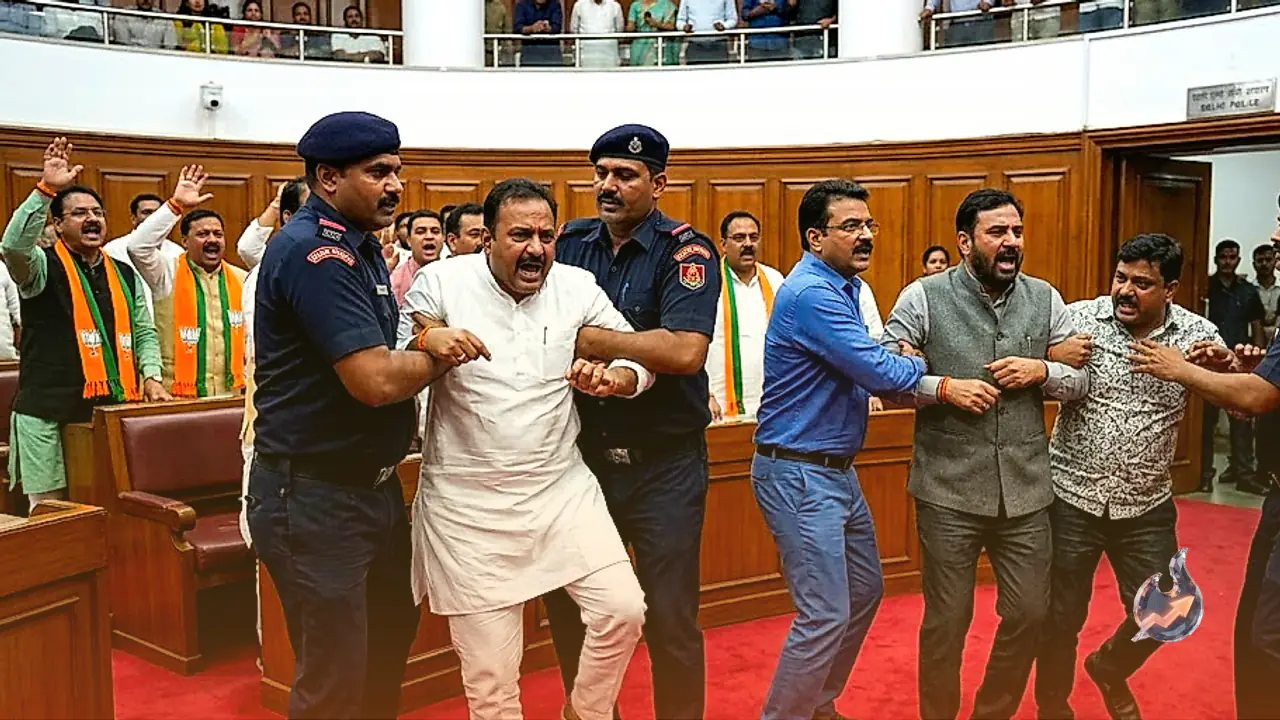


















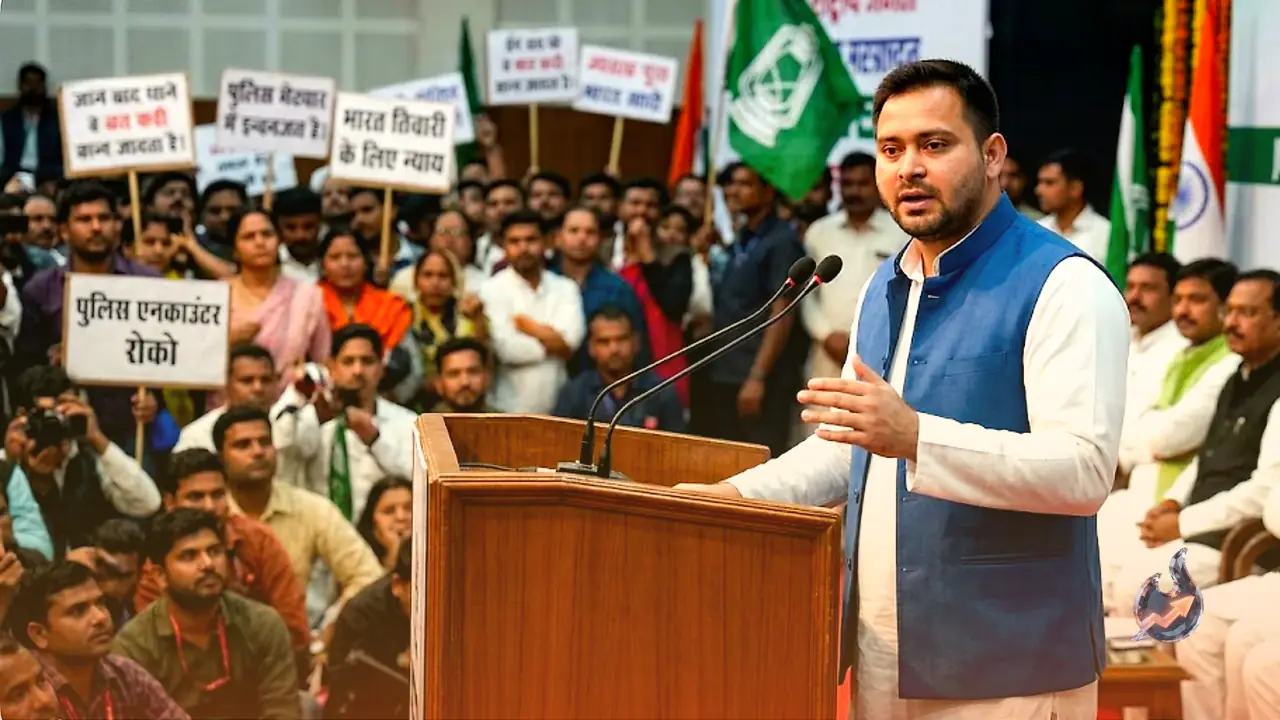

The alleged encounter of Bharat Tiwari in Bhojpur has created a massive political stir across Bihar. While the government has ordered a judicial probe and initiated departmental action against four police personnel, the opposition remains relentless in its criticism. This incident has evolved beyond a simple encounter case, transforming into a significant issue concerning law and order and administrative accountability. The NDA government, led by Chief Minister Samrat Choudhary, faces scrutiny not only from the opposition but also from within its own ranks, with senior leaders like Sanjay Jha and Ashwini Choubey questioning the police conduct. For the RJD, this unfolding situation appears to be a major strategic opportunity for leader Tejashwi Yadav to push toward the pinnacle of state power.
Political Calculus and Tejashwi Yadav
According to political analyst Ashok Kumar Sharma, this incident serves as a significant turning point for Tejashwi Yadav to implement his 'A to Z' inclusive politics. The RJD already commands a stable and loyal core vote base of approximately 30 to 32 percent. To capture power decisively, they need an additional 5 to 10 percent of the vote share. If Tejashwi Yadav manages to frame this issue around the rule of law, justice, and the security of all citizens rather than just partisan opposition, he could gain acceptance among social segments that have historically kept their distance from the RJD. Given that Bharat Tiwari belonged to the Brahmin community, the issue offers Tejashwi a chance to bridge the gap with upper-caste voters.
Bihar's Caste Math and Challenges
The 2023 caste survey in Bihar indicates that the Extremely Backward Class (EBC) constitutes 36.01 percent of the population, Other Backward Classes (OBC) 27.12 percent, Scheduled Castes 19.65 percent, Scheduled Tribes 1.68 percent, and the General category 15.52 percent. Within the General category, upper castes like Rajputs, Bhumihars, Kayasthas, and Brahmins account for about 10.56 percent, while the Yadav community alone represents 14.27 percent and the Muslim population 17.7 percent. For Tejashwi Yadav, the primary challenge is to maintain his traditional Muslim-Yadav base while winning the trust of upper castes and other marginalized sections. Journalist Prem Kumar suggests that if the case is projected as a matter of civil rights and justice rather than through a caste-based lens, it could prove to be a breakthrough for the RJD.
A Test for the Samrat Government
The Samrat Choudhary government has attempted damage control by ordering a judicial investigation, yet the credibility and speed of this probe will remain under close public watch. An RJD delegation has already visited the victim's family, and leaders like Uday Narayan Choudhary are actively cornering the government. The coming days will reveal whether the government can effectively mitigate this political fallout or if this incident will pave a clearer path for Tejashwi Yadav to reach the helm of Bihar's administration.