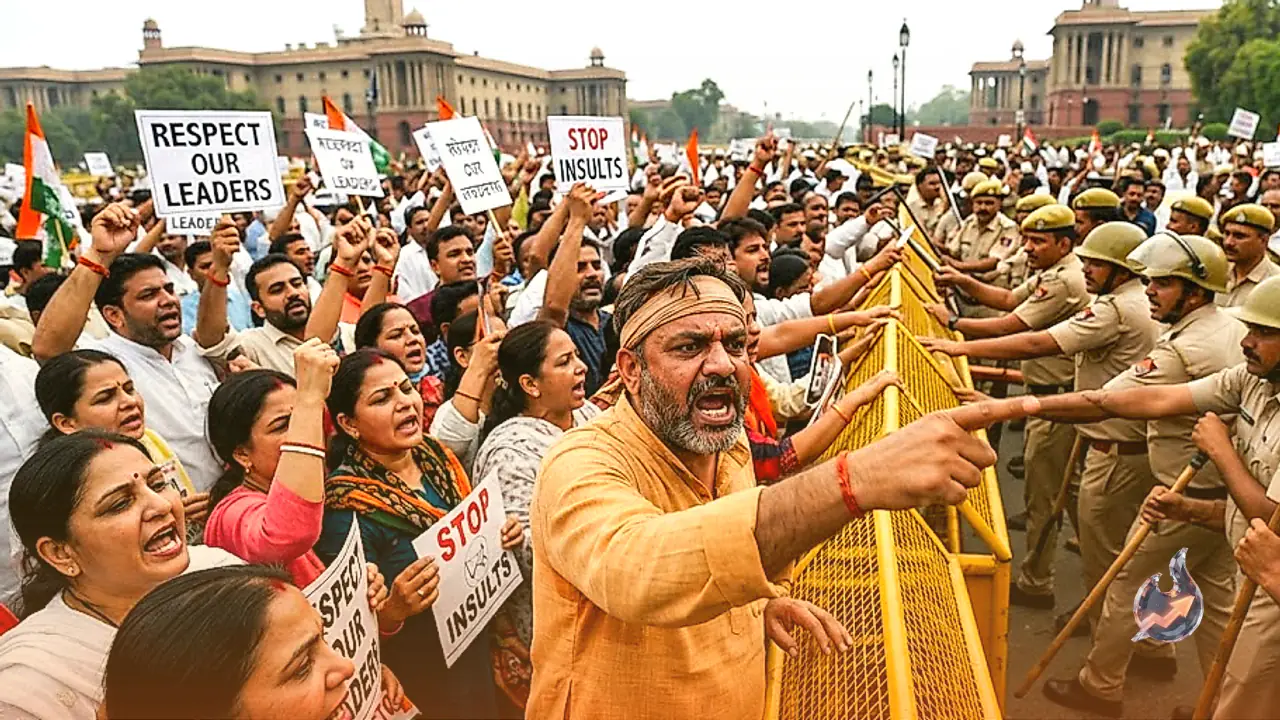
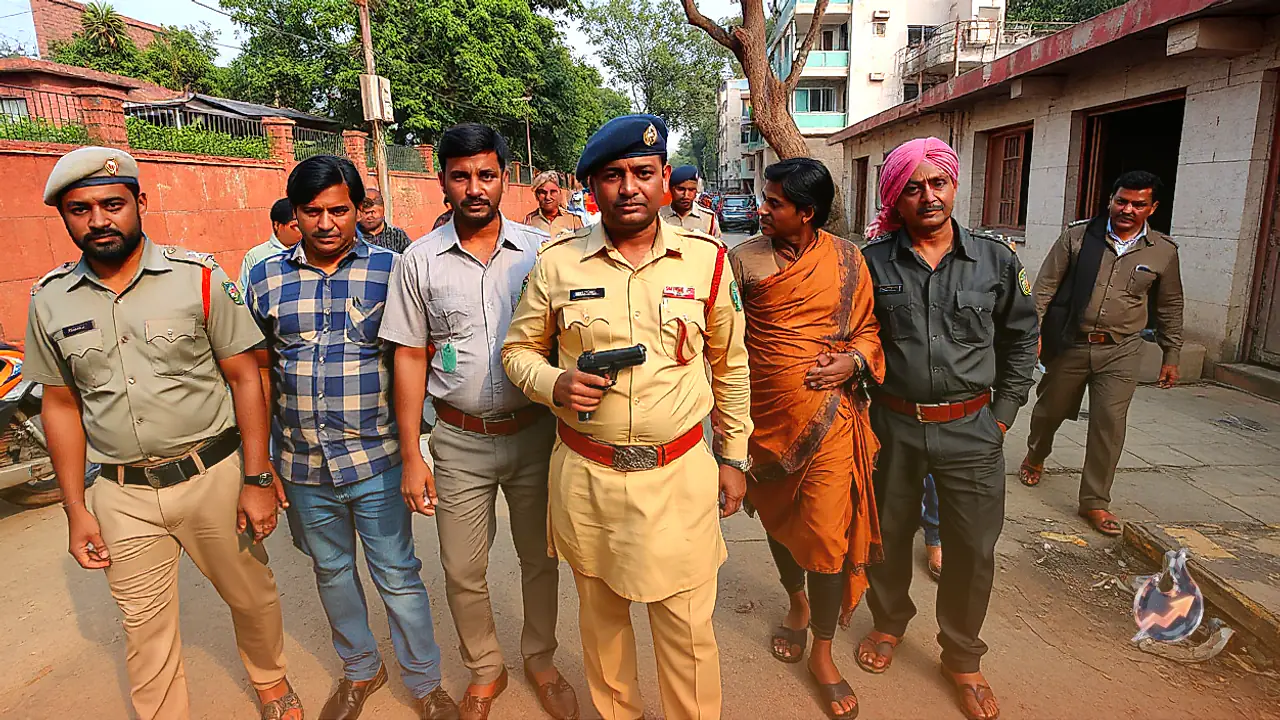





















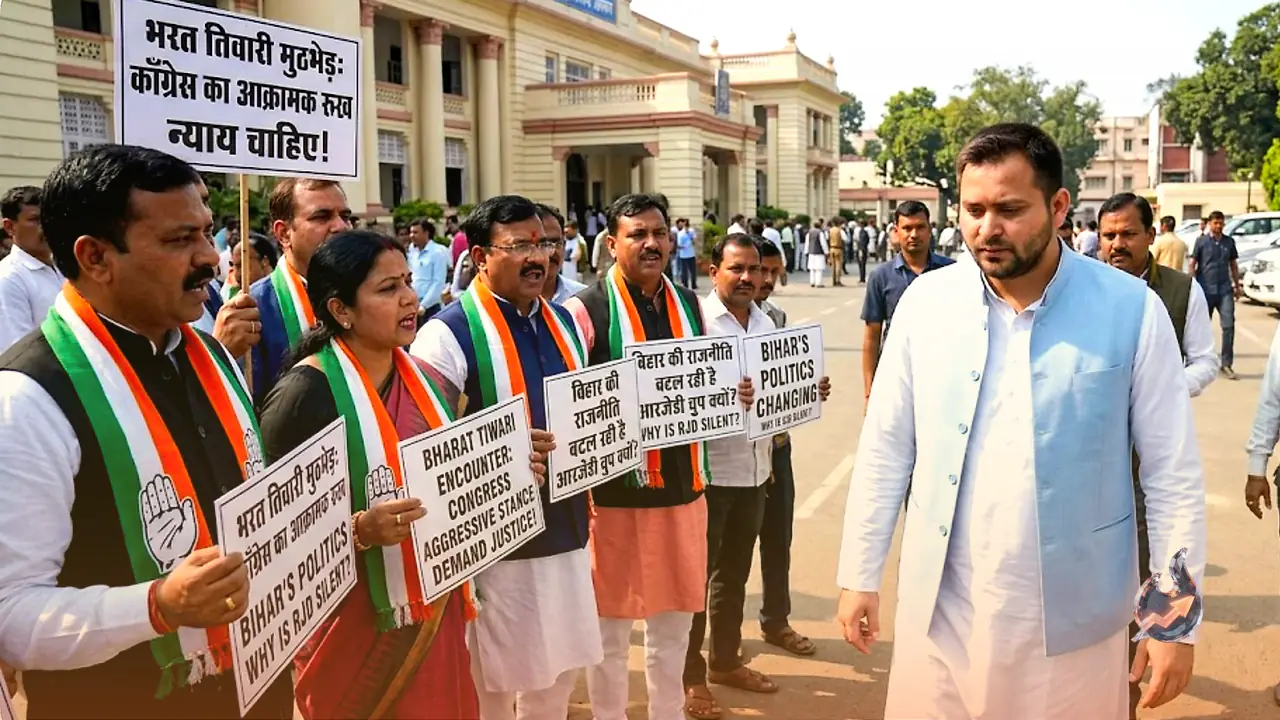

Bilauti village in Bihar's Bhojpur district has become more than just the site of a contested police encounter; it has transformed into a laboratory for the shifting political currents of the state. As the NDA remains embroiled in internal debates over the Bharat Tiwari encounter, the stark ideological and strategic gap between the two primary constituents of the Mahagathbandhan—Rashtriya Janata Dal and Congress—has shed light on the deep-seated ethnic and political contradictions within the India Bloc. While many observers suggest these tensions may be part of a broader political strategy, the visible approach of the parties has raised questions about the cohesion within the opposition alliance. On one hand, Leader of Opposition Tejashwi Yadav labeled the event a police-led killing, yet conspicuously refrained from visiting the victim's family. On the other hand, the aggressive, extra-active stance taken by the Congress party suggests that a significant political shift is brewing beneath the surface of Bihar's politics.
Tejashwi's Balanced Political Approach
It is important to acknowledge that Tejashwi Yadav has not shied away from attacking the government. He has repeatedly called the Bharat Tiwari encounter fake, demanded a judicial inquiry, and cornered the administration. However, his political maneuvers have been notably balanced, a fact that has left political experts intrigued. Rather than visiting the site personally, he dispatched a delegation led by Uday Narayan Choudhary. Senior journalist Ravi Yadav notes that Tejashwi’s decision to avoid Bilauti village and instead send a seasoned Dalit face like Choudhary is not a result of administrative constraints, but a calculated political hesitation. While the RJD consistently claims to be an A to Z party representing all sections of society, it remains tethered to the pressures of its traditional MY (Muslim-Yadav) and Extremely Backward Class (EBC) vote bank when it comes to ground-level actions.
RJD's Cautious Stance
Ravi Yadav further observes that because Bharat Tiwari belonged to the upper-caste Brahmin community and faced criminal charges, Tejashwi is acutely aware that personally visiting the home of an accused individual could alienate his core base of backward, Dalit, and minority voters. This is particularly sensitive given that Tejashwi has recently been vocal against encounters of individuals from these very communities, positioning himself against police dominance and hegemonic politics. The RJD delegation’s visit to Bharat Tiwari's home and Choudhary’s subsequent attacks on the government served a dual purpose. Tejashwi aimed to raise questions of law and order without getting trapped in a political frame that could jeopardize the party’s broader social coalition. Following the success of the Mahagathbandhan’s candidate in the recent MLC elections in Bhojpur, Tejashwi seems keen to avoid letting this issue become solely a caste-based movement.
Congress on the Front Foot
Congress has attempted to occupy the vacuum created by Tejashwi’s hesitation. Historically, Congress was the preferred party for upper-caste groups in Bihar, particularly Brahmins, Bhumihars, and Rajputs, along with certain segments of upper-caste Muslims. While the BJP eventually consolidated the Hindu upper-caste vote, Congress believes it can now leverage the anger against the Nitish government resulting from this encounter. The party has deployed high-profile leaders from outside the state, such as UP Congress President Ajay Rai and Haryana MLA Kuldeep Vats, to the field in Bilauti. Their bold claims that this grievance will reach Rahul Gandhi and that he might visit Bilauti show that Congress is no longer content being a junior partner to RJD in Bihar. The party is clearly attempting to re-brand its national slogans of saving the Constitution and seeking justice for the upper-caste demographic.
Is the A to Z Politics Just a Slogan?
The Bharat Tiwari encounter has essentially tested the narrative Tejashwi Yadav has been building to establish himself as a modern, inclusive leader representing all sections of society. The politics of the Lalu Prasad Yadav era were openly anti-upper-caste and focused strictly on social justice, a mold from which Tejashwi has tried to break away. However, his distance during this sensitive juncture proves that he remains heavily dependent on old, tested caste equations to navigate Bihar's electoral waters. The ongoing developments within the Mahagathbandhan reveal that all is not well, as the political interests of both parties increasingly collide. The aggressive stance adopted by Congress represents an internal challenge for the RJD, highlighting a strategic divide that will likely shape the future of the alliance in the state.