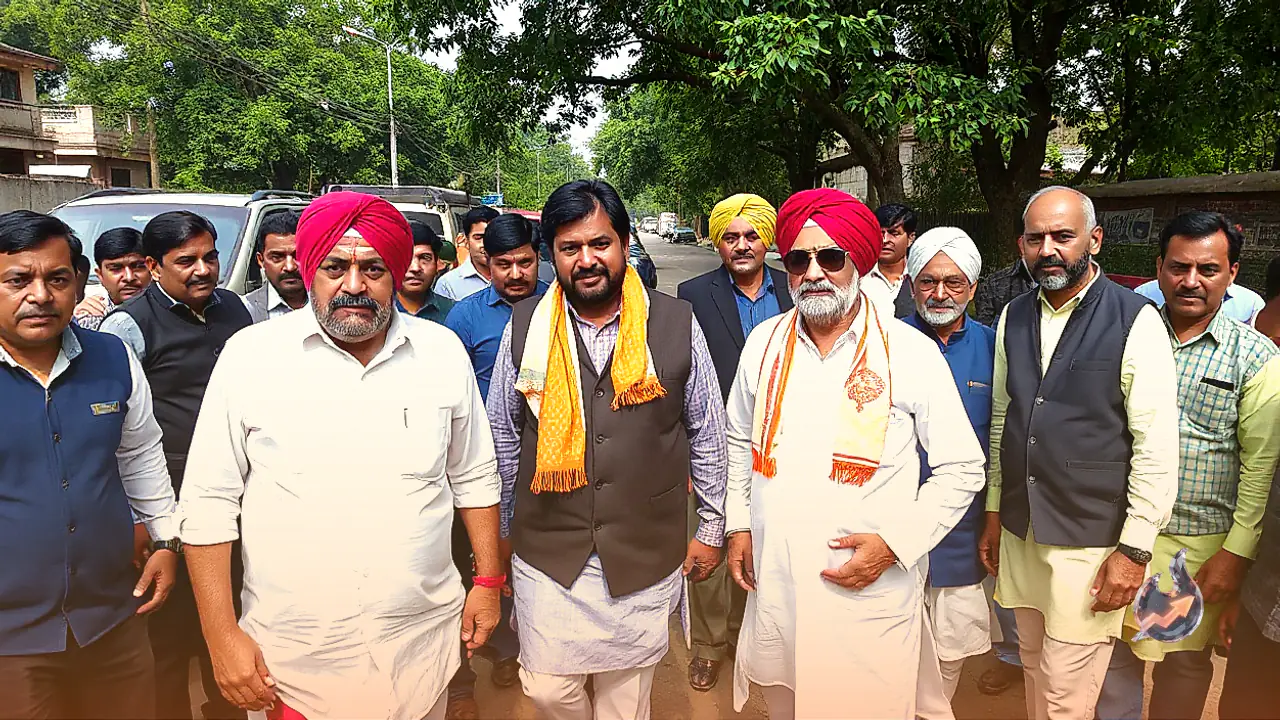



















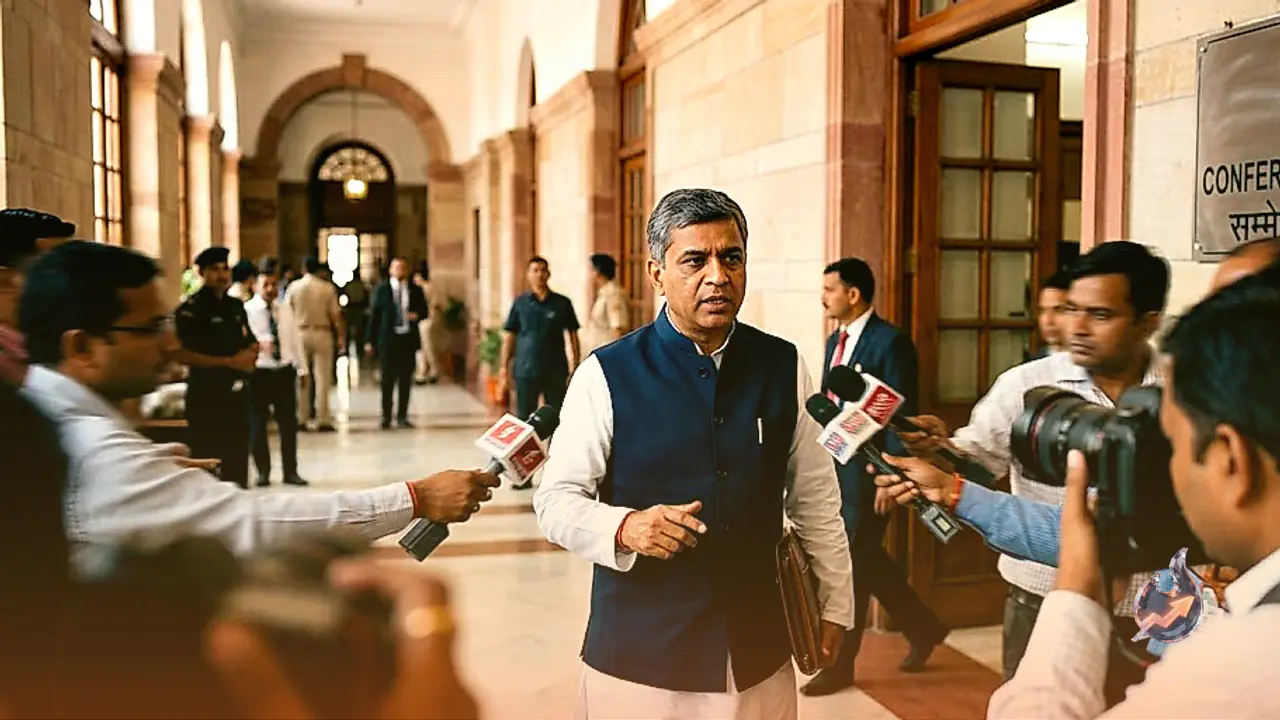

Following the declaration of the new national organizational team under Nitin Nabin by the Bharatiya Janata Party, political attention in New Delhi has rapidly shifted toward the central government. The completion of major changes within the party structure has triggered intense discussion regarding whether an expansion and restructuring of the Union Council of Ministers is imminent. At present, the central ministry consists of 69 members. Under constitutional provisions, the Council of Ministers can accommodate up to 15 percent of the total strength of the Lok Sabha, which sets the upper limit at 81 ministers. This leaves a clear scope for 12 additional ministerial appointments, fueling widespread political debate across the capital, even though no official government announcement has been made so far.
Organizational Reassignment and One Person One Post Principle
Several prominent leaders who held key responsibilities in the central government or national politics have been assigned strategic duties within the ruling party organization. Commerce and Industry Minister Piyush Goyal has been appointed as the National Treasurer of the Bharatiya Janata Party. Simultaneously, Union Minister of State for Road Transport and Highways as well as Corporate Affairs Harsh Malhotra has been appointed as the President of the Delhi state unit, while Union Minister Pankaj Chaudhary has taken charge as the President of the Uttar Pradesh state unit. Other high-profile figures such as Smriti Irani and Anurag Thakur have also been assigned crucial roles within the party apparatus.
These organizational developments have brought the party's traditional One Person, One Post policy into sharp focus. Managing a major state unit or holding a key national organizational role alongside ministerial duties poses significant practical challenges. If the party decides to enforce a clear separation between organizational governance and government administration, certain ministers may be relieved of their executive portfolios to focus entirely on party organization. Conversely, in specific strategic cases where leaders possess distinct political weight, dual responsibilities might be retained temporarily to maintain administrative continuity ahead of key elections.
Evaluating 12 Vacancies and New Coalition Dynamics
The existence of 12 vacant slots within the constitutional ceiling of 81 ministers provides substantial flexibility for executive realignment. Filling these open positions does not necessarily require inducting 12 entirely new faces, but it opens the door for strategic entries. Political observers note that party strategists are evaluating options to bring fresh talent into the cabinet while simultaneously addressing key electoral equations across critical states.
Coalition allies within the ruling alliance are also under consideration for representation in the expanded Council of Ministers. From Maharashtra, the name of Shrikant Shinde, a prominent leader from the Shiv Sena faction led by Chief Minister Eknath Shinde, has emerged as a key candidate for potential induction. Incorporating coalition partners into the central government would send a strong signal of unity and reinforce political coordination within the alliance, particularly in states where competitive political battles lie ahead.
State Representation and Regional Power Equations
Regional representation remains a primary driver in any central cabinet restructuring. Deliberations are reportedly focused on strengthening ministerial representation for major states including Uttar Pradesh, Gujarat, Maharashtra, Madhya Pradesh, Rajasthan, Himachal Pradesh, and Karnataka. Each of these states holds significant parliamentary weight, and ensuring adequate regional and social balance in the ministry is viewed as critical for political stability and effective governance.
Furthermore, evolving political dynamics in Punjab have prompted speculation about potential representation for leaders from the state in the central cabinet. By recalibrating regional representation, the leadership aims to align state-level political ambitions with national governance priorities. Factors such as ministerial performance, demographic representation, administrative track record, and organizational experience will play a decisive role in final selections.
Portfolio Reallocation and Administrative Focus
Beyond the induction of new ministers, a potential cabinet reshuffle is expected to involve a comprehensive redistribution of ministerial portfolios. Currently, several senior cabinet ministers oversee multiple ministries or complex combined portfolios. Reallocating these responsibilities across a broader pool of ministers could allow for greater departmental focus and improved administrative efficiency.
Dividing multi-portfolio assignments would enable ministers to concentrate on specific policy sectors, accelerating key infrastructure, economic, and social welfare initiatives. Redistributing portfolios also allows the leadership to match specialized skills with relevant ministries, ensuring that government execution keeps pace with policy goals set for the coming years.
Parliamentary Board Reshuffle and 2029 Strategic Vision
Speculation is not confined to the executive cabinet alone; potential changes within the Bharatiya Janata Party Parliamentary Board, the party's highest decision-making body, are also generating significant interest. Names of prominent leaders such as Uttar Pradesh Chief Minister Yogi Adityanath and Maharashtra Chief Minister Devendra Fadnavis have been widely discussed in connection with potential inclusion in the top decision-making unit. Additionally, Assam Chief Minister Himanta Biswa Sarma is frequently highlighted as part of the party's emerging leadership structure.
Inducting key chief ministers and experienced state leaders into the central decision-making mechanism would consolidate next-generation leadership within the party. Political analysts view the simultaneous organizational restructuring and potential cabinet expansion not as isolated events, but as part of an integrated long-term political strategy. As the party prepares for upcoming state assembly elections and positions itself for the 2029 General Election, recalibrating roles between government and organization is intended to build a balanced, resilient, and election-ready setup.