
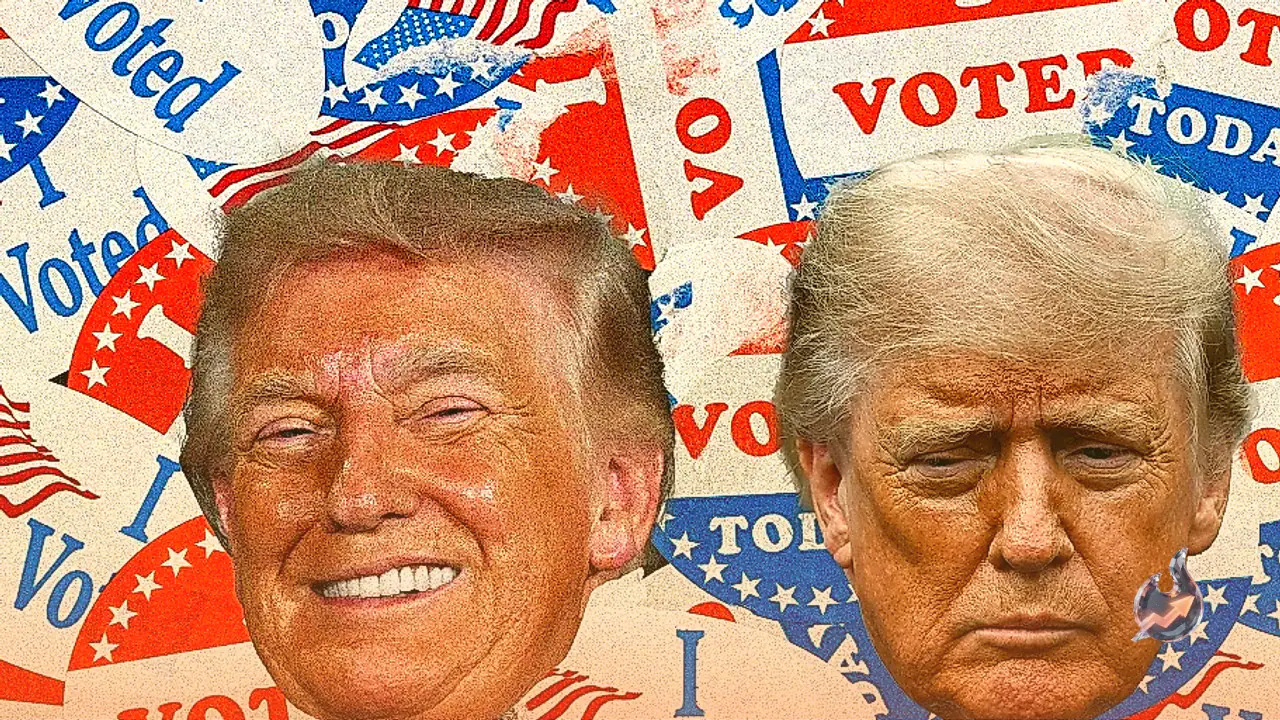




















With the midterm elections drawing near, a fierce political battle has broken out across conservative circles over the validity of recent polling data. Multiple independent surveys have shown Donald Trump's approval ratings sinking to historic lows, while Democratic candidates have taken unexpected leads in pivotal Senate races across states that Trump had carried comfortably in 2024. In response to these concerning figures, prominent conservative activists, think tank leaders, and online commentators have mounted a concerted pushback, declaring the unfavorable data to be nothing more than a psychological operation designed to dampen turnout among Republican voters.
Conservative leaders and influencers reject survey data
Kevin Roberts, who serves as president of the conservative think tank Heritage Foundation, stated on Fox News that the current midterm polling represents a psyop intended specifically to depress conservative turnout. The sentiment quickly spread throughout the pro-Trump online ecosystem. Phillip Buchanan, an election denier and political commentator known to his four million followers on X under the handle Catturd, told his audience that with the midterms approaching, laughable fake polls are rolling out in force.
The characterization of negative data as military-style psychological warfare was echoed by veteran political operatives. Steve Bannon, an influential voice who has consistently amplified allegations regarding election procedures for the past six years, also labeled the negative figures a psyop. Emphasizing personal agency over media projections, Bannon urged supporters to recognize that their fate remains entirely in their own hands, regardless of whatever projections news outlets offer regarding a blue wave or a Democratic blue tsunami. Seth Keshel, a former Army colonel who built a following challenging election outcomes and claims close connections to the White House, similarly denounced the numbers on X, declaring that political polling has become so unethical that it should be officially outlawed.
Donald Trump's public denials against internal party anxiety
For more than a decade, Trump has repeatedly maintained that American elections are distorted by widespread fraud, offering no evidence to back up his assertions. Following his defeat in 2020, a sprawling network of election denial groups and online communities mobilized around the claim that former president Joe Biden had illegitimately taken the presidency. That narrative has since entrenched itself as a cornerstone of the Republican Party's foundational platform, leading hundreds of GOP candidates seeking federal and statewide offices in November to openly question the fairness and integrity of the country's voting infrastructure.
Since re-entering the White House last year, Trump has publicly dismissed polling as fake on 39 distinct occasions, according to an analysis conducted by the media watchdog group Media Matters for America. During the month of August alone, he made nine separate dismissals. In a statement published on Truth Social last month, Trump described the surveys as demoralization operations orchestrated by Democrats to discourage Republicans from showing up to vote. He reiterated that defiance while addressing reporters in the Oval Office on Monday, brushing aside critical polling figures out of Iowa by stating plainly that the polls are fake.
Behind closed doors, the atmosphere appears markedly different. Trump's internal advisory circle harbors intense concern regarding the unfavorable numbers and the very real prospect of losing control of both the House of Representatives and the Senate. One veteran operative within Trump's political orbit acknowledged the gravity of the situation, noting privately that the party is heading toward a severe defeat. Confronted with this shifting landscape, the Republican party apparatus has begun redirecting significant financial resources toward dozens of competitive races that leadership had previously classified as completely safe.
Disagreements within the pro-Trump media sphere
While denial remains the prevailing response, fractures have emerged among right-wing commentators regarding the underlying cause of the poor numbers. When conservative podcaster Tim Pool suggested that Trump's slump in public support stemmed from persistent high gasoline prices and the ongoing military conflict in Iran, commentator Bill Mitchell, who commands an audience of over 500,000 followers on X, pushed back by suggesting the surveys themselves might simply be fake.
Other online voices have adopted an outright rejection of electoral reality. Julie Donuts, an influential commentator with 220,000 followers on X, asserted that all 50 states are red and that the polls are fabricated, illustrating her claim with an electoral map depicting widespread support for Trump dating back to 2016. Former America First Policy Institute staffer Kambree Nelson, who once claimed the moon had disappeared for an entire week, accused news organizations of running an electoral scam using fabricated surveys and softball interviews to crush conservative spirit. She insisted opponents are terrified of growing momentum and urged supporters to stay committed.
Institutional advocacy groups have advanced similar arguments. The Maryland Election Integrity Group claimed without substantiation on X that surveys have systematically leaned toward Democrats by an average of three percentage points across the last five electoral cycles. David Freeman, an influencer posting under the alias Gunther Eagleman who is 52 years old, argued that because he has personally never been contacted by a pollster, the entire polling industry is fake. However, commentators reviewing Freeman's account pointed out an obvious contradiction, noting that he frequently amplifies and celebrates polling data whenever the numbers show Trump in the lead.