
















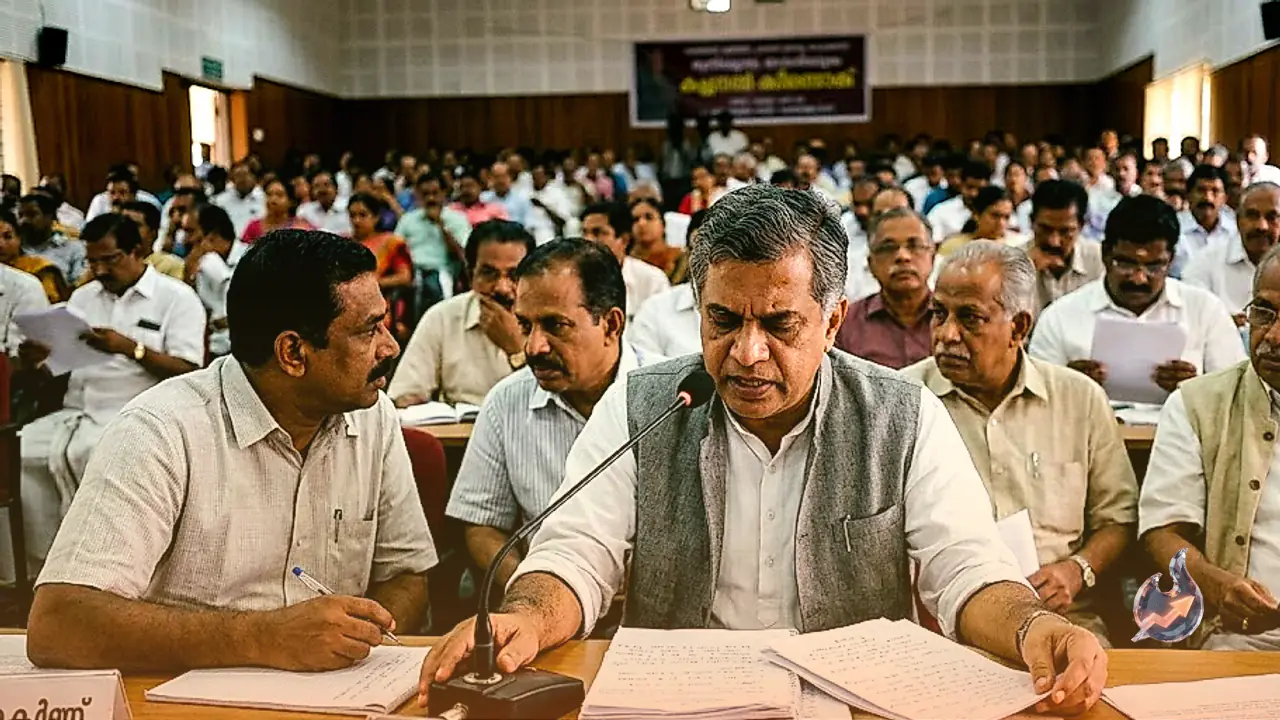

Following a decisive defeat in the recently concluded assembly elections, the Kerala State Committee of the CPI(M) has convened a crucial three-day review session in Kozhikode. The high-level meeting is designed to conduct an exhaustive evaluation of the party's current political and organizational standing across the state. Inaugurated by CPI(M) General Secretary M.A. Baby at the AKG Auditorium, adjacent to the district committee headquarters, the event marks a pivotal effort by the party leadership to identify the core factors behind their electoral setback and formulate a roadmap for political revitalization.
Critical Evaluation of Organizational Weaknesses and Defeat Factors
This conference comes at a critical juncture as the CPI(M) seeks to recalibrate its ideological direction, reinforce its grassroots framework, and re-establish a meaningful connection with voters. The discussions are characterized by a rigorous self-critical assessment of the leadership's recent functioning. Rather than focusing solely on immediate campaign missteps, the assembly is taking a deep dive into chronic structural vulnerabilities that surfaced during the election period.
Key items on the agenda include analyzing the effectiveness of the party's political messaging, campaign tactics, inter-organizational coordination, and its ability to perceive evolving public expectations. Special emphasis is being placed on introducing corrective measures that can bridge gaps between senior leaders, local party units, and the general electorate.
Participation of Top Leadership and 307 Delegates
A total of 307 delegates are participating in the three-day deliberations in Kozhikode. Prominent Politburo members from Kerala, including M.A. Baby, Pinarayi Vijayan, M.V. Govindan, and A. Vijayaraghavan, are leading the state delegation. Additionally, five central Politburo leaders—K. Balakrishnan, B.V. Raghavalu, Ashok Dhawale, Vijoo Krishnan, and U. Vasuki—are attending the sessions as official observers to oversee the assessment process.
The meeting also brings together Central Committee members from Kerala, representatives from the State Secretariat and State Committee, District Secretariat delegates, and key office-bearers from allied mass organizations. The presence of such a comprehensive leadership spectrum underscores the gravity with which the party is approaching its post-election recovery plan.
Grassroots Feedback and Bottom-Up Review Approach
In a notable shift from its standard review protocol, the CPI(M) adopted a bottom-up methodology for its post-election appraisal. Traditionally, the State Committee would draft an initial review document and send it down to lower-level committees for discussion. For this exercise, however, the party prioritized collecting direct feedback from local organizational units before formulating top-level conclusions.
The party also solicited public feedback to gauge voters' views on the political loss and overall party governance. The responses gathered from citizens, internal unit discussions, and central committee guidelines were compiled into a draft review report, which was subsequently scrutinized and approved by the State Committee. The final report, enriched by inputs from all organizational tiers, forms the central basis of the ongoing discussions in Kozhikode.


