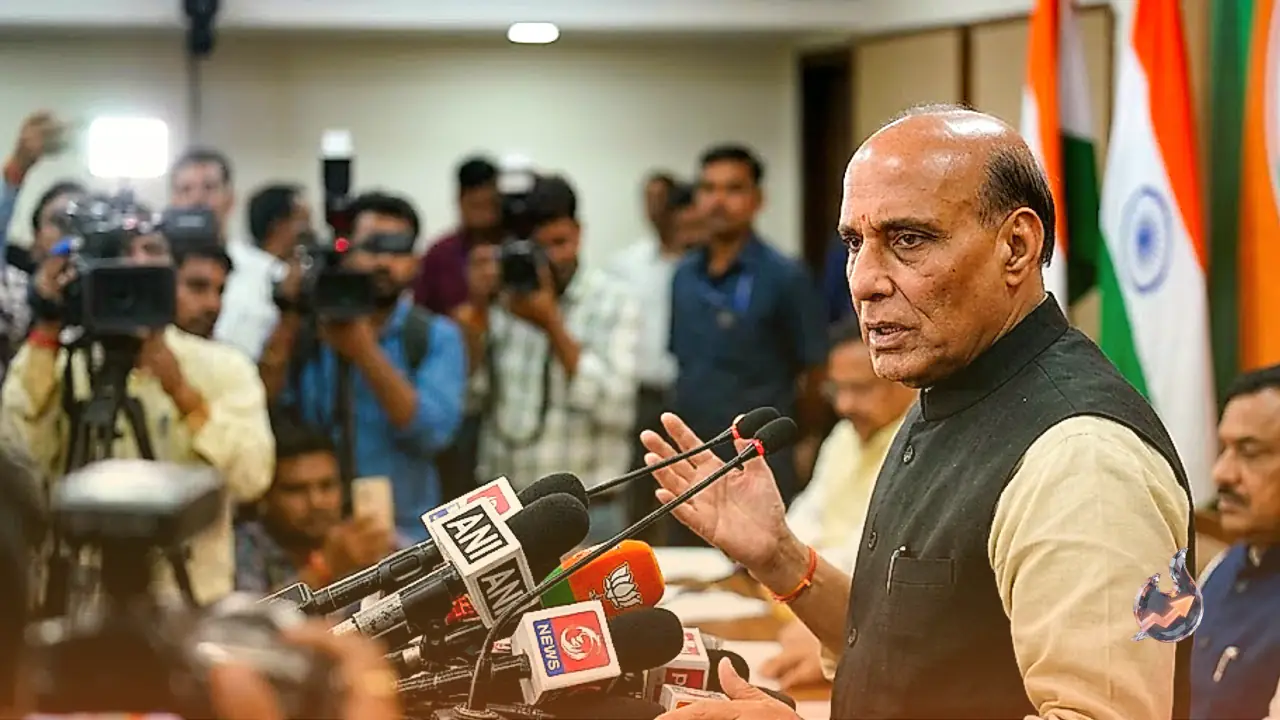





















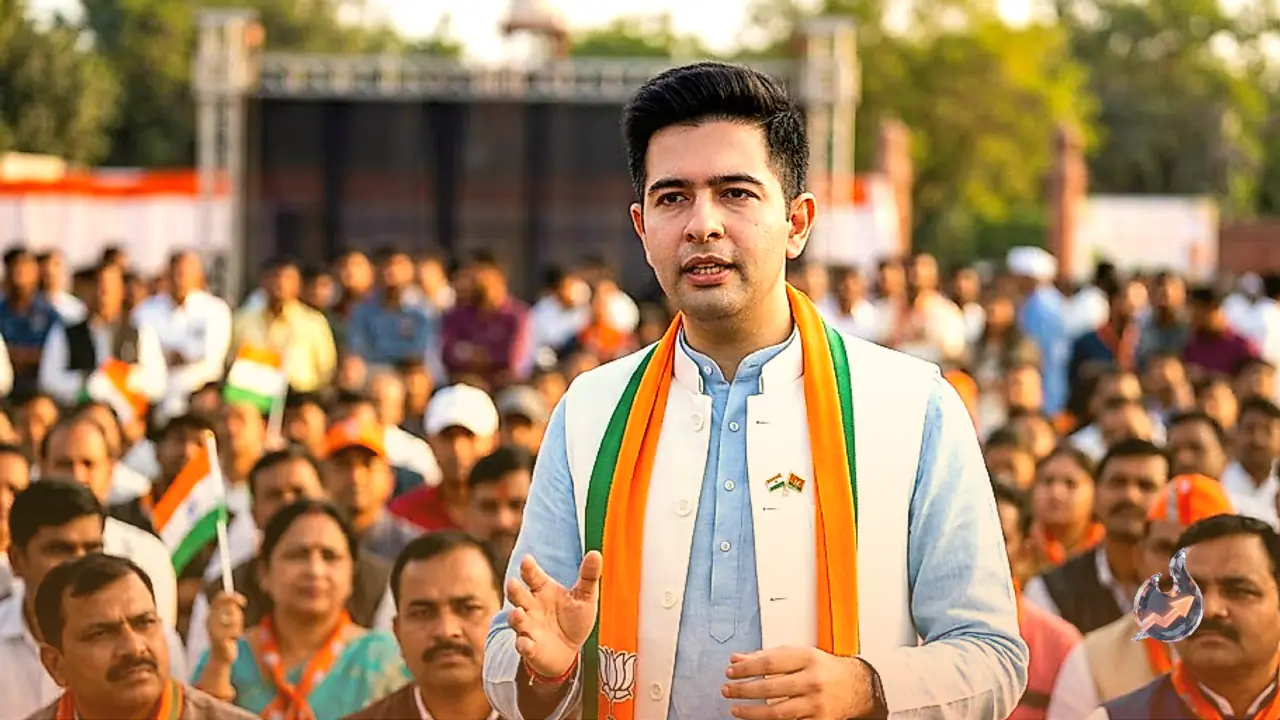

Amid ongoing political claims surrounding Electoral Roll Assembly Constituency 39 in Rajendra Nagar, the Election Commission of India and the Election Cell of the Bharatiya Janata Party have clarified the complete factual position. Following allegations raised by the Aam Aadmi Party regarding the procedure for adding names to the voter list, the Office of the Chief Electoral Officer of Delhi issued an official statement dismissing all assertions of irregularity. The electoral body confirmed that every inclusion and deletion of names in the electoral roll is carried out strictly in accordance with statutory guidelines and established rules. Reacting to the development, Bharatiya Janata Party Member of Parliament Raghav Chadha criticized the Aam Aadmi Party leadership and rejected their allegations as baseless.
Election Commission Details Voter List Revision Procedure
The controversy emerged after the Aam Aadmi Party held a press conference asserting that procedural flaws occurred during the voter registration process. In response, the Chief Electoral Officer of Delhi outlined the administrative mechanism governing voter enrollment. Election Commission officials stated that adding, modifying, or removing a voter's name relies entirely on prescribed documentation, specifically Form 6, Form 7, and Form 8. The entire exercise is conducted by the designated Electoral Registration Officer under the provisions of the Representation of the People Act 1950 and the Registration of Electors Rules 1960. Officials reiterated that these statutory norms are strictly maintained at every step of the process.
According to the official schedule released by the Election Commission, a field calculation phase was conducted between June 30 and August 17. Based on the entries and applications processed during this timeframe, the draft electoral roll was published on August 31, 2026. The commission emphasized that the draft list publication complied with statutory timelines and standard administrative protocols. The election authority noted that eligible citizens can submit voter enrollment forms at any time during the year, ensuring continuous opportunity for electoral participation.
BJP Election Cell Explains Serial Number 747 Entry
A primary contention raised by the Aam Aadmi Party focused on the serial numbering of the draft voter list. The party claimed that the draft roll contained 746 entries, questioning how Raghav Chadha's name appeared at serial number 747. Addressing this query, Advocate Sanket Gupta, Convenor of the BJP Election Cell, provided technical details regarding list compilation procedures. He explained that election rules contain explicit provisions for generating supplementary electoral rolls.
According to Sanket Gupta, the draft roll was frozen on June 16. Applications approved after this cutoff date are systematically incorporated into the supplementary list. If the primary draft roll ends at serial number 746, any newly approved application naturally receives the subsequent number, 747. He stated that this sequence reflects standard operating software logic rather than any administrative flaw. Under the Election Commission system, a new EPIC number is generated only after formal approval of the submitted form. Across various assembly constituencies in Delhi, approximately 700 Form 6 applications were approved by September 8, 2026. Processing of pending forms continues on the digital network prior to the publication of the final electoral roll scheduled for November 4, 2026.
Raghav Chadha Criticizes Aam Aadmi Party Approach
Commenting on the voter list dispute, BJP MP Raghav Chadha rejected the accusations and questioned the motivation behind the claims. He stated that the leadership of the Aam Aadmi Party remains focused on targeting him through unfounded assertions. Chadha mentioned that ever since he separated from the party, its leadership has struggled to accept the reality of his departure.
In his statement regarding the matter, Raghav Chadha remarked, “They are behaving like a bitter ex who has just been dumped.” He claimed that the opposition party has established a routine of leveling allegations first and searching for supporting arguments later. Chadha emphasized that his voter registration adhered strictly to every protocol laid down by the Election Commission, making his inclusion in the Rajendra Nagar voter list completely lawful and valid.
BJP Stand On Constitutional Bodies And Public Trust
The legal and election division of the BJP expressed concern over repeated criticism directed at constitutional authorities like the Election Commission. Advocate Sanket Gupta observed that making unverified allegations against autonomous institutions harms public trust in electoral systems. The party highlighted that challenging routine administrative functions without empirical proof creates unnecessary confusion among voters.
BJP representatives maintained that electoral rolls are public documents governed by law rather than private registers owned by political entities. The mechanisms implemented by the Election Commission are designed to ensure complete transparency across all stages of voter registration. The party stressed that political debate in Delhi should remain grounded in verified facts rather than speculative claims, thereby safeguarding the integrity of democratic processes.
Complete Guide To Voter Registration Procedures For Citizens
To ensure transparency and assist the electorate, the Election Commission maintains accessible public records of voter enrollment. The draft electoral roll is published on the official portal of the Chief Electoral Officer of Delhi, allowing citizens to verify their details online. Physical copies are also made available for public inspection at designated polling stations and with local Booth Level Officers.
Under the established guidelines, individuals seeking new registration must submit Form 6. Citizens wishing to lodge an objection regarding any existing entry can file Form 7, while Form 8 is utilized for making corrections to personal details. For Non-Resident Indian citizens, Form 6A provides the statutory mechanism for enrollment. The Election Commission has designated the period from August 31 to September 30 for filing claims and objections, enabling voters to ensure their particulars are correctly recorded before final publication.