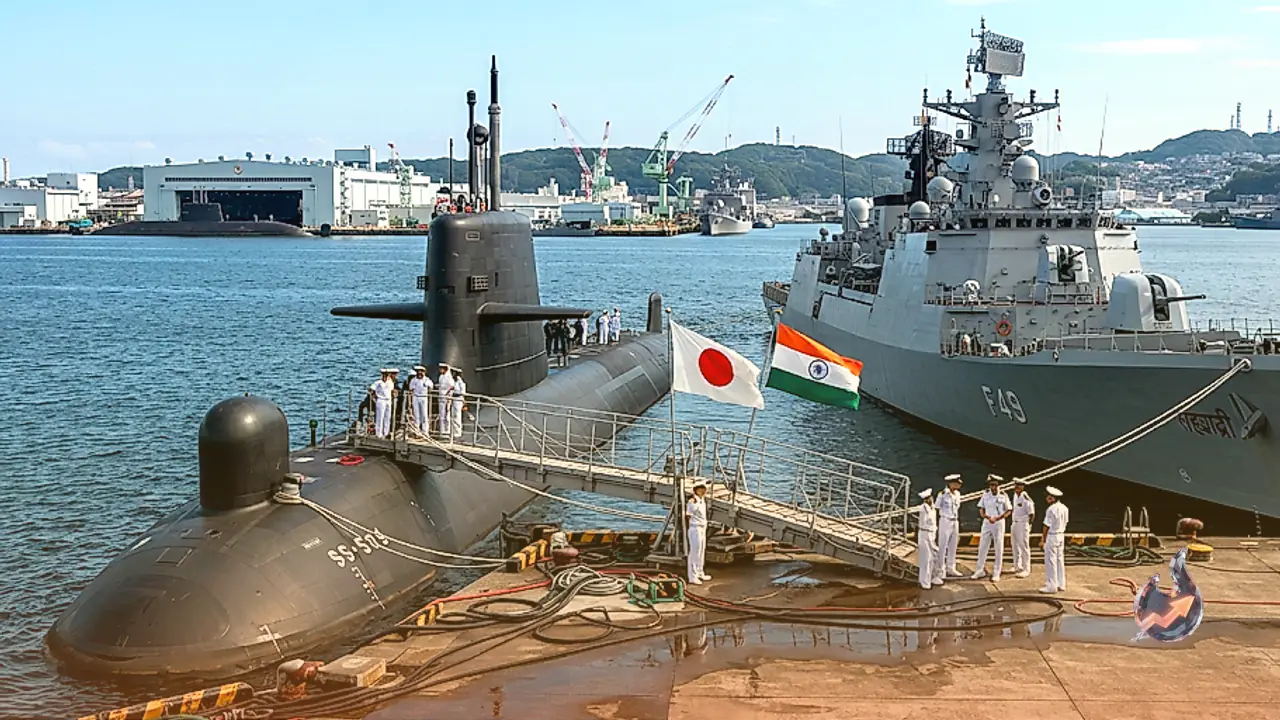

India and Japan are taking their defense collaboration to unprecedented heights, preparing to build a formidable security architecture spanning from the ocean depths to the skies. Following recent high-level consultations, both nations have reached a consensus to expand cooperation in underwater and missile technologies, a move that is set to significantly boost India's defense capabilities across maritime and aerial domains.
During his visit to Tokyo, Defense Minister Rajnath Singh held extensive bilateral talks with his Japanese counterpart. Following the discussions, he stated that India and Japan are actively strengthening their Special Strategic and Global Partnership. Both countries are currently gearing up to mark the 75th anniversary of the establishment of diplomatic relations in the year 2027.
Highlighting the continuous progress in bilateral defense and security cooperation, Singh pointed to the joint military exercise Veer Guardian 26 held in India. For the very first time, combat aircraft from Japan's Air Self-Defense Force participated in the drills, providing the Indian military with a valuable opportunity to study and adopt advanced Japanese techniques.
Expanding Maritime Security and Industrial Collaboration
The newly forged security arrangements encompass a wide array of strategic areas. Both governments have agreed to step up cooperation in maritime security, air and maritime domain awareness, search and rescue operations, and intelligence sharing. Furthermore, decisions have been finalized to accelerate joint efforts in underwater systems, missile development, and cutting-edge technologies, ensuring enhanced preparedness from beneath the sea to the upper atmosphere.
Discussions also focused on finalizing an agreement for the maintenance and repair of naval vessels in the near future, enhancing mine countermeasures capability, and deepening defense industrial cooperation under the framework of Design with Japan, Make in India.
Reiterating a shared vision for global stability, Singh emphasized that both nations firmly advocate for the peaceful resolution of regional and international disputes and strict adherence to international law.