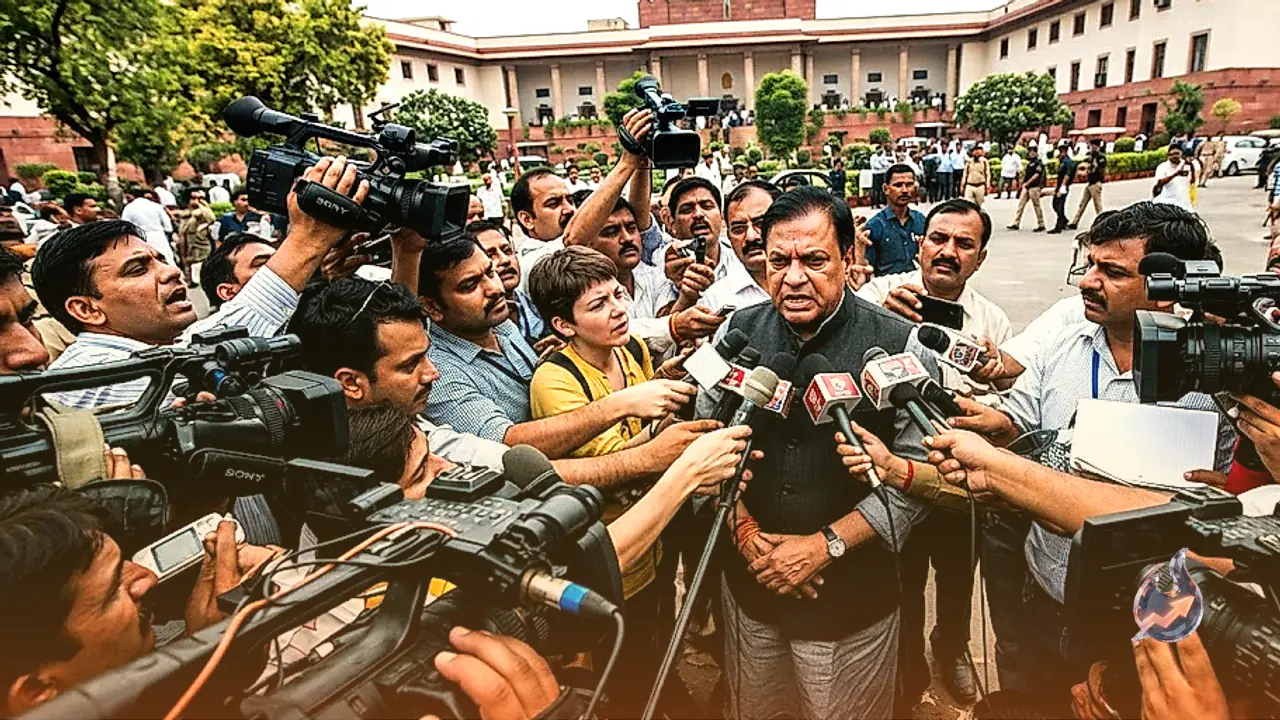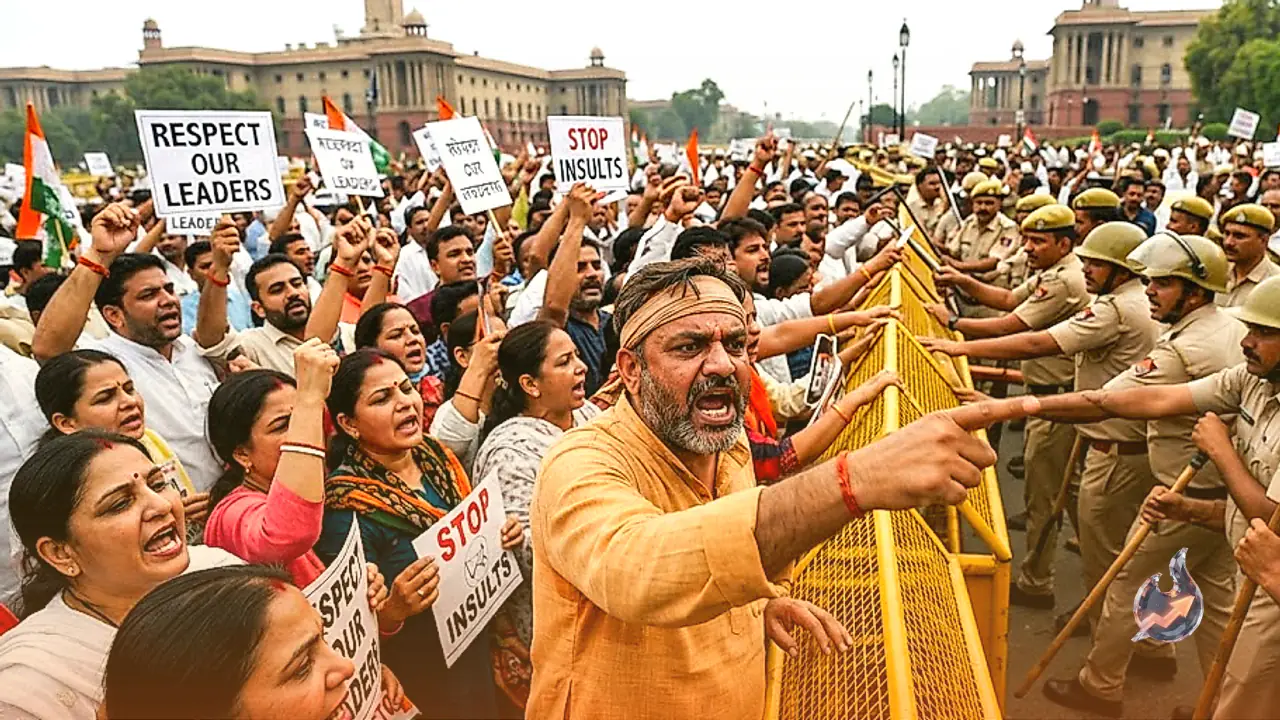























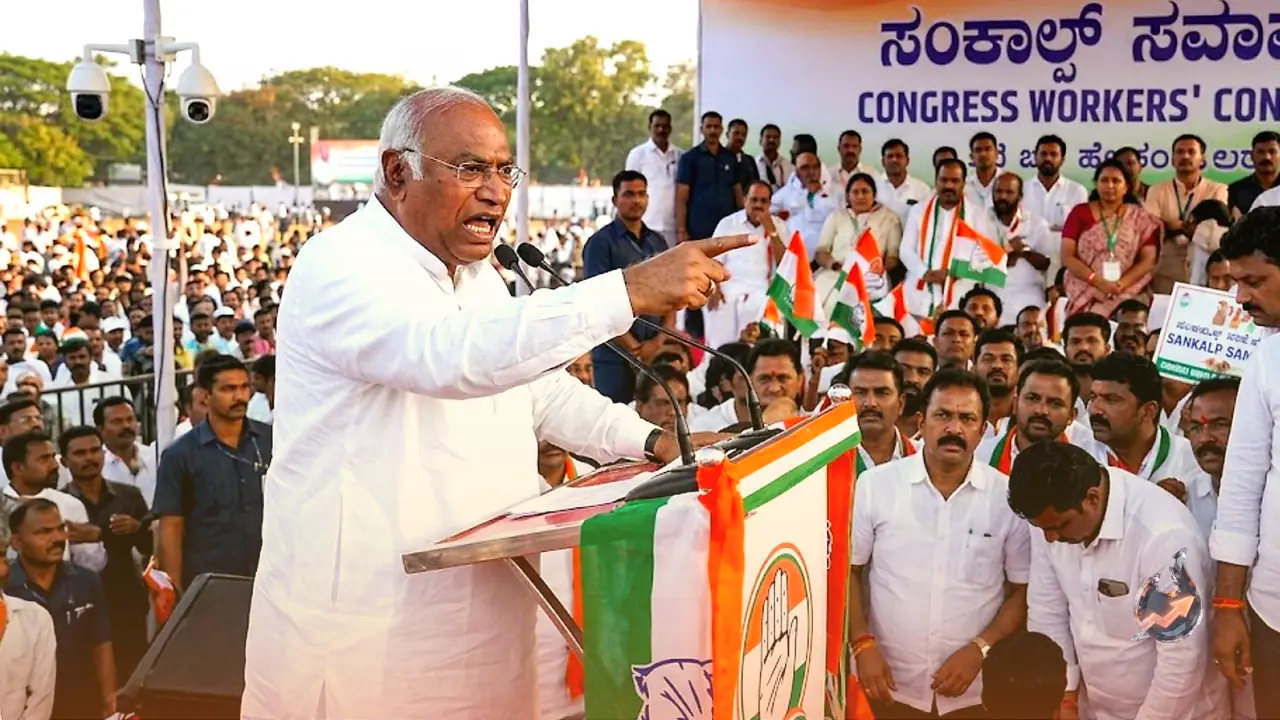

The Congress party's 'Sankalp Samavesh' event in Bengaluru was mid-session when the mood shifted sharply. A section of workers began chanting 'DK-DK' loudly, displaying their support for Chief Minister DK Shivakumar. Party president Mallikarjun Kharge, seated on the stage, did not let it pass. He stepped up to the microphone and addressed the crowd directly, making no effort to soften his words.
He told the assembled gathering that this was Congress party's platform and not any individual leader's personal stage. Referring to the slogan-chanters, he called them "useless people" in front of the entire crowd and stated plainly that there is no room for personality cults in Congress. The party, he said, has given a great deal to its leaders over the years, making such displays of individual devotion all the more unacceptable.
CCTV Warning Signals Zero Tolerance for Indiscipline
Kharge extended his reprimand with a concrete warning. He said that video footage from the CCTV cameras installed at the event would be carefully reviewed, and that everyone found to have participated in the disruption and chanting would be identified and face strict disciplinary action. The warning left little room for doubt: the Congress leadership was treating this not as a minor disturbance but as a serious breach of party discipline that would carry real consequences.
Fifty-Eight Years of Experience Behind the Discipline Lecture
Kharge grounded his message in the weight of personal experience, pointing to 58 years spent in active politics. He argued that Congress had given much to its leaders over the decades, which is precisely why placing any one individual on a pedestal at a party event crosses a line the organisation cannot allow. The broader context was unmistakably the factional rivalry in Karnataka, where the camps of Siddaramaiah and DK Shivakumar have for some time been engaged in a visible contest over the state's political leadership.
A Sharp Dig at the Modi-Trump Relationship
Having addressed the internal party matter, Kharge broadened his attack to national and global affairs. He targeted the personal friendship between Prime Minister Narendra Modi and US President Donald Trump, arguing that what appears as a close bond on the surface comes at a real cost to ordinary people. He alleged that Narendra Modi's policies are causing harm to India, while Donald Trump's decisions are proving damaging to the wider world. Both men may call themselves friends, he suggested, but it is the public that ends up paying for their choices.
Invoking Nehru to Critique Today's Foreign Policy
To sharpen his critique of the government's foreign policy direction, Kharge invoked the era of Jawaharlal Nehru. He argued that during Nehru's time in government, India maintained balanced and respectful diplomatic ties with every country. Under the present government, he contended, foreign policy has come to be shaped by personal affinity between individual leaders rather than by the country's strategic interests, and this has damaged India's international standing and relationships.
Allegations of Financial Misconduct in Ram Temple Trust
Kharge also raised serious concerns about alleged financial irregularities in the Ayodhya Ram Temple Trust. He alleged that the large sums of money collected in the name of the Ram temple's construction, as well as donations flowing into temple donation boxes, have not been subjected to any transparent accounting. He demanded that an impartial investigation be conducted into the entire matter, arguing that the scale of the alleged financial misconduct warrants serious scrutiny.
The Deeper Story: Karnataka Congress's Factional Battle
Kharge's anger at the Bengaluru event pointed to something larger than a single moment of frustration. It reflected the long-running internal struggle within Karnataka Congress between the Siddaramaiah faction and the DK Shivakumar camp, a rivalry centred on who should lead the state that has periodically broken into the open. The 'Sankalp Samavesh' incident was merely the latest visible eruption of that underlying tension. His firm public rebuke was directed not only at the workers who chanted slogans. It was a pointed message to the senior leaders who have been positioning themselves above the party organisation, allowing internal discipline to erode in the pursuit of personal political advancement.