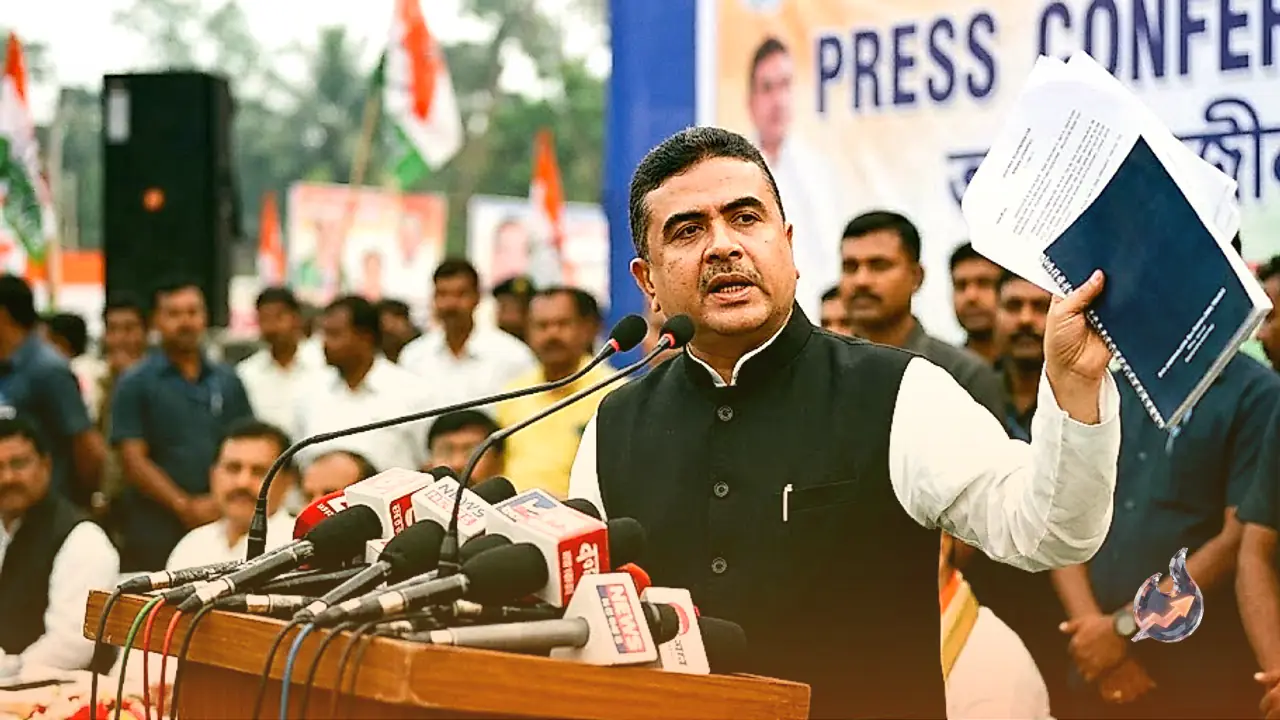


















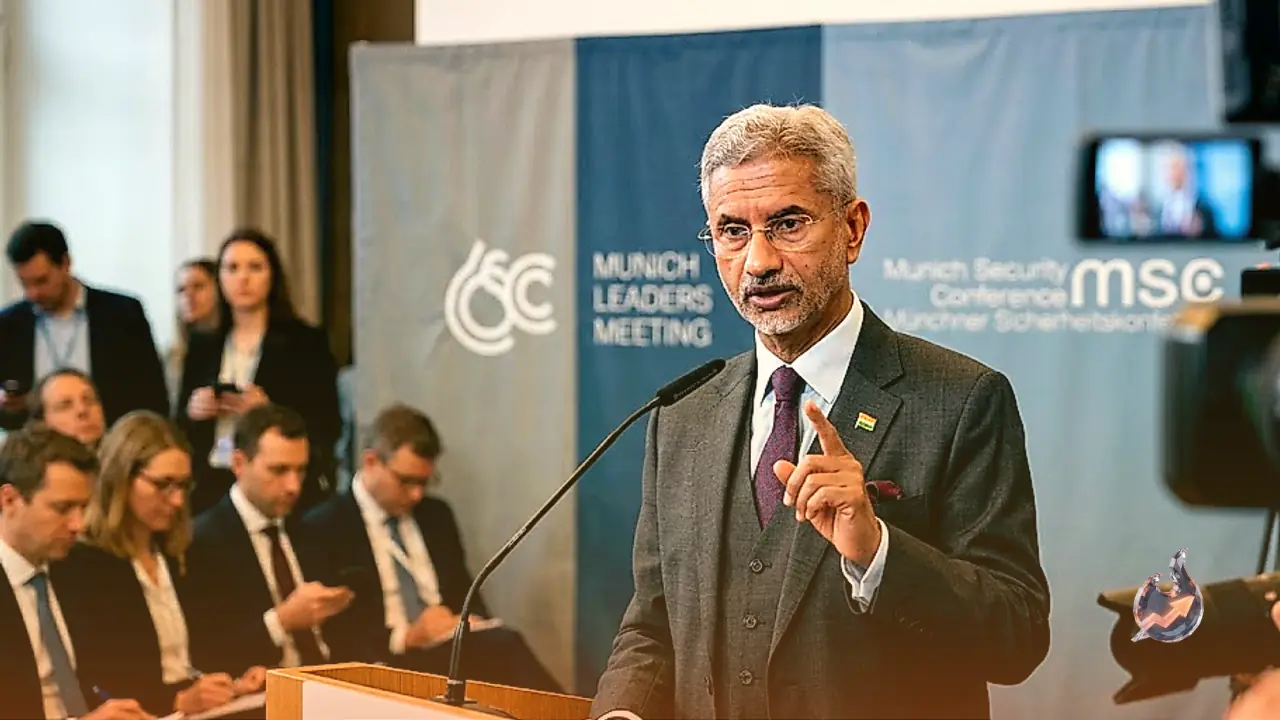

Addressing the shifting dynamics of global governance, External Affairs Minister S. Jaishankar stated that the international order is rapidly transitioning toward an era marked by an evolving role for the United States alongside an assertive rise of China. Speaking at the opening session of the Munich Leaders Meeting 2026 held in New Delhi, he observed that Washington has by deliberate policy choice turned into something of a solitary power, while Beijing continues to alter international equations through its expansive strategic posture. He emphasized that the unfolding friction between these two heavyweights is no longer restricted to traditional diplomatic maneuvering, but has effectively transformed economic assets, industrial capacities, and global supply networks into contested instruments of statecraft.
Washington's Recalibration and Beijing's Strategic Weight
Jaishankar identified the radical repositioning of the United States as the most defining feature of contemporary international affairs. He noted that this transformation reflects Washington's conscious decision-making rather than external compulsion, turning the country into an increasingly autonomous actor operating with selective global engagements. Simultaneously, China views itself as an exceptional power and occupies a distinct position across multiple strategic domains. The intense friction between these two dominant states now exerts a pervasive influence on international decisions, strategic alliances, and diplomatic choices worldwide.
The Weaponization of Capabilities and Trade Leverages
The External Affairs Minister observed that the reverberations of this intense competition extend far beyond Beijing and Washington. Across the global stage, sovereign states possessing specialized leverage or strategic capabilities are actively deploying those advantages to advance their narrow national objectives. Framing the core dilemma of economic interdependence, he questioned whether true leverage in a commercial exchange rests with the seller or the purchaser, whether physical control over production outweighs market access, and where genuine absorption capacity truly resides. In his assessment, strategic influence will increasingly favor those actors that maintain commanding control over essential sectors, sustain deep institutional commitments, and exercise independent decision-making capabilities.
Seeking a Goldilocks Equilibrium and Strategic Hedging
In response to escalating geopolitical polarization, Jaishankar advocated for a Goldilocks equilibrium across the global architecture. He defined this as an operational environment that avoids extreme friction and geopolitical confrontation on one hand, while preventing the unchecked hegemony of a single dominant power on the other. Instead of locking themselves into rigid ideological blocs, emerging economies and middle powers are practicing strategic hedging. By diversifying diplomatic, economic, and technological engagements across multiple partners, these nations seek to shield their domestic economies, protect critical supply networks, and preserve sovereign autonomy in an unsettled geopolitical climate.
A Broader Mandate for Emerging and Middle Powers
The transformation of global governance models creates significant opportunities for proactive collaboration among emerging and middle powers. Jaishankar urged these nations to forge flexible coalitions focused on peace, international stability, advanced manufacturing, public healthcare, critical supply security, regional connectivity, climate transition, defense modernization, and space research. When international conflicts or tensions emerge, constructive solutions need not depend exclusively on traditional superpowers; coalitions of middle powers can pool administrative and diplomatic resources to facilitate de-escalation. Complete alignment across all foreign policy issues is unnecessary, as tangible cooperation can thrive on well-defined convergences of mutual interest.
Non-Superpowers Holding Critical Technological Chokepoints
A nation does not need to rank among the largest global powers to wield decisive geopolitical leverage. Drawing attention to the semiconductor ecosystem and high-precision manufacturing, Jaishankar pointed out that indispensable technological nodes are managed by non-superpowers. In advanced microchip fabrication, Taiwan's TSMC remains an essential pillar for the entire international digital economy, while the Netherlands' ASML holds an unmatched position in advanced lithography systems required to manufacture cutting-edge silicon. Turning to public health security, he underscored the necessity of dispersing the production of finished pharmaceuticals and Active Pharmaceutical Ingredients rather than keeping them concentrated in isolated regions, noting that global pandemic disruptions thoroughly exposed the structural fragility of centralized supply chains.
Coalitions, Corridors, and the Multilateral Mosaic
Reflecting these evolving geopolitical dynamics, nation-states are increasingly building issue-based coalitions to safeguard their collective interests. Jaishankar cited the Quad as a prime manifestation of enhanced coordination among emerging and middle powers. In the infrastructure domain, transformative connectivity frameworks such as the India-Middle East-Europe Economic Corridor, the International North-South Transport Corridor, and the Northern Sea Route are assuming strategic importance. He also characterized BRICS as a vital forum where diverse economies find that speaking as a collective amplifies their diplomatic weight far beyond what individual voices could achieve, alongside Indian-led multilateral initiatives like the International Solar Alliance and the Coalition for Disaster Resilient Infrastructure.
The Strategic Horizon of the India-EU Free Trade Agreement
Turning to bilateral economic ties, Jaishankar characterized the proposed Free Trade Agreement between India and the European Union as a true game changer. He stressed that completing this agreement would extend well beyond standard tariff reductions, fostering deep institutional alignment, mutual regulatory understanding, and closer private-sector integration. Such a framework would catalyze expanded partnerships across artificial intelligence, semiconductor ecosystems, advanced manufacturing, life sciences, and innovative research. He noted a shared approach between India and Europe regarding the ethical and regulatory dimensions of artificial intelligence, while pointing to India's thriving network of Global Capability Centers as a functional bridge anchoring both economies.
Defense Industry, Space Infrastructure, and the Green Transition
As Europe seeks to reconstruct its strategic and industrial defense capabilities, Jaishankar highlighted complementary opportunities with India's defense sector, where domestic startups are forming productive partnerships with global defense contractors and fueling rising exports. In the space domain, as Europe looks to augment its aerospace competencies, India is scaling up its satellite launch capabilities and orbital infrastructure for the global commercial market. Addressing climate resilience and energy transition, he underscored the value of combining European technological expertise and capital with the expansive Indian market, calling for sustained investments by European renewable energy firms into India's green infrastructure.
Reforming the Global Architecture in a Multipolar World
Having sustained the post-war global order for decades, the United States is now visibly paring back its commitments, creating institutional voids across international governance. Jaishankar emphasized that emerging economies, particularly India with its expanding gross domestic product and international stature, must step forward to assume greater responsibilities. Addressing multilateral governance, he maintained that the objective should not be dismantling the United Nations, but executing urgent structural reforms to restore its credibility. As global politics becomes genuinely multipolar, nations across the Global South and Global North share a common drive to de-risk supply networks, diversify strategic dependencies, and chart independent paths through flexible multilateral partnerships.