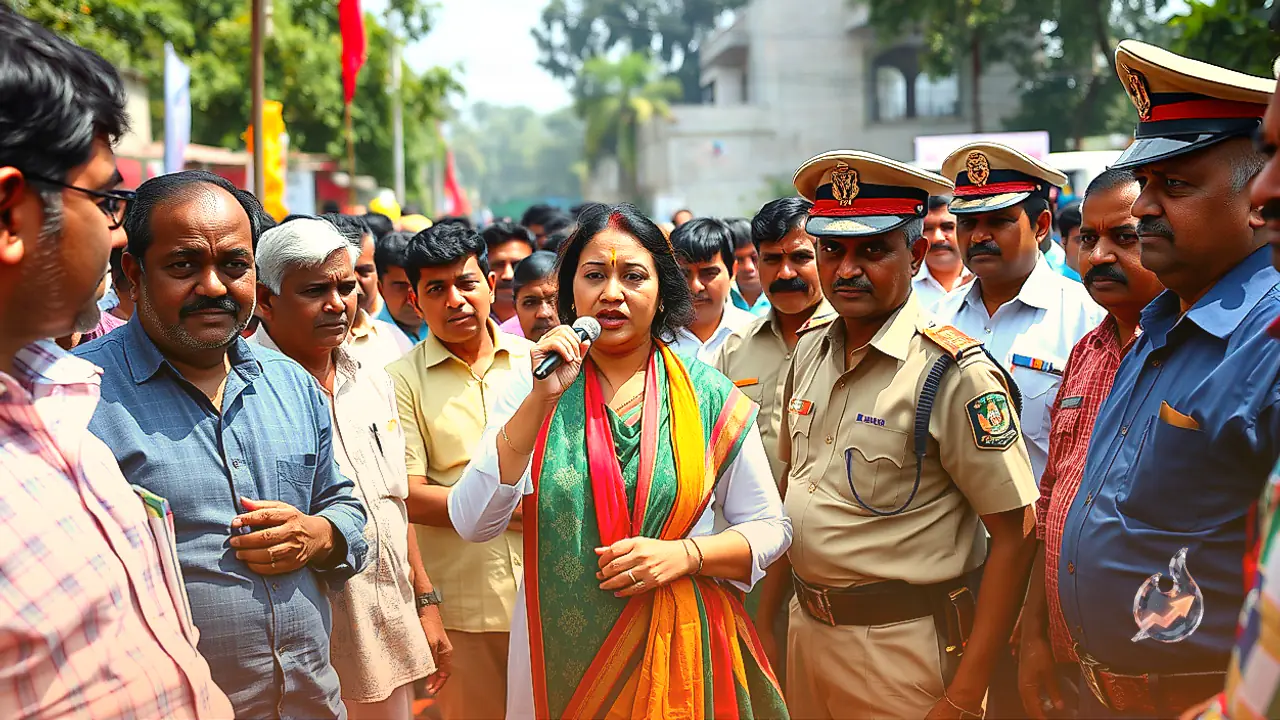















Political maneuvering has begun to take shape in Uttar Pradesh as preparations start for the upcoming 2027 assembly elections. The central leadership of Congress has carried out a comprehensive structural overhaul within its state organization, formally introducing a newly balanced team. In a notable transition, former state president Ajay Rai has been replaced by Aradhana Mishra Mona, a three-time member of the legislative assembly representing the Rampur Khas constituency, who now takes charge as the president of the Uttar Pradesh Congress Committee. Alongside her appointment, Imran Masood, an influential parliamentarian representing Saharanpur, has been designated as the executive president. This reconstituted leadership group reflects a deeply deliberated calculation to address key social and demographic segments across the state.
The revised organizational roster seeks to bridge several demographic bases that historically shaped state politics. Alongside existing state in-charge Rajendra Pal Gautam, an established Dalit leader, the party has inducted Alok Prasad, who also belongs to the Dalit community, as a senior vice president. Additionally, Devendra Nishad has been brought into the leadership fold to provide direct representation to the Extremely Backward Classes. By assembling these leaders, the Congress party is actively attempting to consolidate major voting blocs across regional boundaries. Observers are currently assessing whether this coalition-oriented setup is primarily intended to strengthen the party's negotiating leverage during seat-sharing discussions with the Samajwadi Party or to present a direct, standalone electoral challenge to the Bharatiya Janata Party alliance.
Mobilizing Upper-Caste and Minority Voters
By entrusting the primary leadership role to Aradhana Mishra Mona, daughter of Rajya Sabha parliamentarian Pramod Tiwari, the Congress leadership has sent an intentional signal to upper-caste communities, specifically Brahmin voters. In the electoral dynamics of Uttar Pradesh, Brahmin voters account for roughly 10 to 12 percent of the electorate and have repeatedly acted as a pivotal factor in deciding governance outcomes. The strategic elevation of a prominent Brahmin face appears aimed at capitalizing on perceived discontent within this segment toward the current administration.
Simultaneously, the appointment of Imran Masood as executive president addresses minority demographics in the western districts of the state, where his personal network remains robust. Muslim voters represent approximately 19 to 20 percent of the total electorate across Uttar Pradesh. By placing Masood in a senior executive role, the party hopes to establish direct engagement with this community and safeguard its core vote share against fragmentation. Through this dual leadership structure, the organization is attempting to revitalize its historic social coalition combining upper-caste and minority constituencies.
Outreach Toward Dalit and Extremely Backward Communities
The strategic framework of the Congress party extends well beyond upper-caste and minority voters. A concerted effort is underway to attract Dalit and Extremely Backward Class voters who may be drifting away from Mayawati's Bahujan Samaj Party amid its declining electoral presence. With Rajendra Pal Gautam overseeing the state as in-charge and Alok Prasad positioned as senior vice president, Dalit representation occupies prominent tiers within the committee. Complementing this, Devendra Nishad's inclusion addresses communities categorised under the Extremely Backward Classes.
This leadership distribution is structured to appeal to non-Yadav Other Backward Classes and marginalized communities looking for alternative political platforms. By extending formal organizational authority to figures from these demographic groups, the party seeks to create a viable social coalition capable of shifting traditional ballot equations across multiple electoral belts.
Impact on Seat Dynamics in Alliance with Samajwadi Party
Should this newly assembled social formula of Brahmin, Muslim, Dalit, and Other Backward Class representation align with the Samajwadi Party's PDA framework—representing the backward classes, Dalits, and minorities—the combined political impact could reshape the broader electoral landscape. Under such an arrangement, analysts project that the Muslim and Yadav vote share, totaling around 28 to 30 percent, would experience minimal division. Concurrently, non-Yadav Other Backward Classes and Extremely Backward Class voters aligning with this joint platform could potentially challenge the traditional backward-caste support base of the Bharatiya Janata Party.
Political analysts estimate that if this coalition successfully coordinates voter mobilization and ensures smooth vote transfers on the ground, between 120 and 150 assembly seats across Uttar Pradesh could experience shifts in their competitive dynamics. In western Uttar Pradesh alone, around 40 to 50 assembly constituencies possess significant Muslim populations. Influenced by Imran Masood's presence, districts such as Saharanpur, Muzaffarnagar, Meerut, Bijnor, and Moradabad could witness substantial consolidation among Muslim, Jat, and Dalit voters.
Shifting Balances Across Central, Eastern, and Bundelkhand Belts
Across eastern and central Uttar Pradesh, an estimated 60 to 70 assembly constituencies could see altered competitive equations. The elevation of Aradhana Mishra Mona raises questions regarding whether a portion of Brahmin voters will move away from the governing party. Supported by Nishad and Dalit representatives, the Congress party may also offer stiff competition in eastern areas characterized by high concentrations of Extremely Backward Class populations.
Furthermore, the Bundelkhand and Terai regions encompass 20 to 30 critical constituencies where Dalit and Extremely Backward Class communities represent decisive electoral blocs. Successful outreach in these regions could create close contests in areas where political outcomes rely heavily on the participation of marginalized demographic groups.
Counter-Strategies and Ground Realities for the Ruling Party
Despite these opposition moves, Chief Minister Yogi Adityanath and the Bharatiya Janata Party retain substantial structural advantages to counter this social engineering. The party's extensive grassroots organization, paired with the large welfare beneficiary network cultivated by the double-engine administrative model, continues to operate effectively beyond rigid caste demarcations. Furthermore, a substantial majority of Brahmin, Thakur, and Vaishya voters has long formed the core constituency of the ruling party, making a wholesale realignment unlikely solely on the basis of leadership changes.
The state government's strict zero-tolerance approach toward criminal activities and its sustained emphasis on Hindutva issues maintain considerable support across Uttar Pradesh. Consequently, this reconstituted Congress core team serves not only as an effort to rebuild political competitiveness ahead of 2027, but also as a tactical instrument to strengthen its bargaining power during prospective seat-sharing negotiations with regional partners.