















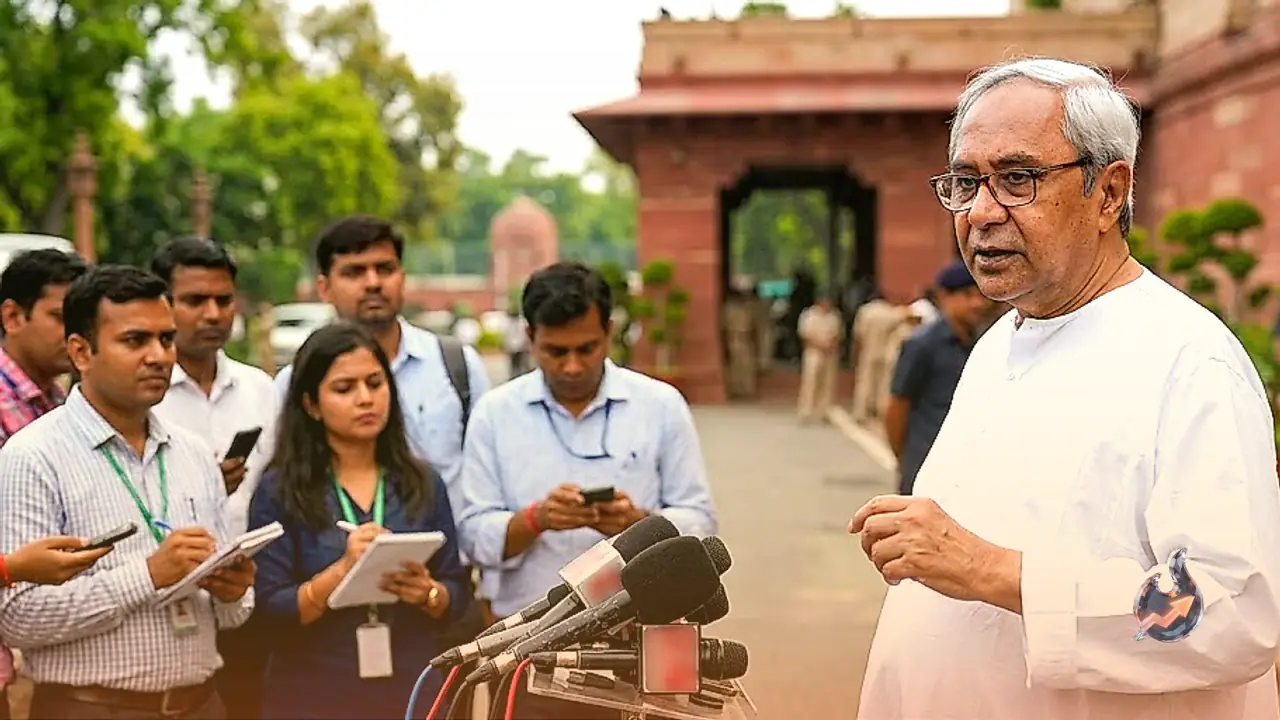

Biju Janata Dal chief Naveen Patnaik has called on the government to place the country's exam paper leak crisis at the very top of the agenda when Parliament's monsoon session opens tomorrow, warning that public faith in India's testing system has collapsed and that someone must be held answerable for it.
What Patnaik said on X
In a post on X, the former Odisha Chief Minister said the matter was too serious for millions of affected students to be sidelined by routine politics. He argued that every strong democracy rests on solid schooling and a fair, transparent way of testing its students, and he credited India's own education system with producing generations of engineers, doctors, scientists, teachers and innovators who went on to shape the modern country. That legacy, he said, is exactly what makes the present breakdown so painful to watch.
Naveen Patnaik said, "A nation that compromises the integrity of its examination system, compromises its own future."
He added that the setback goes well beyond a single botched test. It tells hardworking students that their effort no longer counts, and it takes away what is often their only route out of poverty for families with limited means. Patnaik said the country's children and young people are looking to their leaders for direction at this moment, and that leadership cannot afford to let them down.
Push for a full Parliament debate
Patnaik wants lawmakers to hold a full, honest debate on these failures during the monsoon session, which is due to run until August 13, and to follow that debate with concrete reforms so that leaked question papers, botched evaluations and similar lapses are never repeated. He also said that whoever is responsible for this breakdown of public trust needs to be identified and held to account, rather than the matter being allowed to quietly fade away once the news cycle moves on.
An appeal for dialogue with protesting students
Setting politics aside, he urged the Centre to sit down with the students who have been holding peaceful protests for several days now, and to give them a genuine platform to be heard. A healthy democracy moves forward through conversation rather than silence, he said, and that is especially true when the people affected are the country's own youth. He added that honest, open dialogue with the protesting students would go a long way toward rebuilding confidence in India's democratic institutions, in its schools and testing system, and in the leaders entrusted with shaping the students' future. The BJD, he said, stands firmly behind the country's young people and students on this issue.
The NEET-UG row and opposition pressure
Patnaik's remarks come at a moment when Congress and several other opposition parties are pushing for Union Education Minister Dharmendra Pradhan to step down over the alleged NEET-UG exam leak, the national test used for admission to medical colleges across the country. Students unhappy with how the matter has been handled have been staging a continuous sit-in at Delhi's Jantar Mantar, one of the capital's traditional protest sites. Activist Sonam Wangchuk, who had joined the demonstration there and gone on a hunger strike, has since been moved to a hospital.
Notably, Patnaik's intervention is significant because it comes from a party that is not part of the Congress-led opposition bloc pressing for Pradhan's resignation, suggesting the anger over paper leaks and exam mismanagement now extends beyond the usual opposition ranks and reflects wider unease over how the education ministry has handled the crisis.
Congress's own campaign against paper leaks
Congress has been running its own parallel campaign against paper leaks under the banner Chhatron ki Goonj. Party leader Rahul Gandhi, who spoke at a Chhatron ki Goonj gathering held in Dehradun this past Friday, claimed that the country had witnessed as many as 152 paper leaks over the past decade. He questioned why the government had still failed to punish anyone responsible for those leaks, and called for stronger technology-based safeguards to protect future examinations from being compromised in the same way.
What happens next
With Parliament's monsoon session opening tomorrow and running until August 13, the paper leak controversy is likely to be one of the first flashpoints between the treasury benches and an opposition that has already signalled it plans to keep the pressure on the government over the education ministry's handling of the crisis. It also means Pradhan is likely to face uncomfortable questions from multiple directions once the session gets underway, not just from the Congress benches he has already been sparring with over the issue.