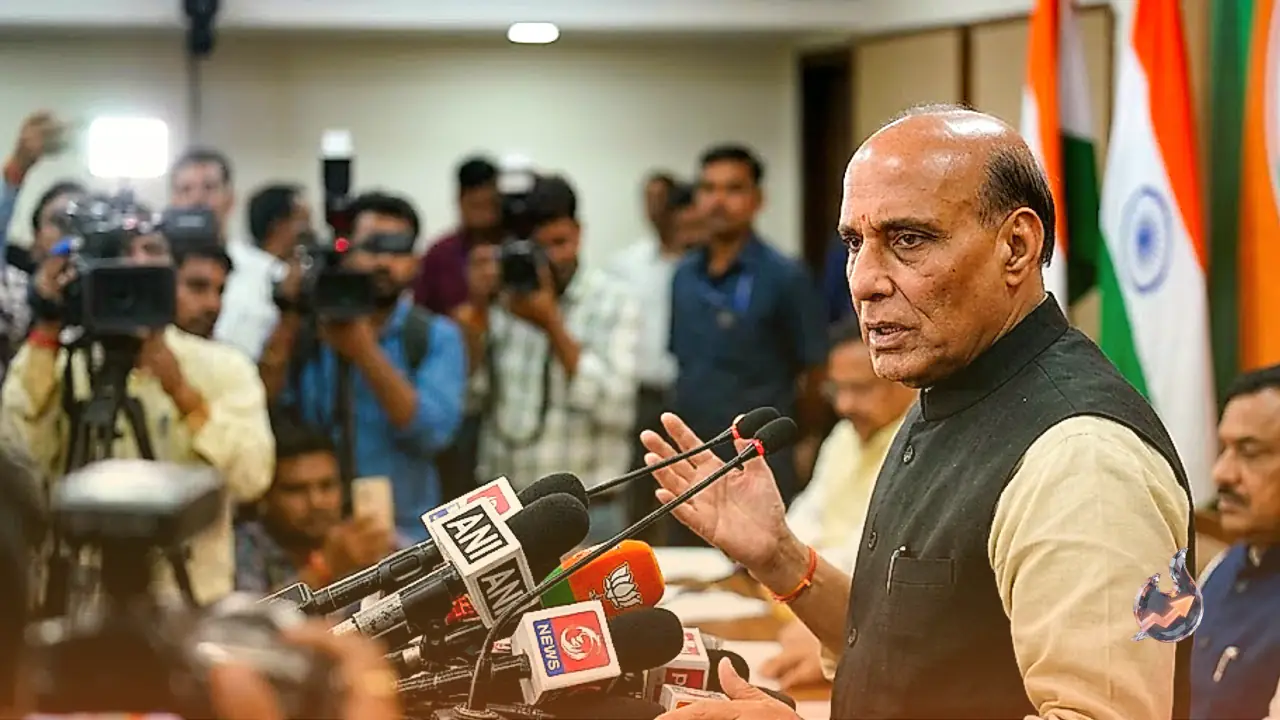





















A sharp political debate has broken out following the speech delivered by Prime Minister Narendra Modi on the occasion of the 80th Independence Day from the ramparts of the Red Fort. The usage of the term Brain Naxal during the address led to a direct face-off between the Bharatiya Janata Party and the Congress. The confrontation intensified after senior Congress leader and former Union Minister P Chidambaram stated that he was proud to be referred to by the term. In response, Union Minister of Parliamentary Affairs Kiren Rijiju provided a detailed clarification outlining the exact context of the Prime Minister's remarks.
Origin of the Political Debate at Red Fort
While addressing the nation on the 80th Independence Day, Prime Minister Narendra Modi outlined the efforts taken against Naxalism in the country. He mentioned that security forces have largely contained armed Naxals who resort to violence within forest areas. However, he also highlighted a emerging ideological challenge that requires equal attention.
The Prime Minister noted that while armed Naxals have weakened, individuals carrying Naxalite ideology remain active and look for opportunities to mislead the public. He emphasized the necessity of identifying such elements and isolating them from society in the interest of national integrity. This specific portion of the address became the focal point of the ongoing political disagreement.
Chidambaram's Statement and BJP's Counterattack
On the day following the speech, senior Congress leader P Chidambaram reacted publicly, asserting that he felt proud to be called a Brain Naxal. The statement drew swift criticism from the BJP leadership, who questioned why a senior Congress figure chose to apply a warning directed against anti-national ideologies to himself.
BJP leaders argued that Prime Minister Narendra Modi did not mention any political party or individual leader in his address. Consequently, they stated that Chidambaram's decision to link himself to the description was entirely his own interpretation and response.
Kiren Rijiju Clarifies the Scope on Social Media
Amid the growing political row, Union Minister Kiren Rijiju posted a detailed explanation on the social media platform X. He clarified that the Prime Minister had not labeled opposition leaders as Brain Naxals. Instead, the expression referred specifically to individuals and groups that align with ideology hostile to the Indian constitutional framework.
Rijiju detailed that the term applies to those who support Maoism and reject the Constitution of India. He added that people standing alongside separatists or supporting the restoration of Article 370 also fall within this category. Furthermore, he referenced the geographically critical Chicken's Neck corridor in West Bengal, which connects the Northeastern region to the rest of India. Rijiju stated that anyone advocating for severing this vital connection to detach the Northeast belongs to the same ideological grouping.
Statements from BJP Representatives
Joining the critique, BJP spokesperson RP Singh accused P Chidambaram of attempting to provide cover to proponents of Brain Naxal and Urban Naxal ideologies. He asserted that offering legitimacy to such positions is detrimental to public discourse.
Additionally, BJP leader Syed Shahnawaz Hussain commented that addressing armed insurgents in forested areas is a straightforward tactical matter for law enforcement. However, when prominent figures identify with anti-establishment ideologues and disseminate misleading narratives against the state, it presents a more complex threat to internal stability.
Ideology and National Security at the Core of the Debate
On the opposing side, members of the Congress party continue to raise questions regarding the exact boundaries and political usage of the term Brain Naxal. They argue that broad categorizations risk misinterpreting legitimate dissent.
In response, the BJP maintains that the debate transcends terminology and focuses on opposing ideas that encourage violence, secessionism, or unconstitutional activities. The controversy surrounding the Independence Day speech highlights an ongoing ideological divide in national political discourse.