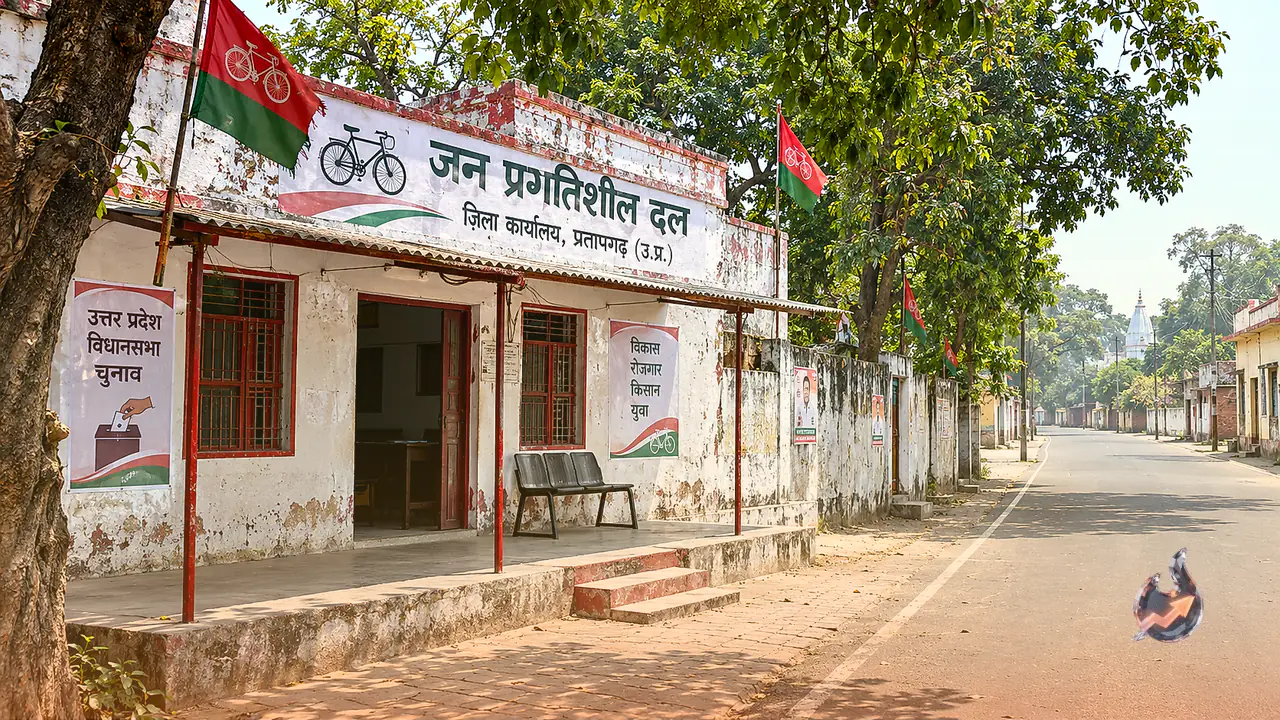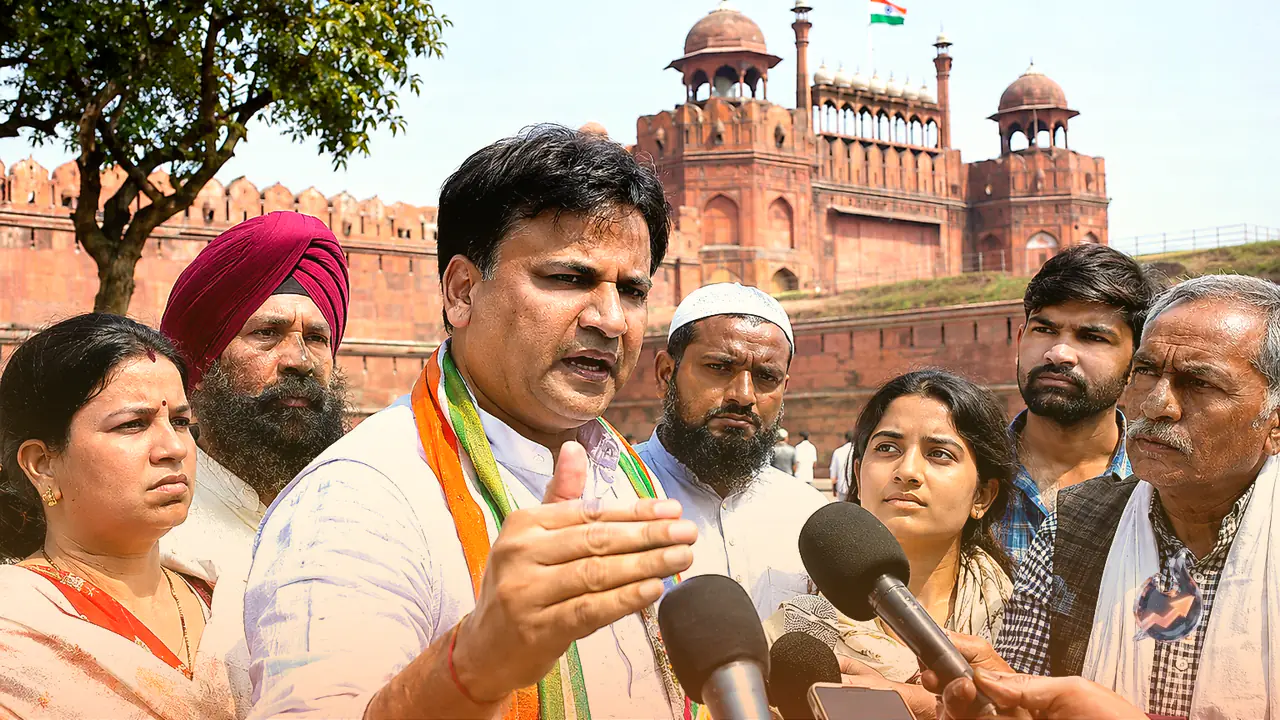

Political tension has escalated significantly following controversial remarks made by Shadab Chauhan, the national spokesperson of All India Majlis-e-Ittehadul Muslimeen (AIMIM). Chauhan stated that his political movement would first gain control over Lucknow and subsequently raise a green flag atop the historic Red Fort in Delhi. The statement immediately provoked sharp reactions from political opponents, sparking widespread debate across Uttar Pradesh and national political circles.
ST Hasan Delivers Stern Response
Senior Samajwadi Party leader ST Hasan reacted strongly to the AIMIM spokesperson's comments, offering a firm word of advice on national unity. Hasan emphasized that India thrives on unity in diversity, noting that colors such as saffron, green, and white represent the nation's shared culture and deep-rooted values. He recalled that various flags had been raised at the Red Fort on previous occasions in history, but such symbolic acts yielded no meaningful outcomes. Hasan urged political figures to maintain restraint and respect the country's pluralistic fabric instead of issuing divisive declarations.
Social Transformation Front and Political Objectives
Prior to the controversy surrounding his Red Fort remark, Chauhan had shared a post on his X account detailing the vision of the Social Transformation Front (Samajik Parivartan Morcha). He claimed that the formation of this front had left several established political parties deeply rattled. According to Chauhan, the front aims to establish a justice-driven administration in Uttar Pradesh and work toward creating a government in Delhi committed to upholding the Indian Constitution. He stressed that the primary objective of such a government would be to guarantee security, dignity, and equality for all citizens, ensuring that the national Tricolour flies high while preventing discrimination based on religion, caste, or community.
Chauhan's History of Controversial Remarks
This is not the first instance where Chauhan's public statements have drawn attention. Previously, he had publicly objected to comments made by senior leader Azam Khan regarding beards. While wishing Khan good health, Chauhan argued that Khan's remarks were objectionable because wearing a beard is a practice among Muslims in general, not restricted solely to religious clerics. In another lighthearted yet political dig, Chauhan had remarked that Samajwadi Party chief Akhilesh Yadav preferred Gujarati dhokla over biryani.
Furthermore, Chauhan strongly criticized Akhilesh Yadav's scheduled visit to the Ram Temple on December 12. Using an idiom to suggest that things ultimately return to their origin, Chauhan alleged that Yadav's visit effectively validated the long-standing movements led by the Bharatiya Janata Party (BJP) and the Vishva Hindu Parishad (VHP). He questioned whether Yadav had sought approval from Azam Khan, a founding member of the Samajwadi Party who fought extensively for the Babri Masjid through the Babri Masjid Action Committee. Chauhan asked Samajwadi Party's Muslim leadership how they intended to justify their political stance to Muslim voters.
Waris Pathan's Earlier Remarks and Muslim Political Representation
Chauhan's statement adds to a series of assertive public declarations by AIMIM figures in recent times. Earlier, AIMIM leader Waris Pathan made headlines with his statement declaring that a day would come when a Muslim youth named 'Abdul' would become the Chief Minister of Uttar Pradesh and eventually the Prime Minister of India. Political observers view these escalating rhetoric strategies by AIMIM as part of an ongoing battle for Muslim political representation and influence in Uttar Pradesh and beyond.