





















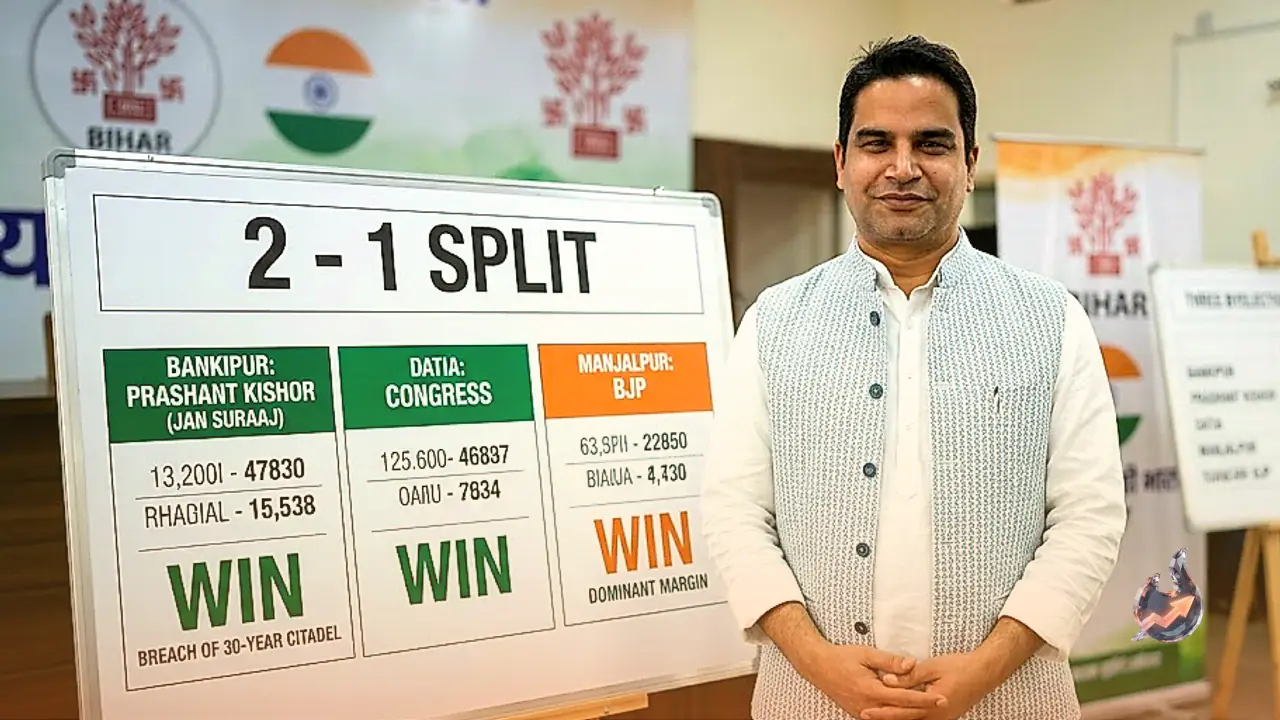

The results of the recent byelections across three key assembly constituencies have reignited intense political debate nationwide. With the ruling BJP trailing 2-1 in the aggregate tally, opposition parties have quickly mobilized to claim a shift in political momentum. Paradoxically, the very opposition leaders who previously alleged election manipulation, vote theft, and the misuse of administrative machinery by the ruling party have set aside those claims to celebrate the byelection outcomes. While the headline story remains Prashant Kishor's historic victory in Bihar's Bankipur constituency, the Congress managed a key win in Madhya Pradesh's Datia, even as the BJP retained its formidable grip on Gujarat's Manjalpur seat.
Prashant Kishor's Historic Triumph in Bankipur and the Vote Arithmetic
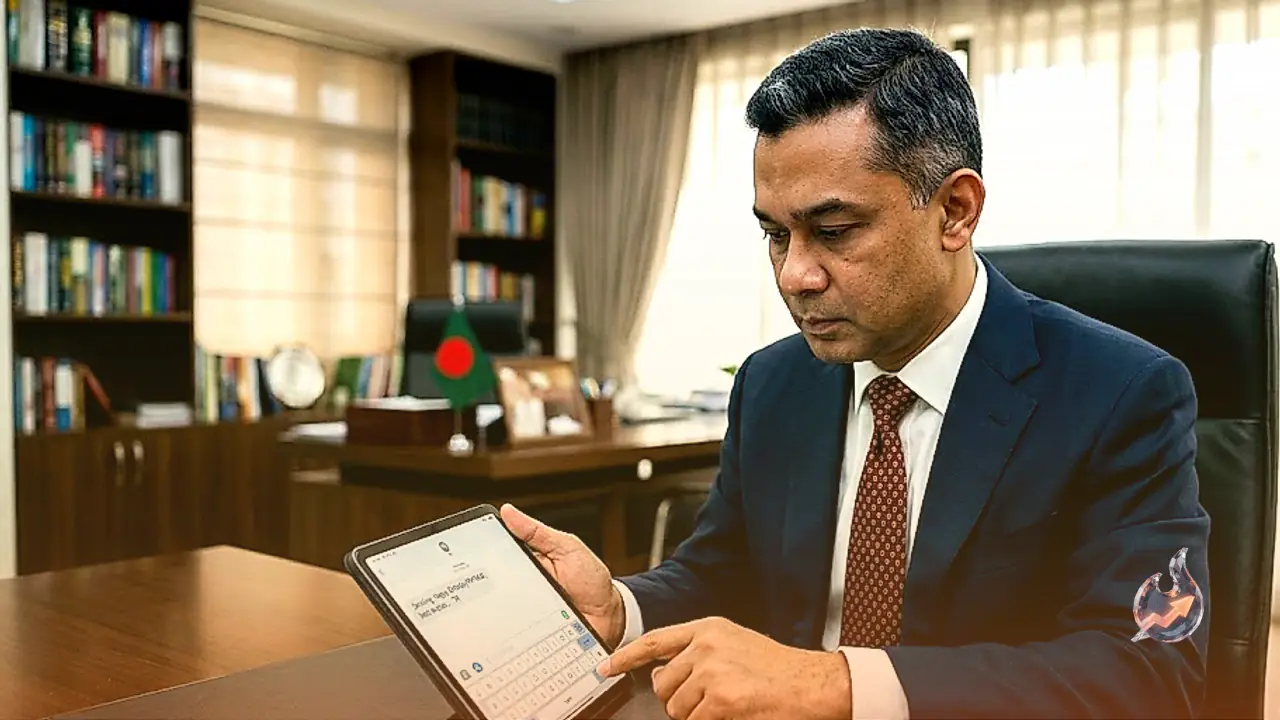
The byelection outcome in the high-profile Bankipur assembly segment in Patna, Bihar, delivered an unprecedented political shock. Jan Suraag founder Prashant Kishor registered a dominant performance by securing 64,151 votes. In contrast, his chief opponent, BJP candidate Neeraj Sinha, managed to gather 44,827 votes. This gave Prashant Kishor a decisive victory margin of 19,324 votes over the ruling party's nominee.
For the main opposition party in Bihar, the Rashtriya Janata Dal, the election proved disastrous. RJD candidate Rekha Gupta ended up in a distant third position with a mere 14,273 votes, resulting in the forfeiture of her security deposit. The votes polled by Rekha Gupta represented just 11 percent of the total turnout. This represents a staggering collapse for the RJD, considering that in the November 2025 assembly elections, the party had secured nearly 30 percent of the vote share in Bankipur, amounting to approximately 46,000 votes. The steep reduction in RJD's vote share within a span of a few months underscores a significant realignment among traditional voters.
Breaching a 30-Year Citadel: The History of Bankipur Assembly Seat
The defeat in Bankipur is widely regarded as a major setback for the BJP, given that the seat had been an invincible fortress for the party for three decades. The history of this constituency traces back to 1995, when Navin Kishore Sinha, father of current BJP President Nitin Nabin, won the seat then known as West Patna. Navin Kishore Sinha served as the MLA from this constituency continuously until his passing in 2006.
Following his father's demise in 2006, Nitin Nabin contested the byelection and won the seat for the first time. Over the next two decades, Nitin Nabin secured victory in five consecutive assembly elections, solidifying the party's supremacy in the region. He defeated the RJD candidate in 2010, followed by consecutive victories over Congress candidates in 2015 and 2020. In the previous year's assembly elections, Nitin Nabin once again defeated the RJD candidate to maintain his winning streak.
However, after being appointed as BJP President and subsequently elected to the Rajya Sabha, Nitin Nabin resigned from his assembly seat. The resulting vacancy triggered the byelection that saw the seat slip from the BJP's hands for the first time in nearly thirty years. What makes the result even more remarkable is that Prashant Kishor, whose organization failed to win a single assembly seat nine months prior, successfully dismantled a three-decade-old stronghold.
Datia Falls to Congress while BJP Dominates Manjalpur
Apart from Bankipur, the election result in Madhya Pradesh's Datia seat added to the ruling party's byelection losses. In a closely fought contest in Datia, Congress candidate Ghanshyam Singh defeated BJP candidate Ashutosh Tiwari by a margin of 6,016 votes. Ghanshyam Singh polled 66,757 votes against Ashutosh Tiwari's 60,741 votes, bringing cheer to the Congress camp.
On the other hand, the BJP maintained its absolute dominance in Gujarat's Manjalpur seat in Vadodara. BJP candidate Satish Patel posted a landslide victory by securing 55,481 votes. Congress candidate Bhikhabhai Rabari finished second with only 24,851 votes. Satish Patel retained the seat for the BJP with a massive winning margin of 30,630 votes, demonstrating the party's firm hold over its traditional voting base in Gujarat.
Opposition Swings into Attacks Following Bypoll Tally
The byelection results across two seats triggered immediate political commentary from opposition alliance leaders. Trinamool Congress leader Derek O'Brien reacted to the results by stating, "This is the beginning of the end for the BJP." Political observers noted the irony of leaders predicting the collapse of rival parties while facing organizational challenges within their own ranks.
Aam Aadmi Party chief Arvind Kejriwal congratulated Prashant Kishor on his victory while mounting a severe attack on the government. Arvind Kejriwal highlighted that the BJP had lost the seat previously represented by its national president, claiming that public dissatisfaction over paper leaks, donation transparency, and E20 policies has begun eroding the ruling party's voter base.
Samajwadi Party president Akhilesh Yadav shared his thoughts on social media platform X, terming the outcome a double defeat for the double-engine framework. Akhilesh Yadav argued that the shift indicates a broader desire for political change, adding that even traditionally safe seats can no longer guarantee victories. He further remarked that finding candidates willing to run on the ruling party's ticket would soon require drones and binoculars.
Strategic Lessons for RJD and Mainstream Opposition
While opposition leaders are celebrating the overall 2-1 tally, a deeper look at the vote share distribution suggests serious long-term challenges for regional parties like the RJD. The BJP's massive victory margin of 30,630 votes in Manjalpur demonstrates that its core voter base remains intact in key regions. Conversely, the catastrophic fall of the RJD's vote share in Bankipur from 30 percent to 11 percent exposes a severe decline in its political traction.
The fact that Prashant Kishor managed to capture a 30-year BJP stronghold despite having no previous parliamentary or assembly seats shows a shifting appetite among voters. Leaders like Tejashwi Yadav and Rahul Gandhi now face the reality of an emerging political force that appeals directly to dissatisfied voters across different demographics. Whether the Bankipur and Datia results signal voter turbulence among traditional upper-caste bases or a permanent move toward alternative political options remains the key question for future contests.