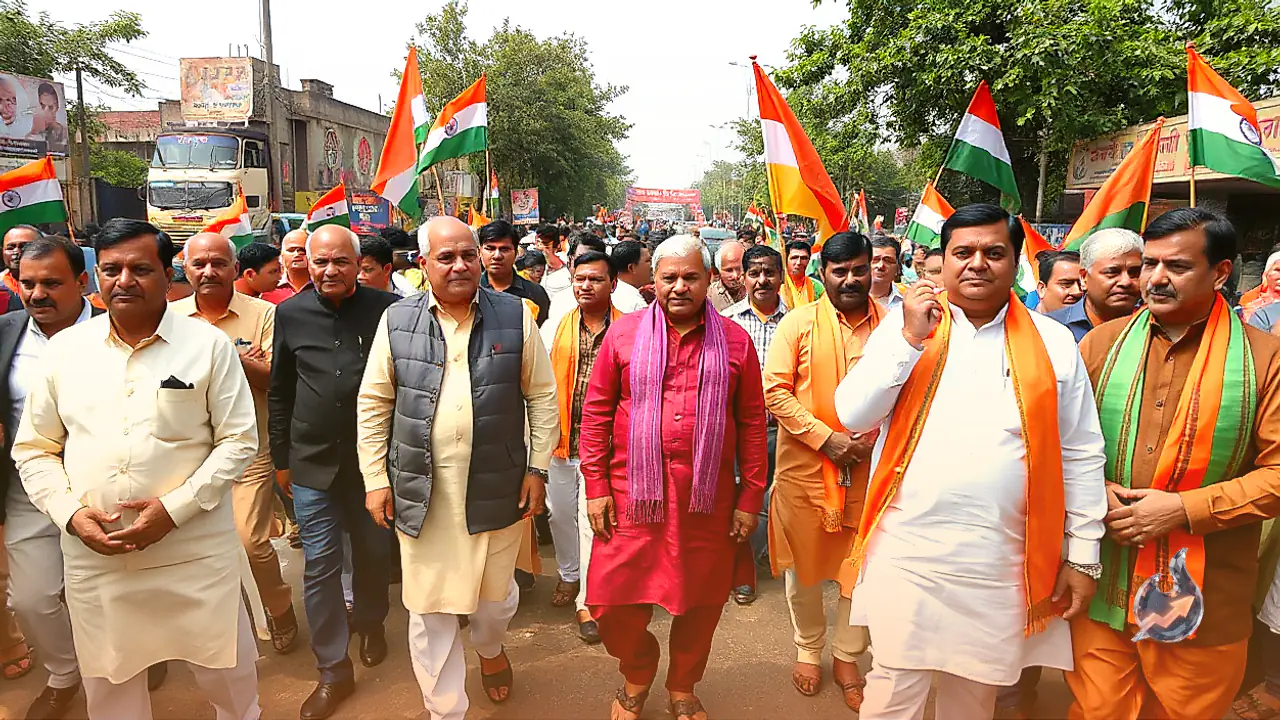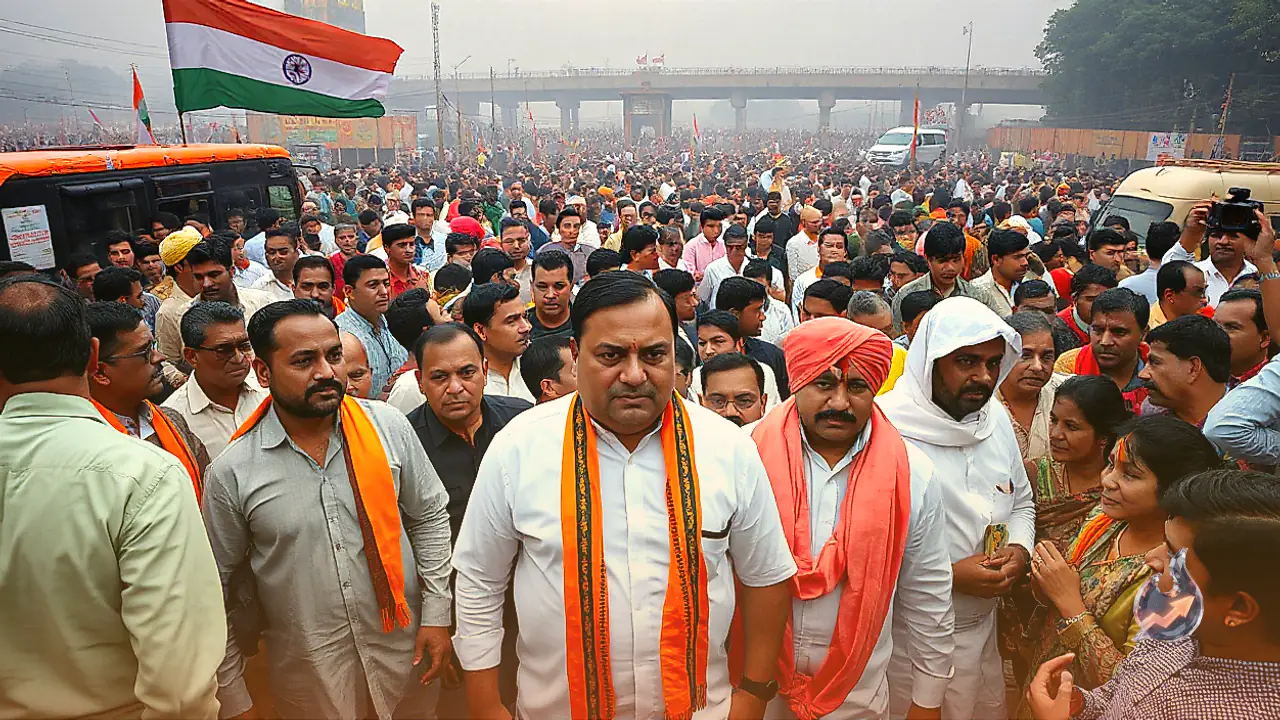



















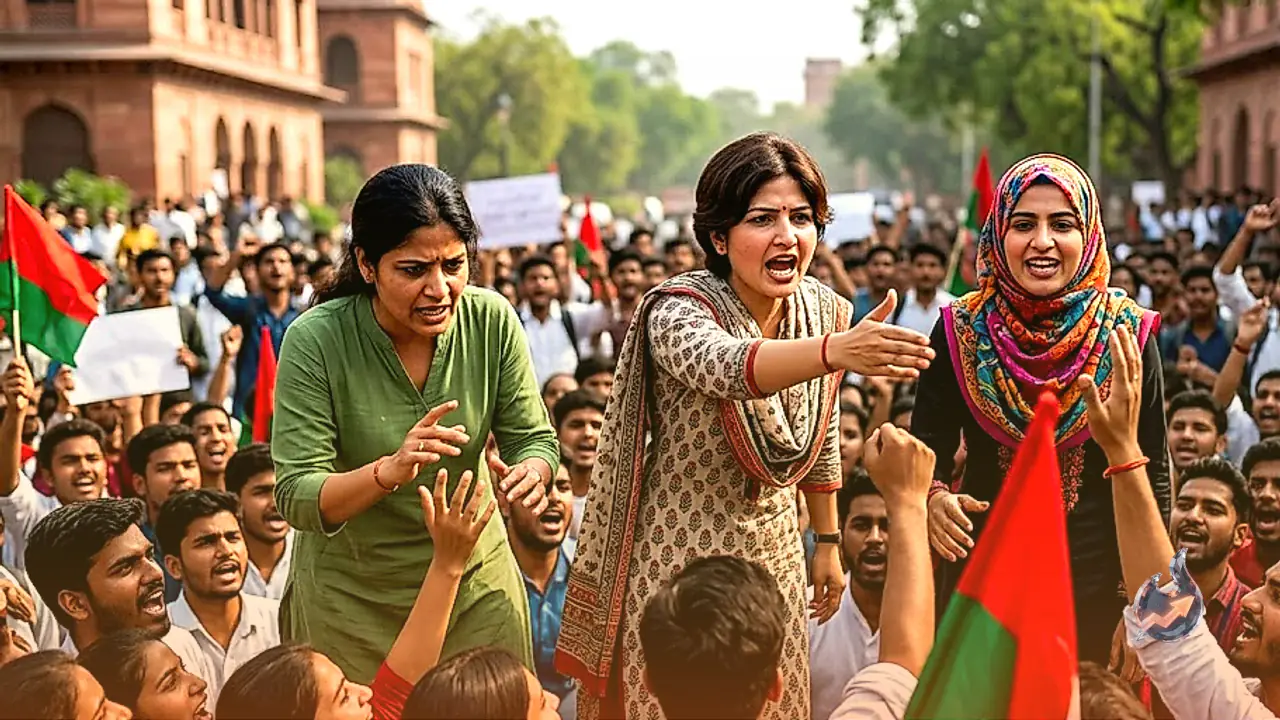

The political landscape of Uttar Pradesh is already witnessing the early tremors of the 2027 Assembly elections, and the epicenter recently shifted to the heart of the national capital. A massive demonstration held at Delhi's Jantar Mantar on Monday has inadvertently become a defining moment for the Samajwadi Party. What began as a gathering in support of the Cockroach Janata Party quickly transformed into a powerful showcase of female political leadership, significantly altering the narrative for the upcoming state polls. The presence of high-profile leaders, including Aam Aadmi Party convenor and former Delhi Chief Minister Arvind Kejriwal, highlighted the event's importance. However, it was the formidable trio of female parliamentarians from the Samajwadi Party, namely Dimple Yadav, Iqra Hasan, and Priya Saroj, who entirely captured the public imagination and dominated social media platforms with their fierce advocacy and ground level engagement.
As the political climate in Uttar Pradesh heats up ahead of the 2027 electoral battle, all eyes are now firmly fixed on this newly emerged women's brigade. Their recent actions in Delhi have raised a critical question regarding whether this dynamic trio will become the ultimate headache for the strategists of the Bharatiya Janata Party. The events at Jantar Mantar provided a clear preview of the opposition's evolving tactics. When the atmosphere during the youth and student protest grew tense and culminated in a massive police lathi charge, these lawmakers did not retreat to the safety of VIP enclosures. Instead, they marched directly from the Parliament to the protest site, wielding placards and placing themselves on the front lines to defend the youth.
Dimple Yadav Steps onto the Frontlines
Dimple Yadav, the Member of Parliament representing Mainpuri and wife of Samajwadi Party chief Akhilesh Yadav, emerged as the central figure of this resistance. Stepping out of conventional political boundaries, she was seen sitting on the ground amid the chaos, personally checking on the well being of the injured demonstrators. Her direct confrontation with the police and her unyielding stance against the authorities became the major talking point of the day. Taking charge of the situation, she openly accused the current government of attempting to ruthlessly suppress the voices of the nation's youth. The poignant images of her offering comfort to the wounded students spread rapidly across social media. This direct approach has significantly solidified her public image as a deeply sensitive and maternal leader, an attribute that resonates strongly with the electorate. As a prominent face for the Other Backward Classes and female voters, her ability to quietly but effectively penetrate the silent voter base presents a formidable challenge to the ruling establishment.
The Firebrand and the Voice of the Marginalized
Complementing Dimple Yadav's seasoned leadership is the firebrand energy of Iqra Hasan, the young parliamentarian hailing from Kairana in Western Uttar Pradesh. Hasan brought her trademark sharp rhetoric and fearless communication style to the forefront, vociferously highlighting the myriad issues plaguing the younger generation. As a strong representative of the Muslim and farming communities in the crucial western belt of the state, she possesses a unique capability to mobilize and unite minority and youth demographics. Her aggressive yet logical articulation of grassroots grievances adds a potent, combative edge to the Samajwadi Party's overall strategy.
Completing this influential trinity is Priya Saroj, the Member of Parliament from Machhlishahr. Ranked among the youngest members of the legislature, Saroj has taken on the crucial responsibility of voicing the frustrations of the Dalit and underprivileged youth. Hailing from the Pasi community in the Purvanchal region, her political mission is highly strategic. She directed her intense criticism at the government for neglecting the fundamental rights of the marginalized. Her presence is a calculated move aimed at decisively shifting the traditional Bahujan Samaj Party Dalit vote bank towards the Samajwadi Party fold, a shift that could heavily alter the political calculus of eastern Uttar Pradesh.
Executing the PDA Strategy on the Ground
The synergy of these three leaders is no accident; it is the practical manifestation of Akhilesh Yadav's heavily promoted 'PDA' formula, an acronym for Pichhda, Dalit, and Alpsankhyak. While this social engineering strategy looks robust on paper, Dimple Yadav, Iqra Hasan, and Priya Saroj have successfully translated it into a tangible, street level reality. Together, they form a comprehensive demographic alliance that covers vast swathes of the state's intricate caste and religious matrix.
A New Demographic Challenge for the Ruling Party
The political history of Uttar Pradesh bears witness to the fact that whenever a new social equation is successfully implemented on the ground, it drastically alters the state's future trajectory. The massive gathering of students at Jantar Mantar provided the Samajwadi Party with the perfect strategic opportunity to showcase their renewed political agenda on a prominent national platform. Choosing the national capital as their battleground indicates a clear shift in strategy; the party no longer wishes to restrict its political maneuvering to regional boundaries. They are acutely aware that a strong message originating from Delhi resonates deeply across the remote villages of Uttar Pradesh. Furthermore, the physical presence of these female parliamentarians on the streets demonstrates that the opposition has moved past relying solely on digital campaigns or press conferences. They are adopting an aggressive, grassroots approach, actively participating in the public's struggles, which signals a highly energized and robust political resistance.
The impact of this trio on the youth and the female electorate, often referred to as half the population, is expected to be highly decisive in the 2027 elections. Historically, the Bharatiya Janata Party has maintained a strong advantage by appealing to the beneficiary class and emphasizing issues of women's safety. However, this Samajwadi Party women's brigade is actively working to dismantle that stronghold. Political analysts point out that by consistently highlighting pressing issues like examination paper leaks and rampant unemployment, and by actively participating in street protests alongside the youth, leaders like Hasan and Saroj are forging a direct, emotional connection with first time voters.
This dynamic triangle not only injects a fresh wave of enthusiasm among the grassroots workers of the Samajwadi Party but also strongly appeals to female voters who are increasingly looking for educated, young, and empathetic women in positions of power. The commotion at Jantar Mantar has definitively proven that the Samajwadi Party has evolved its operational style. It is no longer confined to organizing rallies on the streets of Lucknow; it has mastered the art of leveraging national platforms in Delhi to shift the political winds of Uttar Pradesh.
As the state inches closer to 2027, the ruling Bharatiya Janata Party's established narrative of strict governance and the much touted bulldozer model will face its sternest test against the emotional and demographic appeal of this trio. Armed with the potent combination of youth anger, meticulous caste balancing across the OBC, Muslim, and Dalit spectrum, and a strong narrative of female empowerment, these three leaders represent the opposition's most dangerous weapon. If the ruling strategists fail to devise an effective countermeasure soon, the road to retaining power in the upcoming assembly elections could prove to be exceptionally treacherous.