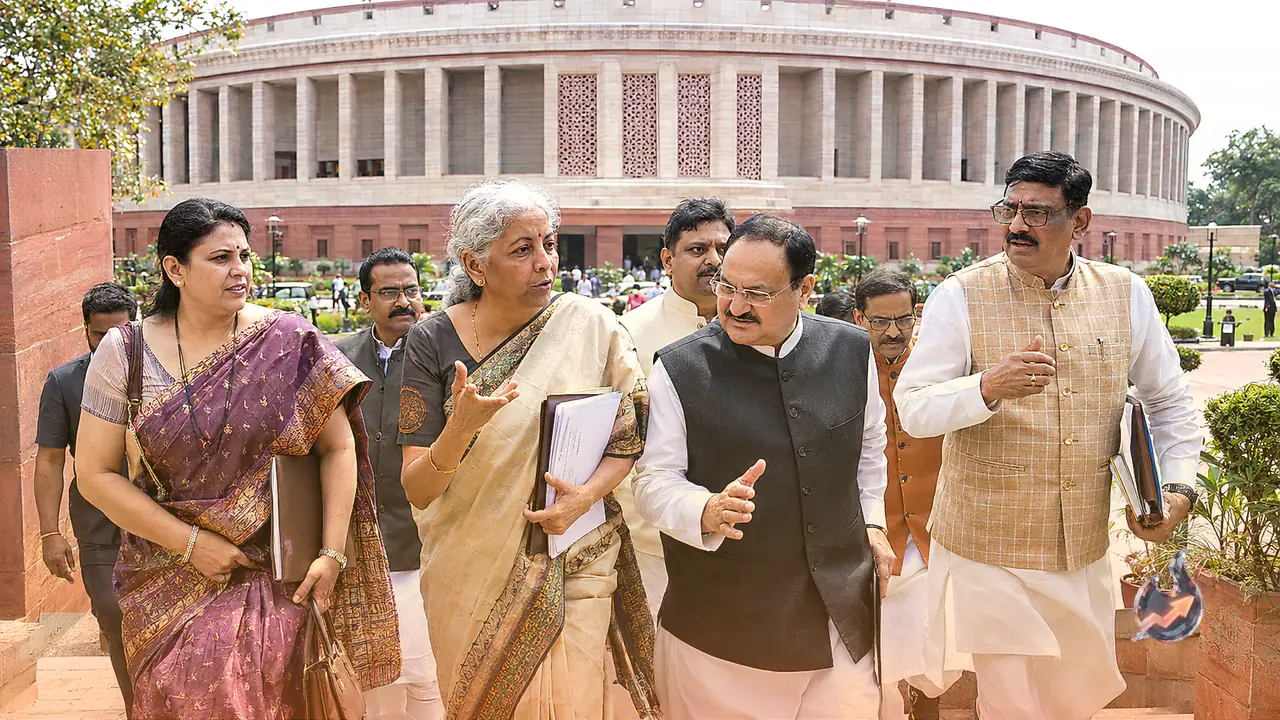

The government has circulated copies of its revised delimitation bill to members of Parliament ahead of its planned introduction in the Lok Sabha on November 30. MPs have been asked to read the proposal and prepare questions or objections, with the government saying it is ready to respond during debate. As opposition parties meet to discuss their approach, statements from the DMK point toward support, while the absence of Sharad Pawar’s NCP from a Congress meeting has drawn criticism.
Proposed increases come with ceilings
The bill proposes a 50 percent increase in Lok Sabha seats for every state. It would cap the House at 850 seats and freeze the total for the next 25 years. State assemblies would also grow by 50 percent, subject to a maximum of 650 seats in any assembly. The government’s stated rationale is that applying the same percentage increase across states would leave no state worse off in relative terms.
The legislation is also linked to women’s reservation. If the bill passes and delimitation proceeds, the 33 percent reservation for women is set to apply in the 2029 Lok Sabha election. The proposal would reserve about 272 seats for women. It also refers to PoK: if PoK joins India, the Election Commission would function like a delimitation commission and determine the electoral map there.
NCP absence becomes a point of dispute
An opposition meeting began at Congress president Mallikarjun Kharge’s home in Delhi. Priyanka Gandhi, Rashtriya Janata Dal leaders Abhay Kushwaha and Manoj Jha, Samajwadi Party’s Ram Ji Lal Suman, Trinamool Congress leaders Abhishek Banerjee and Derek O’Brien, Indian Union Muslim League’s ET Basheer, and Shiv Sena’s Arvind Sawant arrived to attend. No leader from Sharad Pawar’s NCP was present.
NCP leader Jitendra Awhad had said on Friday that he would support the bill. Sharad Pawar is being treated at a hospital in Mumbai, where Supriya Sule is also present. Congress leader Vijay Wadettiwar said he had learned that leaders from the Sharad Pawar faction would not attend the meeting. He interpreted their absence as a sign that they had decided to support the delimitation bill and align with the government.
Wadettiwar called that possible decision unfortunate. He said he had not expected Pawar, who had spent his life committed to secular thought, to make such a choice at this stage of his life. Wadettiwar said the situation was forcing him to consider whether Pawar would stand with those he accused of harming democracy. That was Wadettiwar’s political assessment; no separate explanation for the NCP leaders’ absence was given.
DMK says its demand was accepted
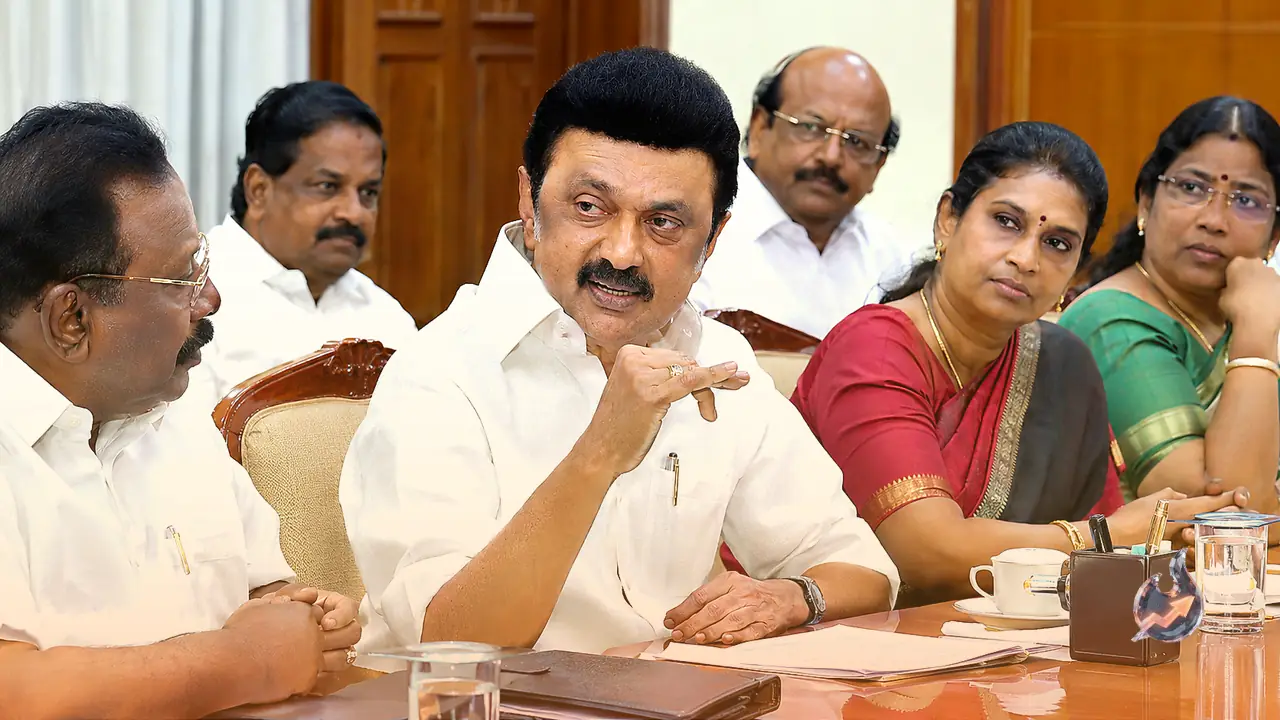
After a DMK meeting, party leader MK Stalin said the party would support the bill because its demand for fair delimitation had been accepted. He linked that support to opening the way for the 33 percent reservation for women. The party’s position is that increasing seats by 50 percent in every state would preserve the existing balance.
DMK MP Dayanidhi Maran said Tamil Nadu and other southern states had followed family planning and kept population under control. He said the concern behind the DMK’s opposition to delimitation had been that these states should not be penalized for doing so. Maran said the proposal to increase seats by 50 percent in every state reflected the party’s demand and would carry the status quo forward. He argued that no state would gain or lose from the arrangement.
Maran said the measure would now bring the benefit of 33 percent reservation for women, which the DMK supports. He also pointed to Tamil Nadu as the first state in India to implement 50 percent reservation for women in local body elections. He said the party had consistently backed women’s reservation.
DMK MPs to plan their parliamentary approach
MK Stalin is scheduled to chair a meeting of DMK MPs on Saturday morning at the party headquarters, Anna Arivalayam. The discussion is expected to cover the party’s strategy in both houses of Parliament, the Lok Sabha and Rajya Sabha. Stalin has made clear that the party will not revise or compromise on its demands on delimitation.
Taking aim at Congress, Maran said it should recognize who was betraying it. He accused the party of using people and then discarding them. Maran said the DMK leadership had not changed its position and that the party was seeking a fair delimitation process. As an example, he cited 1971, when Tamil Nadu had 41 seats and Congress reduced the number to 39.
Maran said Tamil Nadu’s seats are not being reduced under the current proposal; instead, they would rise in line with the national proportion. He said a 50 percent increase across the country would retain the existing balance and would not benefit or disadvantage any state. The DMK considers that outcome consistent with its demand for fair delimitation.