





















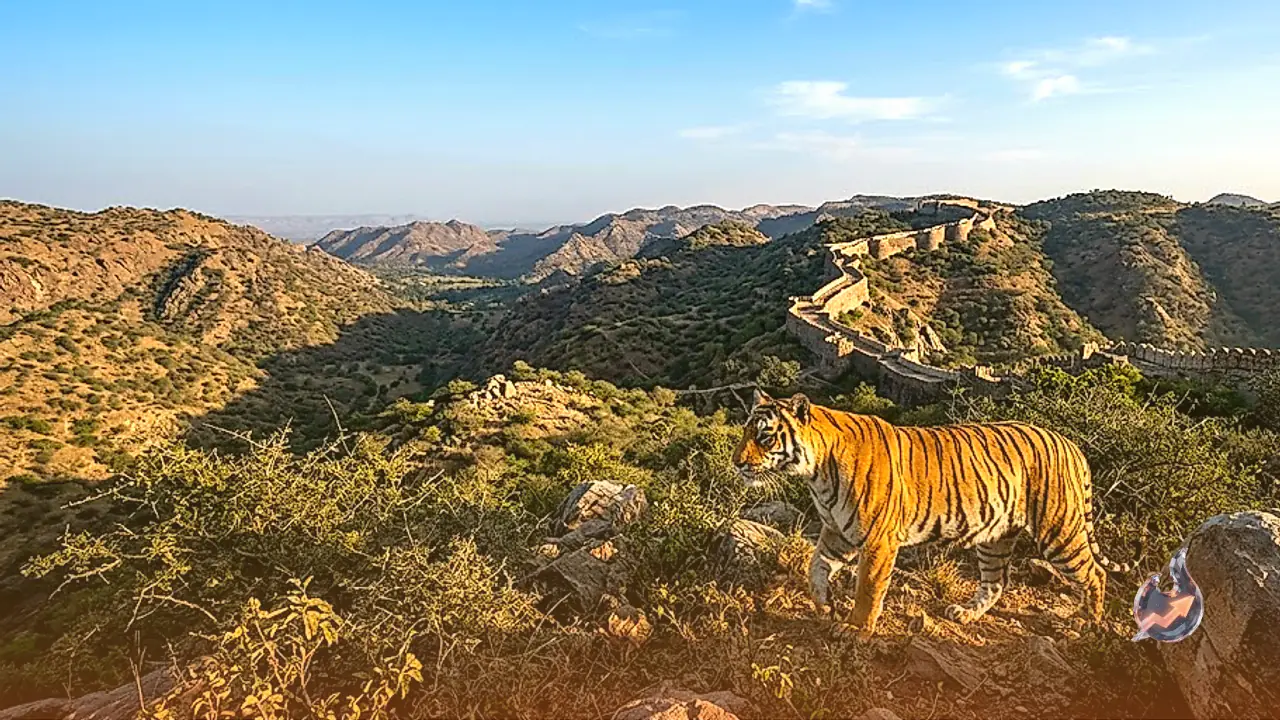

A major conservation milestone has emerged for the Mewar region of Rajasthan on the occasion of World Tiger Day, as the long-pending proposal for the Kumbhalgarh Tiger Reserve reached its final stage of approval. The National Tiger Conservation Authority (NTCA) has successfully completed all technical evaluations and mandatory procedural requirements for the project. The reserve now awaits the final official notification from the state government of Rajasthan. Upon the publication of this notification, Kumbhalgarh will formally become the 59th tiger reserve in India and the 4th within the state of Rajasthan. Furthermore, it will hold the distinct geographic designation of being the very first tiger sanctuary situated on the westernmost frontier of the country.
A 600 Square Kilometer Ecological Sanctuary Across Three Districts
The vast landscape of the Kumbhalgarh reserve spans across the boundaries of Rajsamand, Udaipur, and Pali districts. Covering an area of approximately 600 square kilometers along the ancient Aravalli hill range, the region is celebrated for its extraordinarily rich biodiversity. Beyond serving as a protected habitat for returning tigers, the dense forest ecosystem naturally supports healthy populations of leopards, bears, hyenas, wild cats, foxes, jackals, chinkara, sambar, nilgai, and numerous other species. The rugged mountain terrain, thick canopy coverage, and abundant natural water bodies offer an ideal sanctuary for long-term wildlife survival and breeding.
Strengthening Forest Protection and Curbing Encroachment
Environmental scholars and wildlife experts emphasize that conferring tiger reserve status will fundamentally bolster ecological conservation efforts throughout the Aravalli belt. The designated protection will help expand the population of diverse wild species while safeguarding their core natural habitats. With this official status, the state forest department will gain access to specialized conservation schemes, funding, and administrative resources. This infrastructure will enable stricter enforcement against illegal poaching, unauthorized timber harvesting, and land encroachments that have historically threatened the forest boundary.
Boosting Regional Tourism and Rural Economic Growth
From an economic standpoint, the establishment of the tiger reserve is projected to transform the tourism landscape of Mewar. The influx of wildlife enthusiasts, eco-tourists, and international visitors is expected to increase substantially once safari operations commence. This rise in tourism will directly generate fresh employment avenues for local youth across multiple sectors, including hotels, family-run home-stays, safari driving, nature guiding, traditional handicrafts, and regional retail businesses. As commercial activity expands into surrounding rural pockets, the local economy will experience sustainable long-term growth.
Addressing Community Interests and Honoring Historical Legacy
While the project has garnered broad support, it has also prompted constructive discussions among public representatives. Some leaders have urged authorities to balance wildlife conservation guidelines with the traditional grazing rights and daily livelihoods of local pastoralists and villagers. Conversely, many policymakers regard the reserve as a landmark movement toward regional ecological and infrastructure development. Historical records indicate that wild tigers roamed the Kumbhalgarh forests naturally until 1953. Consequently, the reintroduction of tigers represents not merely a return of an apex predator, but a vital resurgence of the Aravalli ecosystem and sustainable growth for Mewar.


