
















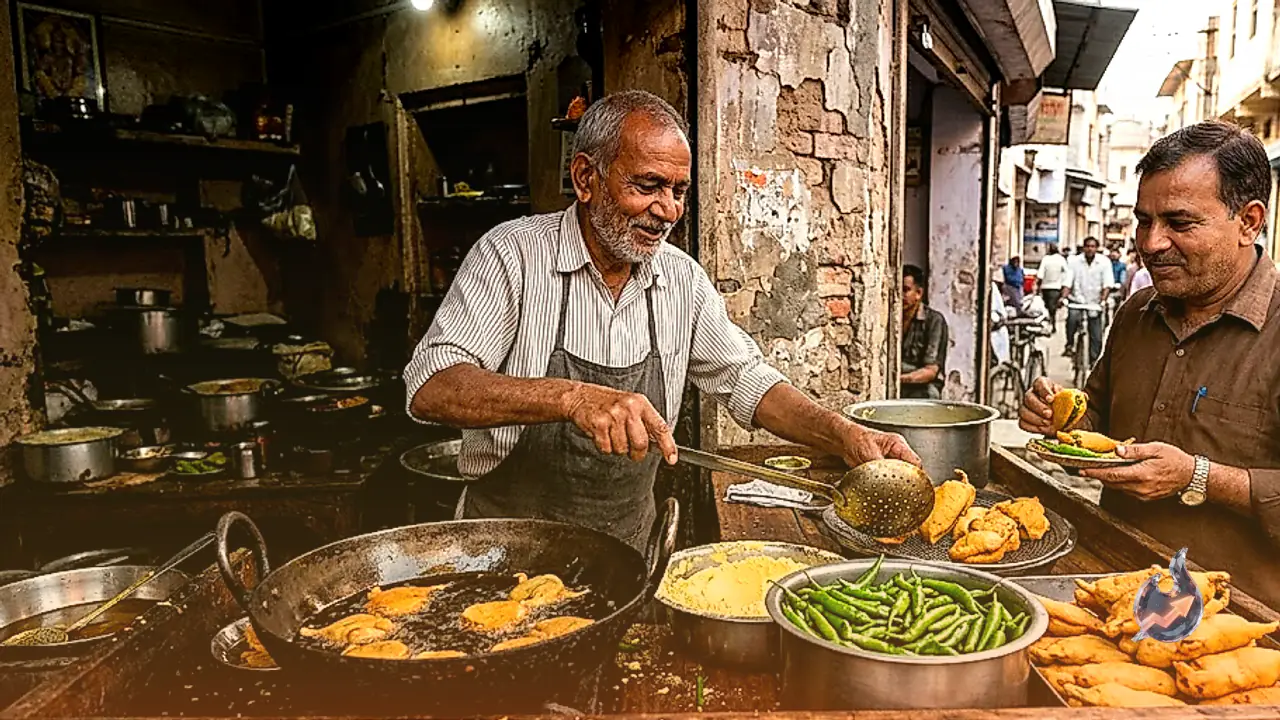

Inside Pali's inner market, near the well known Somnath Mahadev temple, customers can reach a food shop without knowing its name. There is no signboard and no official name, yet people travel from far away for its mirchi bade and pakoras. The shop has a history of about 70 years, with its food tradition carried through three generations and now handled by Kamlesh Vaishnav.
An identity built on taste, not a signboard
The shop's story falls in the 60 to 70 years range, and it is now treated as an establishment that is about 70 years old. Decades have passed and eating habits have changed, but its recipes for mirchi bade and pakoras have stayed the same. The traditional flavor has not shifted even slightly. That consistency matters more to customers than a formal name. From morning to evening, people keep arriving for pakoras and mirchi bade, keeping a steady stream at the shop. Customers identify the place by its location and popularity rather than a written name.
Three generations of customer trust
Kamlesh Vaishnav currently looks after the shop. The pakoras and mirchi bade made by his hands continue the same taste that people remember from decades ago. This inherited work has earned the trust of three generations. Food choices in the market may have changed, but the shop has not altered its recipe or traditional flavor. That steadiness brings people from Pali as well as remote villages. Even though they know the shop has no name, they go directly to the spot and make it a point to stop there.
The chutney adds another reason to return
The appeal is not limited to mirchi bade and pakoras. The chutney served with the pakoras has its own distinct taste, and customers like it strongly. Freshly cooked items come out of the kadhai and disappear within minutes. The speed reflects how quickly hot mirchi bade and tangy pakoras are taken up by the crowd. For visitors, the draw is the combination of the unchanged recipe, the chutney and food served while it is still hot.
Monsoon crowds leave little standing room
The lack of a name has done nothing to reduce the shop's popularity. A line of customers remains in place through ordinary days, while the monsoon and rainy season bring an even larger rush. At that time, there may not be enough space to stand outside. As soon as hot mirchi bade and chatpata pakoras are lifted from the kadhai, they are gone within minutes. Demand continues across the day, with morning and evening both drawing people for pakoras and mirchi bade.
What a regular customer values
Ajay Singh, a regular customer who has been visiting for years, says the shop's main strength is its old, pure taste. He notes that Pali may have several shops selling mirchi bade, but the pakoras and mirchi bade made by Kamlesh Vaishnav have a flavor he does not find elsewhere. For him, the shop's name is not important because the work and taste speak for themselves. His view captures why customers continue to identify the place through its food rather than a signboard.
A food stop tied to temple visits and market trips
Devotees arriving for darshan at the well known Somnath Mahadev temple do not return without tasting the shop's food. The same is true for people who come to the inner market to shop. Customers from the city and those traveling from distant villages all add to the steady demand. After 70 years of remaining a favorite, the unnamed shop has become part of Pali's food heritage. Its popularity has survived without an official name or signboard, making it a natural stop for anyone combining a temple visit or market trip with a meal.


