

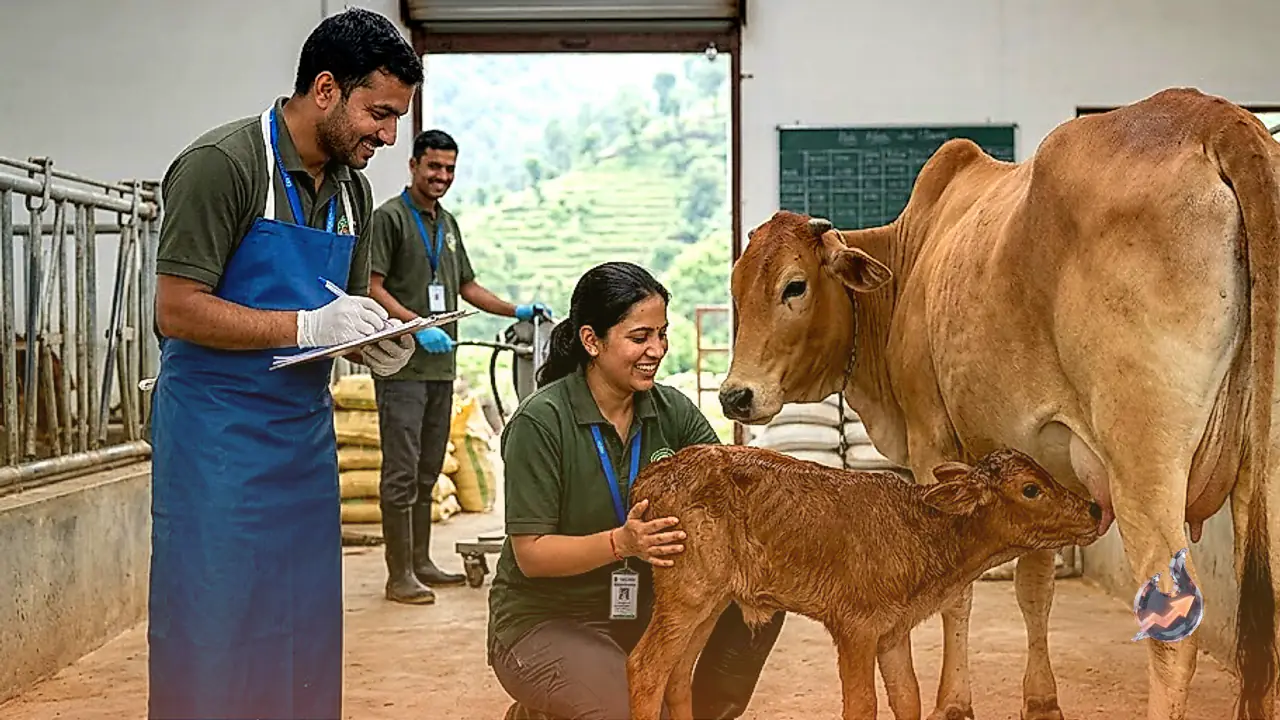




















A remarkable milestone has been achieved in the conservation and genetic improvement of indigenous cattle breeds in Uttarakhand, where scientists have successfully birthed a healthy female Badri calf using In Vitro Fertilization (IVF) technology. What makes this scientific success particularly unique is that the calf was carried and delivered by a surrogate cow belonging to the Sahiwal breed. Born on September 11, the calf is in excellent health, representing a significant victory for advanced animal biotechnology and reproductive sciences in India.
A Joint Scientific Initiative at Pantnagar Dairy Farm
This sophisticated scientific procedure was carried out at the Academic Dairy Farm located within the campus of Pantnagar University. The success of the project is the result of a dedicated collaborative research framework established between the ICAR-National Dairy Research Institute (NDRI) in Karnal and the GB Pant University of Agriculture and Technology in Pantnagar. Financial and administrative support for this extensive biotechnology project was provided by the Uttarakhand Biotechnology Council in Haldi, which ensured that the research teams had the necessary funding to drive this innovation.
The Strategic Importance of Protecting Badri Cattle
The Badri cow is an indigenous cattle breed native to the hilly terrains of Uttarakhand and holds the prestigious status of being designated as the official state animal. Reared primarily in the high-altitude regions of the Himalayas, this hardy breed has been the focus of dedicated scientific conservation efforts for several years. Badri cattle are highly valued for their exceptional climate resilience, disease resistance, and the nutritional quality of their milk, which is rich in A2 beta-casein and organic properties derived from grazing on medicinal mountain herbs.
However, their low overall population and slower natural reproduction cycle have historically hindered conservation efforts. The introduction of advanced reproductive technologies like IVF offers a powerful solution to these limitations. By harvesting eggs from elite, high-yielding Badri cows, scientists can now produce a significantly larger number of embryos in a laboratory setting. This advanced methodology allows for the rapid multiplication of superior genetic traits across generations much faster than traditional breeding methods, providing a reliable pathway to safeguard the breed from decline.
Understanding the Step-by-Step IVF and Surrogacy Procedure
The complex medical procedure was executed through a highly coordinated series of steps. Initially, the research team identified elite Badri cows with superior genetic traits and high milk-yielding histories. Utilizing advanced ultrasound-guided techniques, the scientists extracted high-quality oocytes (eggs) directly from these selected donor cows. These eggs were then transferred to a specialized laboratory environment, where they were matured and prepared for fertilization.
The next critical step involved fertilizing these mature eggs in vitro using premium semen sourced from a high-pedigree Badri bull, which was provided by the Uttarakhand Livestock Development Board. The resulting fertilized eggs were carefully cultured in the laboratory during their early embryonic development stages. Once the embryos reached the optimal stage for transfer, a selected embryo was implanted into the uterus of a Sahiwal cow. This surrogate mother had been medically and hormonally prepared in advance to accept the foreign embryo. The surrogate successfully carried the pregnancy to term, culminating in the birth of the healthy female Badri calf on September 11.
Future Horizons: Expansion and Cloning Technology
The research team's ambitious roadmap extends far beyond this initial success. Scientists have already prepared another surrogate cow, a crossbred animal, using the same advanced embryo transfer protocols. The team expects this second surrogate to deliver another healthy Badri calf within the next five to seven days. This comprehensive conservation program was originally initiated in 2023 under the leadership of the then Vice Chancellor of GB Pant University, Dr. M.S. Chauhan, who established the research collaboration with ICAR-NDRI Karnal. Since then, the joint scientific team spent nearly three years refining the laboratory procedures, egg retrieval methods, and embryo transfer techniques.
Dr. Dheer Singh, the Director of ICAR-NDRI, described this milestone as an extraordinary scientific achievement for the dairy and livestock sectors. He emphasized that utilizing advanced methodologies such as OPU-IVF (Ovum Pick-Up and In Vitro Fertilization) can significantly accelerate the multiplication rates of high-quality dairy cattle. This technology is expected to play a transformative role in upgrading and conserving other native Indian livestock breeds as well.
Looking ahead, the scientific team is also expanding its research into somatic cell cloning. Researchers have already successfully created cloned Badri embryos in the laboratory. In the next phases of the project, the team plans to transfer these cloned and IVF-derived embryos into Sahiwal, crossbred, and Badri surrogate cows to rapidly scale up the population of this genetically superior mountain breed, ensuring its long-term survival and productivity.


