







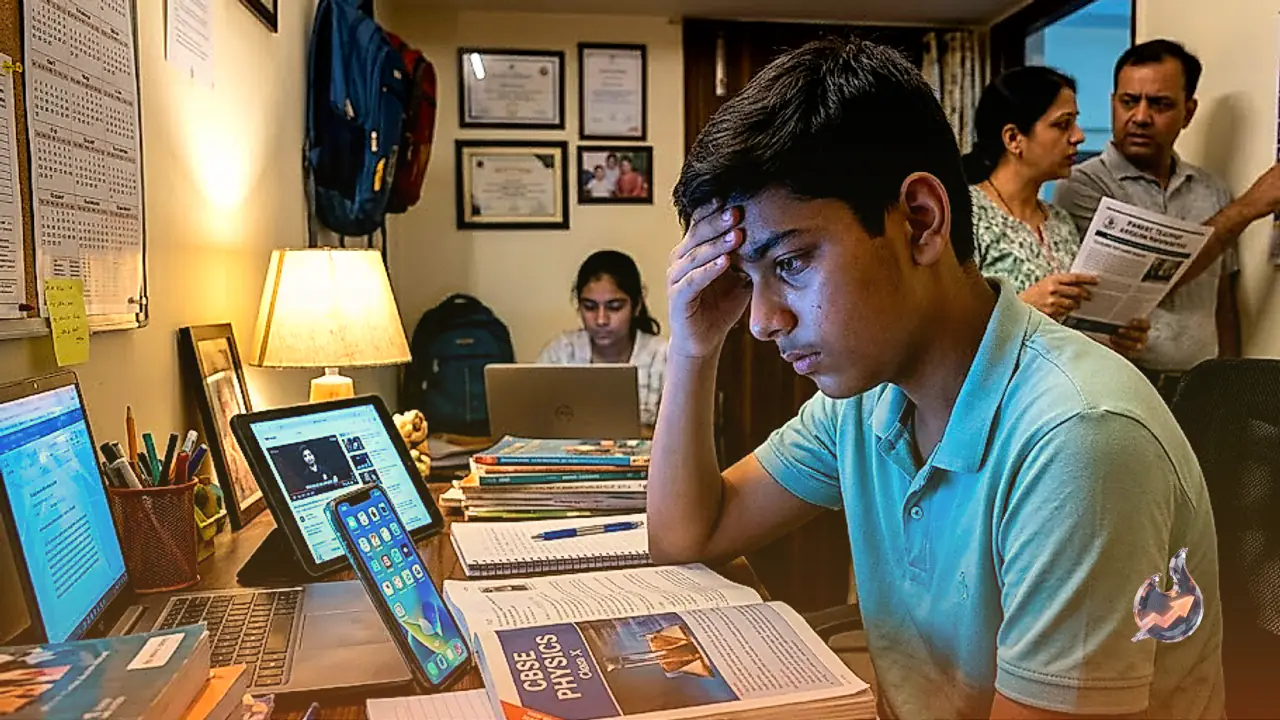















In this digital age, the mental well-being and academic growth of school-going children have become highly complex issues. A group of prominent educationists, retired government officers, and concerned parents from Jodhpur have shared their valuable insights on the rising psychological and academic challenges faced by modern students in the region, particularly in Pali. They highlighted how excessive screen time, dwindling concentration levels, a growing distance from physical books, and the overwhelming burden of parental expectations are pushing young minds into states of severe stress and anxiety.
According to these experts, the trend of online classes during the pandemic has left a lasting impact, fundamentally altering how children study. Rather than delving into the depth of a subject through books, students now seek instant solutions on the internet and mobile devices. This shift has severely damaged their reading habits and lowered their classroom attention spans. For modern teachers, the biggest test lies in bringing struggling students back into the mainstream and rekindling their interest in academic learning.
Academic Pressure and the Need for Strong Foundations at Home
Retired District Education Officer Vidyottama Verma highlighted a stark shift in the attitude of students compared to earlier times when teachers commanded immense respect and students followed their guidance diligently. In the present era, the obsession with clearing examinations and achieving specific targets is incredibly intense. When children face unfavorable circumstances or fail to meet these expectations, they often break down completely, sometimes taking extreme steps like suicide. Verma emphasized that while teachers must understand, encourage, and guide these students, the primary responsibility lies with the parents. A disciplined environment at home establishes a strong foundation, making the teacher's guidance far more effective. Additionally, educators must lead by example through their own conduct.
Overcoming the Addiction to Online Searches
Sharing a similar perspective on digital dependency, retired Principal Chanda Maidh pointed out that online learning was a necessity during the pandemic, but it has now transformed into a persistent habit. Students immediately turn to laptops or mobile phones to find information the moment they return home, ignoring the comprehensive knowledge that only books can provide. Maidh suggested that teachers can counter this trend by thoroughly explaining concepts and addressing every curiosity within the classroom itself. When students realize that their teachers can solve all their queries effectively, their reliance on the internet will decrease, and they will naturally gravitate back toward reading books.
The Cost of Education and Imposing Unrealistic Dreams
Parent and retired bank officer Praveen Maidh focused on the communication gap that has developed among teachers, parents, and students. Managing family expenses while funding higher education has become a major source of anxiety for ordinary citizens, especially with engineering college fees reaching up to Rs 50 lakh. He advised parents against forcing their personal career aspirations onto their children. For instance, if parents are doctors, they should not automatically expect their child to follow the same path, as the child might have a genuine interest and aptitude for administrative services like the IAS. He added that students must receive guidance aligned with their own interests, and teachers must treat all students with the same affection and respect they would show their own children.
The Burden of Unmet Expectations
Adding to the discussion on parental pressure, parent and retired teacher Kamla Mohanot explained how children are crumbling under the weight of unrealistic family expectations. This relentless pressure often drives students to a point where they stop listening to both their teachers and their parents. When education is perceived as an exhausting chore rather than a pursuit of knowledge, children are left feeling deeply frustrated and hopeless. She concluded that there is an urgent need to lighten this psychological burden so that students can learn in a healthier and more positive environment.


