















Across Rajasthan, the traditional folk art form known as Mandana has historically served as an indispensable element of festivals, weddings, and sacred household ceremonies. Yet, as modern lifestyles accelerate and living spaces evolve, this time-honored visual tradition faces an uphill battle to retain its relevance and cultural identity. Amid these shifting sands, Ankit Banwadiya, a dedicated young artist based in Kota, has taken up the mantle of keeping this centuries-old art form alive. Practicing Mandana since early childhood, he has made it his personal mission to reintroduce this indigenous heritage to common households and cultivate wider social appreciation for its deeper value.
The Natural Science Behind Cow Dung and Lime Surfaces
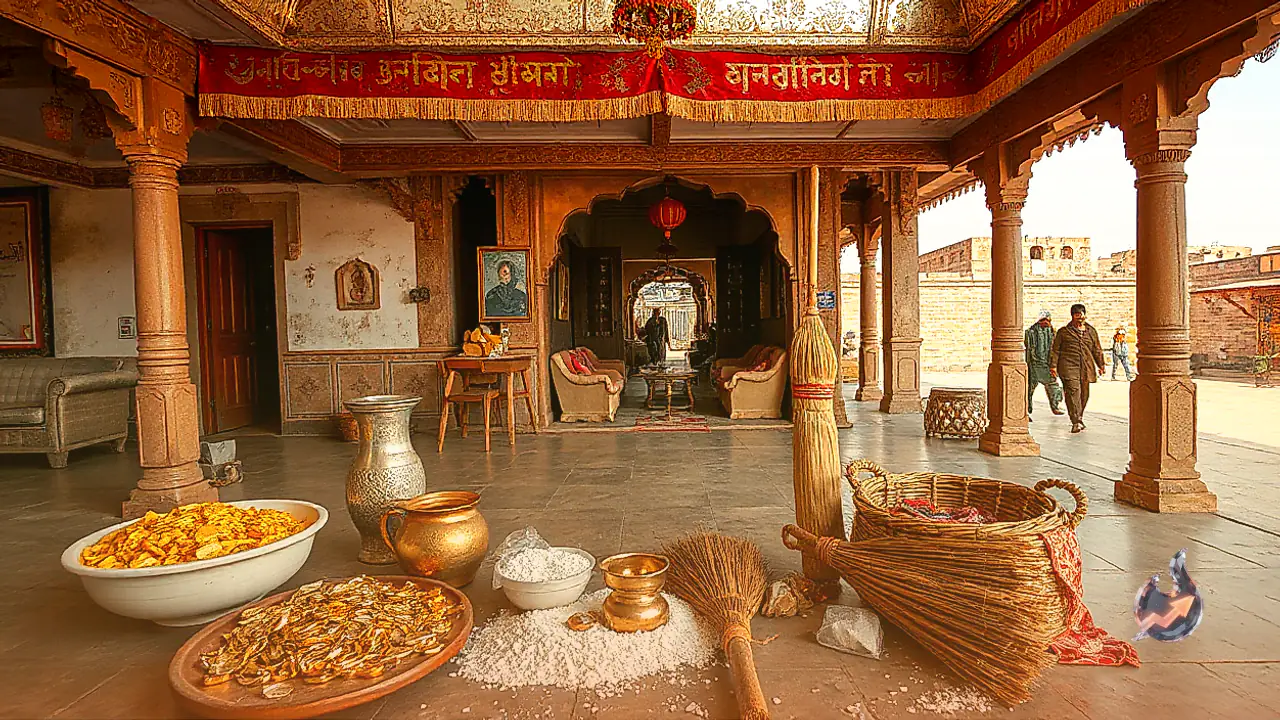
According to Ankit Banwadiya, Mandana was never conceived merely as superficial ornamental decor; rather, it represents a profound, organic connection with the natural environment. Traditionally, village homes across Rajasthan prepared their surfaces using cow dung and slaked lime, creating a sacred canvas for ceremonial geometric and floral designs. This indigenous practice carries clear scientific advantages. Cow dung naturally contains antibacterial properties, while lime acts as an effective agent to neutralize microbes and purify domestic spaces.
In earlier generations, families living in rural mud homes eagerly gathered during Diwali and other significant festive occasions to hand-render auspicious signs across their entrances and floors. Sacred motifs such as the Swastika and Mataji ke Pagle (the revered footprints of the divine mother) were meticulously traced onto courtyards and platforms. These carefully rendered symbols were believed to channel good fortune, ward off negative energies, and invite lasting spiritual harmony into the domestic sphere.
The Rapid Rise of Ready-Made Stencils and Urban Disconnection
The pace of contemporary life and persistent time constraints have dramatically changed how families prepare for celebratory gatherings. Instead of hand-drawing intricate floor designs, people increasingly opt for factory-made, printed rangoli stickers and chemical-laden stencils purchased straight from commercial markets. These mass-produced items lack the raw aesthetic vitality, warmth, and sacred intention that define authentic hand-rendered Mandana art.
Furthermore, structural shifts toward nuclear family living and the proliferation of multi-story urban apartment buildings have severed direct access to rural settings. City residents no longer have straightforward access to organic materials like fresh cow dung or traditional lime washes. This physical separation from agrarian routines has caused modern urban dwellers to gradually lose touch with natural cycles and experiential community traditions.
Gradual Cultural Erosion Rather Than Complete Extinction
Reflecting on the trajectory of ancestral practices, Ankit observes that while traditional culture has not completely perished, it is unquestionably experiencing ongoing dilution and erosion. Modern individuals gravitate heavily toward quick-fix solutions that demand minimal labor and instant results. Yet, ancestral customs were meticulously structured around ecological harmony, scientific logic, and positive vibrational influences. Despite the fact that Mandana possesses no documented, formal written history, Ankit asserts that sustaining such inherited oral and practical traditions remains vital for preserving community identity.
Key Recommendations to Revitalize Indigenous Art
To ensure that Mandana continues to thrive for generations to come, Ankit Banwadiya proposes concrete, actionable steps aimed at grassroots revival
- Educating Younger Generations: Knowledge regarding indigenous methods and organic materials should be actively taught to youth so they develop genuine respect for their architectural and folk roots.
- Providing Dedicated Platforms: Cultural organizations and civic bodies must organize regular exhibitions and festivals where traditional practitioners can showcase their expertise directly before the public.
- Rejecting Synthetic Paints: Families should return to creating hand-made floor patterns while actively eliminating or minimizing the use of toxic, synthetic coloring powders.
- Reviving Outdoor Courtyard Patterns: Maintaining the daily or festive custom of decorating house entrances, elevated plinths, and open courtyards helps sustain an environment of collective positivity and festive celebration.
Background of Artist Ankit Banwadiya
Ankit Banwadiya is an academically accomplished artist who holds a Master of Arts (MA) degree as well as a Bachelor of Education (BEd) degree, with a specialization in Drawing and Painting. Despite achieving high formal academic credentials that could have led him elsewhere, his commitment to folk art never wavered. His artistic journey began during his earliest schooling years, engaging intimately with Mandana patterns from the time he was in first or second grade.
Alongside traditional Mandana and rangoli compositions, Ankit regularly creates large-scale wall paintings rendered in authentic Rajasthani pictorial traditions. He persistently appeals to people of all backgrounds to remain intimately connected with nature and celebrate handmade traditions, reiterating that authentic, hand-drawn motifs are the true soul of Rajasthan's cultural legacy.